Garage Door Balance Basics: How Springs Support Smooth Door Movement
A garage door looks simple from the driveway. It rises, it lowers, and when everything is working properly, it does both without much drama. Behind that easy movement is a carefully matched balance system. The door itself may be heavy, especially if it is wide, insulated, or built with substantial panels, but a properly balanced door should not feel heavy during normal operation. The springs carry much of that load.
When homeowners describe a garage door that slams shut, shoots upward, hangs crooked, strains the garage door opener, or refuses to stay halfway open, they are often describing a balance problem. The opener may be the part making noise, but it is rarely designed to be the muscle that lifts the full weight of the door. Its job is to move a balanced door, not to overcome a failed or mismatched spring system.
Understanding garage door balance helps with safer ownership. It also makes garage door troubleshooting more accurate. A homeowner does not need to adjust springs personally, and in most cases should not, but knowing what the system is supposed to do makes it easier to recognize when a garage door inspection is needed before a small problem turns into a damaged opener, frayed garage door cables, or a door that will not close safely.
What garage door balance really means
Garage door balance is the relationship between the door’s weight and the counterforce supplied by the spring system. A balanced door is not weightless. It is counterbalanced. The springs store energy when the door closes and release that energy as the door opens, reducing the force needed to lift the door.
The easiest way to picture it is to imagine lifting a heavy window with a counterweight hidden in the wall. Without the counterweight, lifting the sash would take real effort. With the counterweight properly matched, the window moves smoothly and stays where it is placed. Garage doors work on a similar principle, though with different hardware and much higher stored energy.
A properly balanced residential garage door should move through its travel without sudden drops, stalls, or uncontrolled acceleration. When disconnected from the garage door opener, it should be possible to move it by hand with controlled effort. It should not feel like dead weight, and it should not fly upward as though the springs are overpowering it.
Balance is not just about convenience. It affects garage door safety, opener life, roller wear, cable tension, and the way the door sits in the garage door tracks. When balance is wrong, other components are forced to compensate. That is why a noisy opener or uneven door movement may trace back to the springs rather than the motor.
Why springs are the heart of the system
Garage door springs do the hardest work in the entire assembly. Panels, tracks, hinges, rollers, cables, and the opener all matter, but the springs provide the counterbalance that makes controlled movement possible.
When the door is closed, the springs are under significant tension or torque, depending on the spring style. That stored energy is ready to assist the next opening cycle. As the door rises, the springs release energy in a controlled way. As the door lowers, the system stores energy again. This cycle repeats every time the door operates.
This is also why spring systems deserve respect. A spring that can help lift a large door contains enough stored energy to cause serious injury if handled incorrectly. The safest homeowner role is observation, cleaning around accessible areas, light lubrication where appropriate, and recognizing when professional garage door repair is needed.
A common mistake is assuming the garage door opener lifts the door. In practice, the opener guides movement once the door is balanced. If the spring system is weak, broken, or incorrectly matched, the opener may still try to move the door, but it will strain. That strain can show up as slow travel, jerky starts, unusual noise, incomplete opening, or damage to other parts over time.
Torsion springs and how they support door movement
Torsion springs are mounted above the garage door opening. They work by twisting and untwisting around a shaft. As the door closes, the cables and drums wind the system in a way that stores energy in the spring. As the door opens, the spring unwinds and helps lift the door.
Torsion springs are commonly preferred for heavier doors and high-use applications because their movement is controlled through the shaft, drums, and cables. The design keeps the spring system compact and allows the lifting force to be distributed evenly when all related parts are in good condition.
Many homeowners first notice torsion springs because they are visible above the closed door. A single wide door may have one or more springs, depending on the door design and weight. The number of springs is not something to guess at during garage door replacement or garage door installation. The correct spring setup must match the door, the hardware, and the expected movement. A spring that is too weak leaves the opener overloaded. A spring that is too strong can make the door difficult to close and may cause it to rise unexpectedly when disconnected.
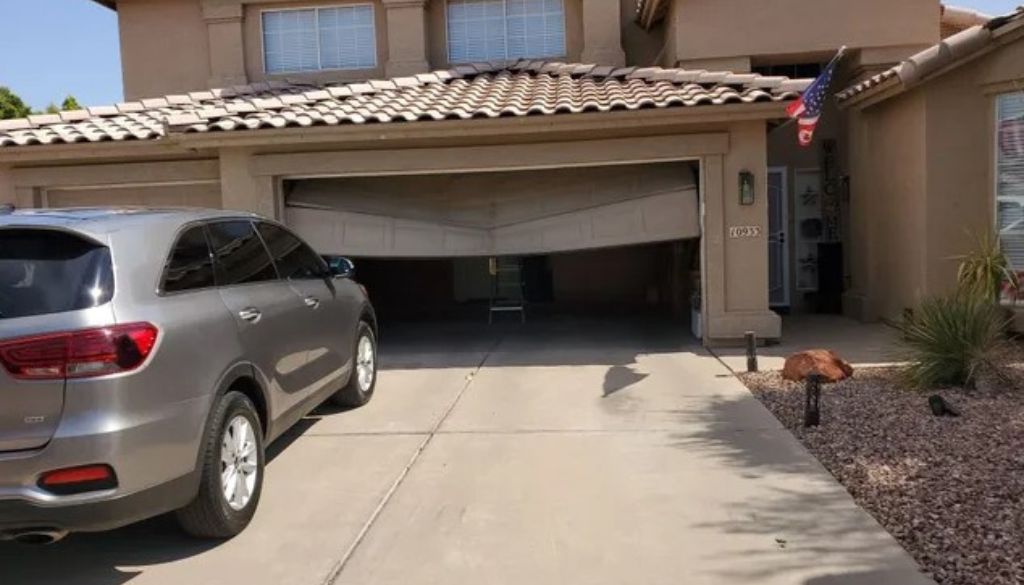
Torsion springs do not operate alone. Garage door cables connect the lower portion of the door to drums near the spring shaft. As the shaft turns, the cables wind or unwind. If a cable loosens, frays, or comes off a drum, the door can become uneven. A homeowner may see one side lower than the other, rollers binding in the tracks, or a gap near the floor on one side. Those symptoms call for caution because a cable issue can be connected to spring tension.
The door is a system, not a single part
Balance problems rarely stay isolated. A garage door is an assembly of moving parts that depend on one another. Panels create the door surface. Hinges allow sectional doors to bend as they travel. Garage door rollers guide the sections along the garage door tracks. Cables transfer lifting force. Springs counterbalance the weight. The opener moves the door and relies on safety systems, including garage door sensors, to reduce entrapment risks during automatic operation.
If one part begins to fail, the rest of the system often shows symptoms. For example, worn rollers may make the door drag in the tracks. That drag increases operating effort, which may make a homeowner think the springs are weak. A dry hinge can cause popping or squeaking that sounds more serious than it is. Dirty or obstructed tracks may create binding that looks like a balance issue. On the other hand, weak springs can cause an opener to struggle, which may be mistaken for a failing motor.
A careful garage door inspection looks at how the whole system behaves. Does the door remain level as it moves? Do the rollers stay seated in the tracks? Are the cables taut and even? Does the opener rail flex or strain? Does the door reverse properly when the sensor system is interrupted? Each answer helps separate a balance problem from a lubrication, alignment, opener, or sensor issue.
Signs your garage door may be out of balance
Balance problems often start subtly. The door may still open every morning, but it begins to sound different or move with less confidence. Homeowners who pay attention to those changes usually catch problems earlier.
A door that closes too quickly is one of the clearest warning signs. If the springs are not providing enough counterforce, gravity takes over. Even if the opener controls the descent during automatic operation, a weak spring system can create unsafe conditions when the door is disconnected or during a malfunction.
A door that feels unusually heavy when lifted by hand also points toward a possible spring issue. This is often noticed during a power outage or when using the emergency release. The door may move a few inches and then resist strongly. If the opener has been lifting that same door, it has likely been working harder than it should.
A door that will not stay in a partially open position can also indicate poor balance. In many cases, a balanced door should remain reasonably controlled when placed at mid-travel by hand. If it drops sharply or rises on its own, the counterbalance may be off.
Uneven movement is another concern. One side may lag behind, the bottom seal may meet the floor unevenly, or a roller may scrape. Sometimes the cause is a cable problem, a track issue, or damaged hardware, but balance should be part of the evaluation.
A safe homeowner balance check
A basic balance check can help a homeowner describe symptoms accurately, but it must be done carefully. The goal is not to repair or adjust anything. The goal is to observe how the door behaves when it is not being moved by the opener.
Before performing any check, make sure people, pets, vehicles, and stored items are clear of the door path. If the door already appears crooked, has a loose cable, has a broken spring, or is stuck partly open, do not test it. A compromised door can move unpredictably.
This test is useful, but it is not a full diagnosis. Weather, track condition, roller wear, hinge friction, door construction, and spring setup can all influence how the door feels. If the door drops quickly, feels unsafe to hold, or does not move smoothly, stop using it manually and schedule garage door repair. Do not try to increase spring tension, loosen set screws, move cables, or remove parts connected to the spring system.
Why balance changes over time
Garage door balance can change gradually. Springs cycle every time the door opens and closes. Over years of use, they can lose some effectiveness or eventually break. A household that uses the garage as the main entry may operate the door many times each day, while another home may use it only a few times a week. Usage patterns matter.
Other parts age as well. Garage door rollers can wear, hinges can loosen, tracks can collect dirt, and cables can show fatigue. A door that was balanced during installation may become harder to move because friction has increased. In that situation, the springs may not be the only issue. The counterbalance might still be close, but the door no longer moves freely.
Changes to the door itself can also affect balance. Adding weight to the door, even unintentionally, changes the load the springs must support. Homeowners sometimes attach decorative materials, insulation, storage brackets, or other items to the door. If those additions add meaningful weight, the original spring setup may no longer match the door. Even a garage door replacement panel that differs from the original can affect movement if the weight changes.
Seasonal conditions can make symptoms more noticeable. Cold weather may make some materials stiffer, and debris tracked into the garage can collect near lower hardware. Moisture and dust can contribute to noise or binding. These conditions do not automatically mean the springs are failing, but they can reveal weaknesses in a system that was already marginal.
How an unbalanced door affects the opener
A garage door opener is often blamed for problems that begin with balance. The motor may hum, the trolley may jerk, or the door may stop before it reaches the open position. Those symptoms look like opener failure, but the opener may simply be struggling against a door that is too heavy or resistant.
Automatic openers are built to move the door through a controlled path. They are not a substitute for properly matched garage door springs. When the door is out of balance, the opener can be forced to pull harder on the top section, which may stress the door and hardware. The opener rail or arm may show unusual movement. The door may start unevenly because the opener is pulling from one point while the door resists through the tracks.
Modern garage door safety is not only about mechanical balance. Residential automatic garage door openers in the United States have long been required to comply with entrapment-protection requirements for operators manufactured on or after January 1, 1991. Properly installed photoelectric sensors or reversing-edge devices are part of that safety approach. A sensor or electric eye should reverse the door if someone enters the closing path.
Balance still matters because safety systems are not meant to compensate for poor mechanics. A door that drops too fast, binds, or strains the opener can create conditions that no sensor should have to manage. Garage door sensors help protect the closing path, but they do not repair weak springs, worn rollers, damaged tracks, or loose cables.
Lubrication and balance are related, but not the same
Garage door lubrication can make a healthy door quieter and smoother, but it cannot correct a spring that no longer balances the door. This distinction matters because many homeowners reach for a spray can when the door gets noisy or sluggish. Sometimes lubrication helps. Sometimes it hides the symptom for a short time while the real issue worsens.
Hinges, rollers, and springs are common lubrication points. A silicone-based lubricant is often recommended for these components. Heavy oil-based products can attract dirt, which may make the door messier and eventually contribute to grime around moving parts. Tracks should generally be kept clean rather than coated with lubricant. Rollers need to roll, not slide through a greasy channel.
Squeaks, grinding, rattling, and binding can come from dry or dirty parts. A squeak at a hinge may be simple. A grinding sound from a roller may suggest wear or debris. A rattle may come from loose hardware. A thud or bang from above the door may be more concerning if it relates to spring or cable movement.
Good maintenance reduces friction, which helps the spring system do its job. If friction rises, the door may behave as though it is out of balance even when the spring force is not the main problem. That is why lubrication, cleaning, and inspection belong together. A smooth door is easier to evaluate accurately.
Practical maintenance that protects balance
The best garage door maintenance is steady and observant. It does not require dismantling the door or touching high-tension parts. It does require listening, looking, and responding before the door becomes unreliable.
A homeowner can start by watching a full open and close cycle from inside the garage. The door should travel evenly, without shuddering, scraping, or sudden speed changes. The cables should appear even on both sides when visible. Rollers should move through the tracks without jumping. Hinges should not wobble excessively. The opener should sound consistent rather than strained.
Cleaning also helps. Tracks can collect dust, leaves, and small debris. Removing loose debris from the track area can prevent rollers from encountering obstructions. The goal is not to bend, realign, or modify the tracks, just to keep the path clean.
Lubrication should be modest. More product is not better. A light application on appropriate moving parts is usually more useful than soaking everything. Wipe away excess to reduce dirt buildup.
A simple homeowner routine can include these checks:
If anything looks unsafe, especially a broken spring, loose cable, crooked door, or door that will not stay controlled by hand, stop using the door and call a qualified technician. Maintenance should never involve loosening spring hardware or attempting to rewind torsion springs.
When spring problems are mistaken for track or roller issues
The line between a balance problem and a track problem can be blurry from a homeowner’s perspective. A door that binds in the track may seem out of balance because it becomes hard to lift. A door with weak springs may bind because the rollers are not being lifted evenly. Both can happen at the same time.
Garage door tracks guide movement. They need to be secure, clean, and shaped correctly. If the tracks are damaged or out of alignment, rollers may rub, scrape, or jam. That added resistance can cause the opener to stop or reverse. It https://goldcoastgaragedoorrepair.com.au/garage-door-replacement-and-installation/ can also make a manual balance check misleading because the door is fighting friction rather than only gravity.
Garage door rollers are another common source of confusion. Worn rollers may chatter or drag. If several rollers are in poor condition, the door may move roughly even with acceptable spring tension. On the other hand, a door with a failing spring may put uneven load on rollers and make them sound worse.
A professional inspection separates these issues by checking the door disconnected from the opener, observing cable tension, looking at track condition, and evaluating whether the spring system is properly supporting the door. The important homeowner takeaway is that symptoms overlap. Replacing an opener because the door is heavy, or lubricating rollers because the door drops, may not address the actual cause.
The safety risk of spring adjustment
Garage door springs are not ordinary household hardware. They store and release energy, and that energy is central to the door’s movement. Torsion springs, in particular, are mounted under torque. Adjusting them requires the right tools, training, and judgment. A wrong movement can release force suddenly.
The risk is not limited to the spring itself. Cables, drums, brackets, and the door sections are all connected to the balance system. Loosening the wrong fastener can allow parts to shift or unwind. A door that is partially open can drop. A cable can lose tension. Hardware can move faster than expected.
That is why the safest advice is direct: homeowners should not attempt spring adjustment, spring replacement, cable resetting, or drum work unless they are qualified to perform that repair. Observation and basic maintenance are reasonable. High-tension repair is different.
There is also a quality issue. Even if no one gets hurt, an incorrectly adjusted spring can damage the door or opener. Too little counterbalance leaves the door heavy. Too much counterbalance can make it rise too aggressively or resist closing. Uneven adjustment can cause crooked travel. Proper garage door installation and repair depend on matching the spring system to the actual door, not guessing.
Balance during garage door replacement or installation
Balance should be part of any garage door installation or garage door replacement discussion. A new door changes the system. Different panel construction, insulation, hardware, or size can alter weight and movement. Reusing an old spring setup without confirming compatibility can lead to poor performance.
A properly installed door should be evaluated as a complete assembly. The panels should move smoothly in the tracks. The rollers and hinges should work without binding. The cables should wind correctly. The springs should counterbalance the door through its travel. The opener should be connected only after the door operates properly by hand.
This sequence matters. If an opener is installed on a door that is not mechanically sound, it may mask the problem briefly. The homeowner presses the remote, the door moves, and everything seems acceptable. Later, the opener begins to strain or the door reverses unexpectedly. What looks like an opener defect may trace back to a door that was never balanced well.
Qualified installation also matters for automated systems. Certified products, correct installation, and attention to applicable safety requirements all contribute to safer operation. Photoelectric sensors must be placed and aligned so they can detect an obstruction in the closing path. A well-balanced door and a properly installed opener work together. One does not replace the other.
What to tell a technician when you call
Good information helps a technician diagnose the problem faster. Instead of saying only that the opener is broken, describe what the door does. Mention whether the door feels heavy by hand, whether it stays halfway open, whether one side moves differently, and whether the issue began suddenly or gradually.
A sudden loud bang from the garage, followed by a door that will not lift normally, may suggest a broken spring. A gradual increase in noise may point to wear, dirt, lubrication needs, or changing spring performance. A door that reverses while closing may involve sensors, track resistance, opener settings, or an obstruction. A door that hangs crooked may involve cables, tracks, rollers, or spring-related imbalance.
Photos can help if they are taken safely from a distance. A clear picture of the spring area, both tracks, the lower corners of the door, and the opener connection may give useful context. Do not climb, pull cables, or move a stuck door to get a better view.
If the door is stuck open, treat it as a security and safety issue. Keep people away from the opening and avoid standing under the door. If the door is closed and will not open, do not force it with the opener repeatedly. Repeated attempts can worsen damage to the opener or door.
Common homeowner questions about garage door balance
Many homeowners ask whether they can keep using the opener if the door seems heavy. The better answer is no, not for long and not casually. If the door is heavy by hand, the opener is likely working too hard. Continuing to use it can turn a spring or balance issue into opener damage.
Another common question is whether lubrication can fix a balance problem. It can improve movement if friction is the main issue, but it cannot restore proper spring force. If the door drops, rises on its own, or feels dangerously heavy, lubrication is not the cure.
Homeowners also ask how often they should inspect the door. A brief visual and listening check can be done regularly because it takes less than a minute during normal use. More deliberate garage door maintenance, including cleaning and lubrication, can be performed as needed based on noise, dirt, and manufacturer guidance. Safety systems should not be ignored. The electric eye or sensor system should reverse the closing door when the path is interrupted, and any failure should be addressed promptly.
Some wonder whether a balanced door should be silent. Not necessarily. Garage doors have moving parts, and some sound is normal. The concern is change: new grinding, sharp squealing, heavy thuds, scraping, or a strained opener sound. A familiar low rumble from rollers is different from a sudden metallic pop.
A final question is whether all doors use torsion springs. Many residential doors use torsion springs, especially heavier or high-use doors, but spring systems vary. What matters most is that the spring system is appropriate for the door and installed correctly. The right setup depends on the door, hardware, and application.
A balanced door is easier on every part
A well-balanced garage door feels uneventful. It opens without drama, closes under control, and does not make the opener sound overworked. The rollers stay in their paths, the cables remain orderly, and the door does not fight the tracks. That ordinary performance is the result of stored spring energy being managed correctly.
For homeowners, the practical approach is straightforward. Learn how the door normally sounds and moves. Keep visible parts clean. Use appropriate garage door lubrication on hinges, rollers, and springs when needed. Test the safety sensors and pay attention to changes. Most importantly, do not treat springs and cables as casual DIY hardware.
Garage door balance sits at the center of smooth movement and safe operation. When the springs support the door properly, every other component has an easier job. When they do not, the symptoms spread quickly. Catching those symptoms early is one of the simplest ways to protect the door, the opener, and the people who use the garage every day.