Garage Door Installation Planning for Tools, Height, and Workspace
A garage door installation is not just a matter of unpacking panels, finding a drill, and working through a manual. The job happens in a tight zone where a large moving door, ceiling-mounted equipment, hand tools, electrical components, and human posture all compete for attention. That mix deserves planning before anything is lifted into place.
The most common mistakes I see in garage door work are not always technical mistakes. They are setup mistakes. A ladder is placed where the installer has to twist at the waist. Parts are stacked in the path of the door. The opener rail is assembled before the ceiling space is cleared. A helper walks through the photoelectric sensor line without realizing the system is being tested. None of these moments looks dramatic at first, but each one can turn a controlled job into garage door troubleshooting under pressure.
Good planning makes garage door installation safer, cleaner, and easier to verify. It also protects the long-term performance of the system. A door that is rushed into place may still open and close, but poor preparation can leave the owner with noisy movement, sensor problems, awkward access for future garage door maintenance, or a garage door opener that has not been checked as carefully as it should be.
Start with the nature of the work, not the parts box
A garage door is one of the largest moving systems in a home. When it is paired with an automatic opener, the system also includes entrapment protection. In the United States, automatic residential garage door openers are covered by a mandatory federal safety standard. They must include protection such as a photoelectric electric eye sensor or an equivalent safety system. That requirement changes the way an installation should be planned. The door is not complete simply because it moves. It has to move safely, reverse properly, and respond as intended when the safety system is tested.
That is why the first part of planning is mental, not mechanical. Before touching tools, the installer should understand the job as a sequence of controlled stages: prepare the workspace, position materials, manage work at height, install and align the moving components, connect the opener and sensors according to the manual, then test the system with the seriousness it deserves.
Garage door safety depends on both the equipment and the behavior around it. Children should be taught that a garage door is not a toy, and remote controls should be kept out of their reach. Those points matter during installation as much as after it. A garage that is open, busy, and full of tools can attract attention. A professional crew will usually control access to the work area. A homeowner doing preparatory work should think the same way.
Clearing the garage is part of the installation
The workspace around a garage door is often worse than people admit. Bicycles hang near the tracks. Storage bins sit under the opener. Extension cords cross the floor. Yard tools lean against the wall where garage door tracks need attention. Even a clean garage can become crowded once sections, hardware, tools, and ladders are staged.
Cramped spaces are a recognized hazard in installation and repair work. So are awkward postures, hand tools, and work performed near ceiling height. Garage door installation brings all of those together. A crowded floor increases the chance of tripping while carrying a long part. A blocked wall makes it harder to work squarely at the tracks. A ceiling area packed with storage can force the installer into an unstable reach.
The garage should be cleared as if the door needs room to move before it actually moves. The work area should allow a person to stand, turn, lift, and step back without bumping into stored items. There should also be a clean path to exit the garage if a task needs to stop quickly. That sounds basic, but it is one of the most valuable forms of risk control.
A practical way to think about the space is to separate it into zones. The opening and track area is the active installation zone. The ceiling area is the overhead work zone. A separate staging area should hold tools and parts that are not yet being installed. The walk path should remain open. When these zones overlap, the job becomes harder than it needs to be.
Height changes the risk profile
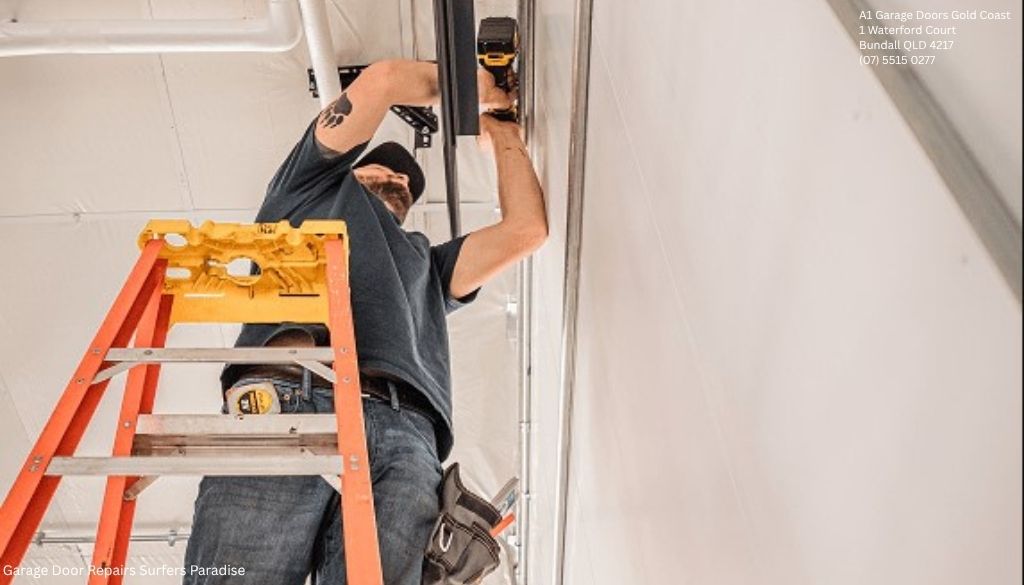
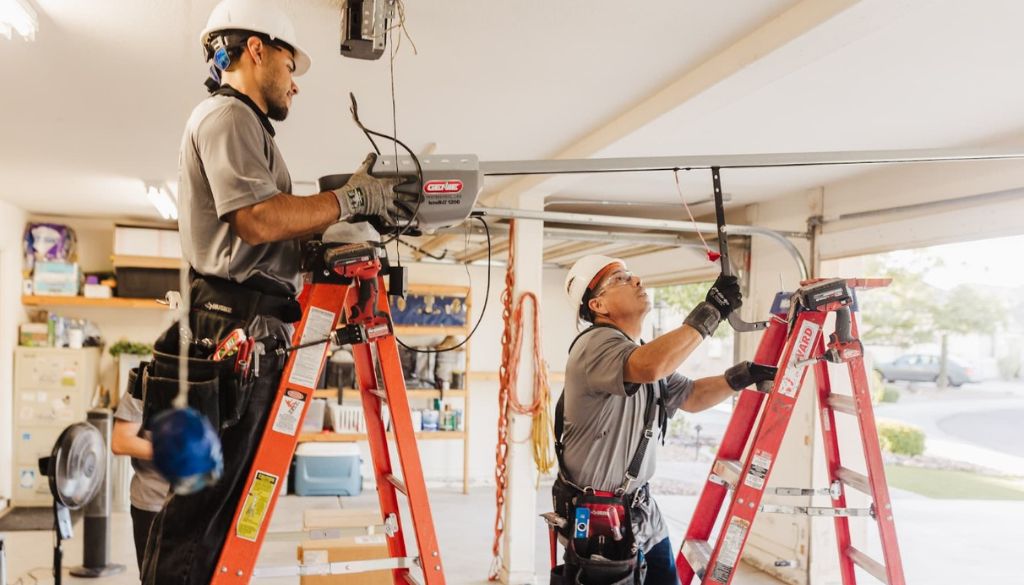
Garage door work is not high-rise work, but it still requires repeated tasks at height. Installing or adjusting an opener often places the installer near the ceiling. Working on tracks, sensors, and hardware can require a ladder or elevated posture. Even short climbs become risky when the worker is holding tools, turning sideways, or reaching around an obstruction.
The real issue is not just falling. It is the chain of small compromises that lead to poor work. A person stretching from the wrong ladder position may tighten a fastener at an angle. Someone balancing a tool in one hand may skip a careful inspection. A worker who has to lean past a stored shelf may move too quickly during alignment. The quality of the garage door installation suffers because the body is fighting the space.
Professional installers tend to reposition often. That is not wasted time. It is how they avoid overreaching. If a task cannot be performed with the worker facing it directly and standing securely, the setup should change. The same principle applies to garage door repair and garage door replacement. The moment the work demands twisting, leaning, or bracing against the door, the workspace is telling you something.
Ceiling height also affects communication. When one person is near the opener and another is near the wall control or door opening, they need clear verbal coordination. No one should assume the other person knows when a test is about to happen. The door should not be operated casually during installation, inspection, or adjustment. A moving door can surprise someone focused on a bracket, a sensor, or a cable path.
Tool planning should reduce motion, not create clutter
A well-planned tool setup keeps the floor clear and the task organized. The goal is commercial garage door installation Gold Coast not to bring every tool in the garage to the opening. It is to have the right tools accessible without spreading them across the path of travel.
Hand tools are part of the hazard profile in installation and repair work. That does not mean they are inherently dangerous when used correctly, but it does mean they need control. A loose tool on top of a ladder, a bit left on the floor, or a cord stretched across the work area can create problems that have nothing to do with the door itself.
The owner’s manual for the garage door opener and door hardware should guide tool selection and setup. If the manual calls for a specific adjustment process, follow it. If the manual requires a certain safety test, perform it as described. Guesswork is a poor substitute for the manufacturer’s instructions, especially when the system includes garage door springs, garage door cables, garage door rollers, tracks, sensors, and an automatic operator.
A compact tool station works better than piles. A sturdy surface away from the door path can hold commonly used hand tools, fasteners, the manual, and test items. If tools are returned there between steps, the job stays cleaner and the installer spends less time searching. This is not about neatness for its own sake. It is about keeping attention on the installation instead of on the mess.
A short pre-installation workspace check
Before the first installation step begins, take a slow look at the garage as a worksite. This kind of check prevents rushed decisions later, especially when the door or opener is partly assembled and harder to move around.
That last point is often treated as a final formality. It should not be. A garage door opener that closes but does not reverse properly is a serious hazard. Safety reversal systems should be tested monthly after installation, and if the door fails to reverse, it should be adjusted according to the owner’s manual or inspected by a professional.
Door balance and spring work deserve caution
Garage door balance is central to the way the whole system behaves. A properly balanced door is easier for the opener to move and easier to evaluate during garage door inspection. When balance is off, other symptoms often follow. The opener may seem strained. The door may move unevenly. Rollers and tracks may reveal problems that are really coming from load or alignment issues elsewhere.
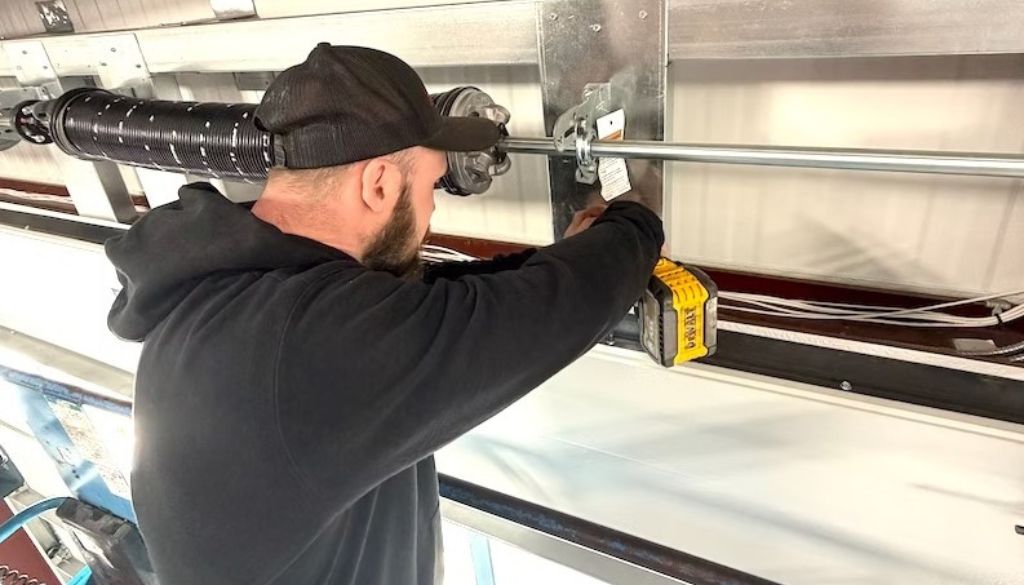
The components associated with balance include garage door springs, and many residential doors use torsion springs. Spring systems are not casual adjustment points. They store force, and the consequences of mishandling them can be severe. If a planned garage door installation involves spring setup, replacement, or adjustment, the work should be approached with the proper training and instructions. When there is any doubt, that is a strong reason to involve a professional.
The same caution applies during garage door repair. A homeowner may notice a door that feels heavy, a cable that appears out of place, or uneven movement in the tracks. Those observations are useful for garage door troubleshooting, but they do not automatically make the repair suitable for do-it-yourself work. The best decision is sometimes to stop, keep the system from being used, and call someone qualified to inspect it.
Planning for spring work also means planning the workspace around it. The installer needs clear footing, a controlled tool setup, and no distractions. Work at height and awkward posture are already hazards. Combining them with loaded components raises the stakes.
Tracks, rollers, and cables need room for accurate work
Garage door tracks are not decorative rails. They guide the door’s movement and influence whether the sections travel smoothly. Garage door rollers need clean, consistent movement through those tracks. Garage door cables must run as intended by the door design. During installation, each of these parts needs enough workspace for careful placement and inspection.
A common workspace mistake is leaving wall storage too close to the track area. It may be possible to squeeze a tool into the space, but squeezing is not the same as working accurately. Track alignment and roller travel are easier to inspect when the installer can see the full path and stand comfortably beside it. Poor visibility creates guesswork. Guesswork creates callbacks.
The same principle applies after installation. Good garage door maintenance depends on access. If storage blocks the tracks, hides cables, or makes the sensors hard to see, routine inspection becomes less likely. Over time, small issues go unnoticed. A noisy roller, a shifted object near a sensor, or a track obstruction may be ignored until the opener starts behaving unpredictably.
Garage door lubrication also benefits from access. Lubrication should be done according to the door and opener instructions, not by spraying whatever product happens to be on a shelf. The planning point is simple: if maintenance areas are impossible to reach, maintenance becomes inconsistent. A clean installation layout should support future service, not just the first day of operation.
The opener is not just a motor on the ceiling
The garage door opener is often treated as the convenient part of the system. Press a button, the door moves. During installation planning, it should be treated as a safety-related device that must be installed, adjusted, and tested carefully.
Federal safety requirements for automatic residential garage door openers exist because entrapment is a real hazard. The safety system is not optional decoration. A properly functioning opener should reverse when closing onto an obstruction. The photoelectric sensors, often called electric eyes, must be installed and working if that is the entrapment protection system used. If an equivalent system is used, it must provide the required protection as intended.
The ceiling area around the opener deserves special attention. It is usually where clutter accumulates: storage racks, light fixtures, extension cords, and seasonal items. Any obstruction that forces awkward posture or blocks access to the opener can affect installation quality. The rail, motor unit, wiring path, and controls all need to be installed according to the owner’s manual, with enough room for safe work and later inspection.
Testing should never be rushed just because the opener runs. The first smooth cycle can feel satisfying, but movement alone does not prove safety. The reversal system needs to be checked. The photoelectric sensors need to be confirmed. If the door does not reverse as it should, the owner’s manual should guide adjustment, or a professional should inspect the system.
Sensor placement, protection, and everyday reality
Garage door sensors live in a hard place. They sit low enough to do their job, which means they are also close to brooms, bikes, trash bins, children’s toys, and car tires. During installation planning, sensor location and protection deserve more thought than they usually get.
The federal standard requires entrapment protection such as a photoelectric sensor or an equivalent safety system on automatic residential garage door openers. For the homeowner, the practical meaning is direct: the safety system must be present, working, and tested. If the sensors are bumped out of alignment or blocked by stored items, the opener may not behave as intended.
A good installation leaves the sensors visible and accessible. The installer should be able to test them without crawling over boxes. The homeowner should be able to see when something is blocking them. If the garage is used heavily, as many are, the area around the sensors should stay clear as part of normal garage door maintenance.
This is where planning overlaps with household habits. A perfect installation can be compromised by poor storage. If a child’s scooter is routinely parked in front of the sensor, the safety system becomes a daily nuisance. If trash cans scrape the sensor bracket every week, alignment problems become predictable. The best installations anticipate real use, not showroom conditions.
Monthly testing should be planned from day one
A garage door installation is not finished unless the owner knows how the system will be checked going forward. Safety reversal systems should be tested monthly. That guidance is not excessive. Garage doors move often, and the components live in a space exposed to vibration, storage changes, and daily traffic.
Monthly testing also helps separate normal operation from emerging problems. If the door reverses correctly one month and fails the next, the owner has a clear signal to stop and respond. If the photoelectric sensors work reliably until stored items begin crowding the opening, the cause may be obvious. If the opener starts behaving differently after a period of smooth use, the owner can begin garage door troubleshooting with recent observations rather than vague memory.
The test process should follow the owner’s manual. If the door fails to reverse, the response should not be to keep using it and hope the issue clears. It should be adjusted according to the manual or inspected by a professional. Non-reversing garage door openers have been identified as a hazard, and fatal entrapment incidents have been documented. That history is the reason testing matters.
A professional installer should explain the safety checks in plain language. A homeowner should know where the sensors are, what normal operation looks like, and when to call for help. If the person using the door every day does not understand the system, the installation has a gap.
When installation planning becomes replacement planning
Sometimes a planned garage door installation reveals that the larger need is garage door replacement or professional garage door repair. The existing door may not move smoothly. The opener may be old enough that its safety features need careful evaluation. The tracks, rollers, cables, or springs may show issues that make a simple opener installation unwise.
The right response is not to force new equipment onto a questionable system. A garage door opener does not solve a door problem by overpowering it. It should operate a door that is properly installed, balanced, and safe. If the door does not move as it should, the opener may mask the issue briefly, but it can also create additional strain or unsafe operation.
Garage door inspection before installation is therefore more than a sales step. It is a safety and performance step. The door should be examined as a complete system, including the balance, rollers, cables, tracks, springs, opener, sensors, and reversal behavior. Some problems are visible. Others reveal themselves only during careful operation and testing.
A homeowner facing this situation may be tempted to handle one issue at a time to control cost. That is understandable. The trade-off is that piecemeal work can become expensive if the underlying system is not sound. Replacing an opener while ignoring a poorly moving door is rarely good planning. Replacing damaged door components without addressing a failing safety system is also incomplete. The better path is to identify what affects safe operation first, then decide what can be repaired, adjusted, or replaced.
A practical safety and function handoff
At the end of an installation, the most valuable handoff is not a receipt. It is a clear demonstration of safe operation. The homeowner should watch the door open and close, observe the safety reversal test, see the photoelectric sensors function, and understand what to do if the door fails to reverse.
A short handoff can cover the essentials without overwhelming anyone.
This handoff also helps prevent misuse. Remote controls should be kept out of children’s reach. Children should be taught not to play with or around the garage door. Those reminders are simple, but they are tied directly to garage door safety. A door that works perfectly can still be dangerous if people treat it casually.
The value of slowing down
The best garage door installations I have seen share a certain pace. They are not slow because the installer is uncertain. They are deliberate because every stage affects the next one. The workspace is cleared before parts are staged. The ladder moves before the reach becomes awkward. The opener is tested before the job is considered done. The owner sees the safety system work, not just the door.
That pace matters because garage doors sit at the intersection of convenience and risk. Most days, a homeowner only notices the system for a few seconds. Press the remote, drive out, press it again. But behind that routine are springs, cables, rollers, tracks, sensors, controls, and a motorized operator that must all behave correctly.
Planning for tools, height, and workspace gives those parts the environment they need. It reduces installation hazards. It supports accurate work. It makes future garage door maintenance easier. Most importantly, it keeps safety at the center of the job, where it belongs.