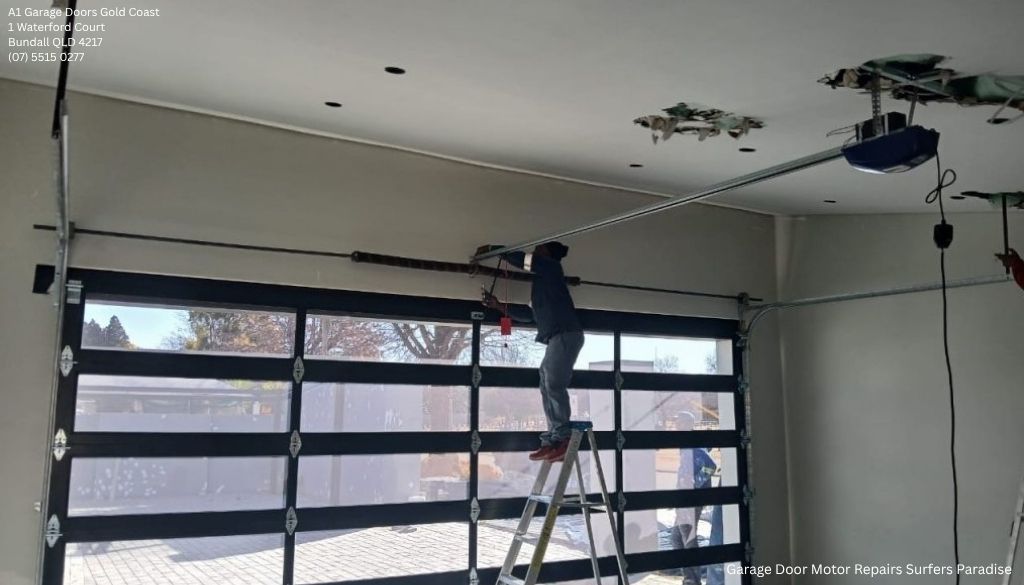
Garage Door Lubrication and Maintenance Safety Guide
A garage door looks simple from the driveway. Press a button, the door moves, the light on the garage door opener blinks on, and the day continues. The simplicity is deceptive. A residential garage door system combines a heavy moving door, an automatic operator, garage door springs, cables, rollers, tracks, sensors, brackets, hardware, and controls that may be mounted overhead or tucked into tight corners. When everything works, the system feels ordinary. When something is out of adjustment, worn, disconnected, or ignored, the risk can become very real.
The most important point in garage door maintenance is not how quiet the door sounds or how fresh the hardware looks. It is whether the system operates safely every time. Automatic residential garage door openers in the United States are subject to a mandatory federal safety standard, and they must include entrapment protection such as a photoelectric electric eye sensor or an equivalent safety system. That requirement exists because a closing door that does not reverse can injure or trap someone. Safety reversal systems should be tested monthly, and a door that fails to reverse should not be treated as a minor annoyance.
Lubrication belongs inside that larger safety picture. It is not a cure for a bad opener, broken hardware, poor garage door balance, damaged garage door cables, or misaligned garage door sensors. Used appropriately and according to the owner’s manual, lubrication can be part of routine garage door maintenance. Used carelessly, it can distract from the real problem or create a false sense that a noisy or binding door has been “fixed.” The best maintenance habits start with inspection, proceed cautiously, and stop as soon as the work moves into adjustment, repair, or replacement territory that belongs to a qualified professional.
Start with the safety system, not the noise
Many homeowners notice a garage door problem because of sound. A door begins to squeal, chatter, thump, or hesitate. It is natural to think first about garage door lubrication. In the field, though, the sound is often only the symptom. A noisy door may also have damaged garage door rollers, hardware working loose, a track issue, or an opener struggling against a door that is not moving as it should.
Before reaching for any product, watch the full door cycle from a safe position. Stand clear of the opening, keep hands away from moving sections, and do not place yourself under the door. Observe whether the door travels smoothly, whether it appears to rack or twist, whether the garage door tracks look aligned to the path of travel, and whether the garage door opener strains or stops unexpectedly. If the door reverses for no obvious reason, refuses to close, or closes only when constant pressure is applied to the wall control, the issue may involve the safety system rather than lubrication.
The photoelectric sensors deserve special attention. They are a common part of modern entrapment protection systems, and they are there for a reason. A properly functioning opener should reverse when closing onto an obstruction. The sensors should be present, properly positioned according to the system design, and working as intended. If a sensor has been knocked out of position by a broom, bicycle tire, storage bin, or child’s toy, the opener may not allow normal operation. That is not a defect to bypass. It is a warning that the safety system is doing its job or needs proper attention.
Monthly testing is not busywork. Safety agencies have repeatedly warned that non-reversing garage door openers are hazardous. Fatal entrapment incidents have occurred with automatic garage doors. That fact should change how routine maintenance is approached. A door that fails a reversal test is not a door to “keep an eye on.” It should be adjusted according to the owner’s manual if the manual gives appropriate instructions, or inspected by a professional.
What garage door lubrication can and cannot do
Lubrication can reduce friction at points designed to move against or around other components. It can help certain hardware operate more smoothly when the door and opener are otherwise functioning correctly. It can also make routine garage door inspection easier, because a quieter system often reveals irregular movement that constant squeaking might have masked.
But lubrication cannot correct unsafe force settings, restore a failed entrapment system, repair damaged garage door springs, fix frayed garage door cables, straighten bent garage door tracks, or make an unbalanced door safe. It also cannot turn a poor garage door installation into a sound one. When a door is binding, sagging, reversing unexpectedly, or dropping too quickly, the answer is not more lubricant. The answer is garage door troubleshooting with safety at the center.
A useful rule is to treat lubrication as maintenance, not repair. Maintenance supports equipment that already operates properly. Garage door repair addresses faults. The difference matters because a homeowner can easily spend time quieting a dangerous door while the dangerous condition remains. For example, if a door makes a sharp popping sound near the top of travel, the sound may tempt someone to lubricate anything that moves. The safer approach is to stop, inspect visually from a safe distance, and consider whether a professional should evaluate the system before further operation.
The owner’s manual should guide any lubrication work. Different garage door opener models and door hardware designs can have different requirements. If the manual says not to lubricate a component, do not lubricate it. If the manual specifies maintenance intervals or approved materials, follow those directions. Where the manual is missing, the conservative choice is to contact the manufacturer, installer, or a qualified garage door service company instead of guessing.
A monthly safety habit that pays for itself
A monthly garage door safety check does not need to be elaborate, but it does need to be consistent. Pick a routine you will actually keep, such as the first weekend of the month or the day you replace an HVAC filter. The goal is not to perform a full garage door repair visit on yourself. The goal is to confirm that the parts of the system a homeowner can safely observe and test are behaving normally.
Use this short monthly check as a safety screen before any lubrication or minor maintenance:
That last point belongs in a maintenance guide because safe operation is not only mechanical. Children are naturally drawn to moving doors and remote controls. The garage can become a play area, a storage area, a workshop, and an entryway all at once. Teaching garage door safety is part of owning the equipment. Remote controls should be kept out of children’s reach, and wall controls should not be treated as entertainment.
If the monthly check reveals a failure, do not continue with lubrication as if the check passed. A failed reversal test, a missing or defeated sensor, or a door that moves erratically changes the job from maintenance to safety correction. Consult the owner’s manual or call a professional. It may feel inconvenient, especially when the car is inside and the morning schedule is tight, but the cost of ignoring a non-reversing opener can be far higher than a service visit.
Working around a garage door requires respect for the setting
Garage door work often happens in awkward places. Opener heads are mounted near the ceiling. Tracks run overhead. Brackets, wiring, and controls may sit in cramped corners. Shelves, ladders, bicycles, tools, vehicles, and storage boxes create trip hazards. Professional installation and repair work recognizes these physical hazards: working at ceiling height, using hand tools, reaching into tight spaces, and holding awkward postures all increase risk.
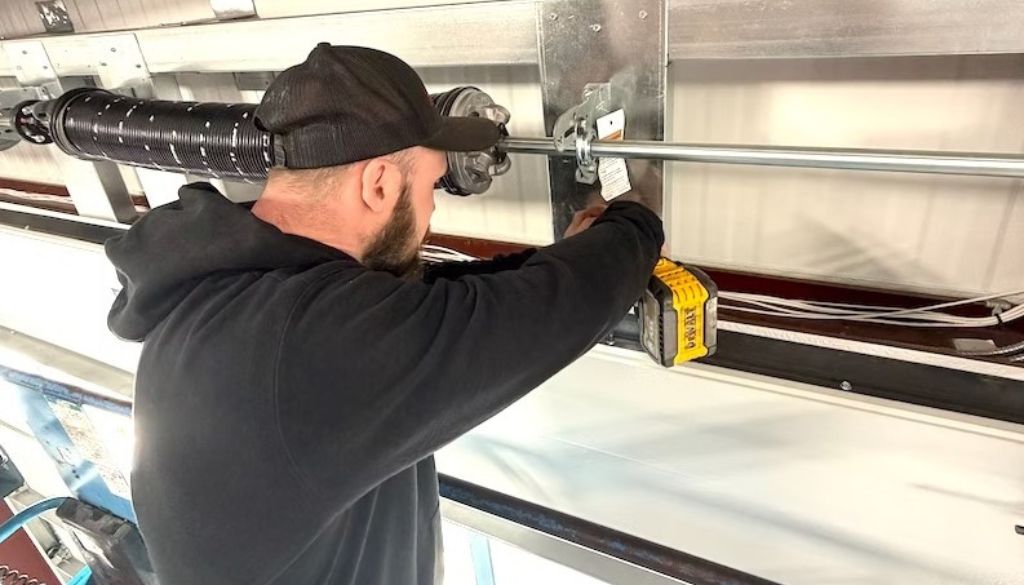
Homeowners should take that seriously. A quick lubrication task can become unsafe if it requires leaning too far from a ladder, twisting beneath a raised door, or reaching around moving parts. If you cannot access an area comfortably with stable footing and good light, it is not a good do-it-yourself task. Move the car out if possible. Clear the floor. Make sure no one else operates the door while you inspect it. Do not let a child press the remote “just once” while you are standing near the tracks or opener.
The door should not be moving while you are touching or inspecting components. Automatic operation can surprise people, especially in homes where several remotes, keypad entries, vehicles, or smart controls may activate the same opener. Treat the system as capable of movement unless it has been properly secured according to the owner’s manual. If you are not sure how to do that safely, stop.
A professional garage door technician is not simply someone with different tools. The value is judgment. Good technicians know when a sound is routine, when a spring system is suspect, when a cable condition makes the door unsafe, and when an opener issue should be handled through adjustment, repair, or garage door replacement. They also work with the risks of overhead equipment every day. For many households, the safest maintenance decision is knowing where the homeowner’s role ends.
Springs, cables, balance, and the limits of homeowner maintenance
Garage door springs carry a significant part of the system’s work. Torsion springs, in particular, are associated with stored energy and should be treated with caution. The same respect applies to garage door cables, brackets, and other parts connected to the door’s lifting and counterbalance system. Even when the visible issue seems minor, these components can be involved in dangerous movement if handled incorrectly.
Garage door balance is one of the most important performance clues. A balanced door should not make the opener fight the full weight of the door. If the door is out of balance, the opener may strain, the door may travel unevenly, and other components may wear faster. The key point for a homeowner is not to adjust springs or cables to “improve” balance. It is to recognize balance concerns as a reason for professional inspection.
One common mistake is assuming the garage door opener is strong enough to overcome any door problem. The opener is not a substitute for a properly functioning door system. If the door is heavy, sticky, crooked in the opening, or unreliable, installing a stronger opener does not address the underlying safety condition. In some cases, garage door opener replacement may be appropriate, but it should not be used to mask a mechanical defect.
The same logic applies to garage door installation. A newly installed door or opener should be tested for safe operation, including reversal and sensor function. Fresh equipment does not excuse skipping safety checks. Hardware can be installed incorrectly, sensors can be bumped, and settings can require adjustment according to the manual. A good installation leaves the homeowner with a system that operates predictably and a clear understanding of what monthly checks are expected.
Sensor problems are safety problems
Garage door sensors are easy to underestimate because they are small, low to the ground, and often surrounded by clutter. Yet they are part of the entrapment protection system required for automatic residential garage door openers or used alongside equivalent protection. garage door installation and setup Gold Coast When they are blocked, misaligned, damaged, or bypassed, the system may no longer provide the protection expected of it.
A sensor problem sometimes announces itself through inconvenience. The door may start down and reverse. The opener light may flash. The door may refuse to close unless the wall button is held. These behaviors can be frustrating, especially in rain or cold weather, but frustration is not a reason to defeat the safety system. The safer interpretation is that the opener is preventing operation because it does not have confirmation that the doorway is clear or the safety system is functioning properly.
Basic homeowner action should stay simple. Clear obvious obstructions from the sensor path. Look for visible damage. Make sure stored items are not pressing against brackets or wires. If the system still does not work normally, use the owner’s manual for troubleshooting or call a professional. Avoid improvising around the sensors. A garage door that closes conveniently but no longer reverses properly is not a successful repair.
Monthly testing also catches gradual problems. A sensor bracket may loosen over time. A box may be pushed closer to the opening each week until it blocks the beam. Dust, movement, or accidental contact can change how the system behaves. Regular garage door inspection helps identify these changes before they become emergencies.
Lubrication should follow inspection, not replace it
A practical maintenance sequence begins with observation. Watch the door, check the safety features, and listen. Only after the system passes basic safety checks should lubrication be considered. This order prevents a common trap: quieting a door that should have been taken out of service.
Because owner’s manuals vary, the safest lubrication guidance is to follow the specific manual for the door and opener. If the manual identifies lubrication points, products, or intervals, use that information. If it warns against lubricating certain parts, respect the warning. If the instructions are unclear or unavailable, professional advice is better than trial and error.
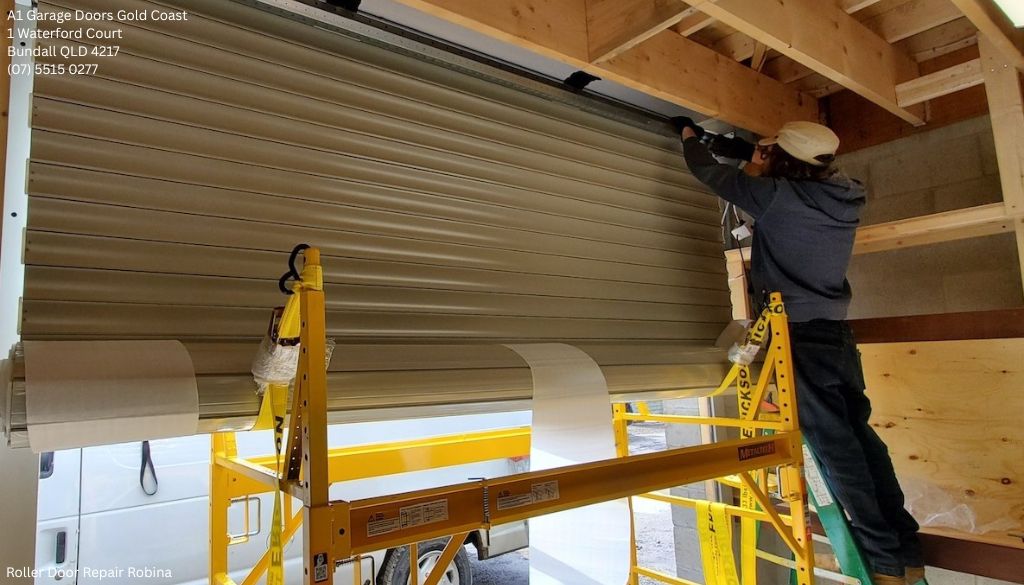
Think of lubrication as a controlled task. Use enough to serve the purpose described in the manual, not so much that residue spreads to surfaces where it does not belong. Wipe excess material where appropriate. Keep products away from children. Do not spray blindly into the opener housing, sensor areas, electrical components, or places you cannot see. Do not lubricate while the door is moving. Do not stand on an unstable object to reach overhead hardware.
It is also worth noting what lubrication should not change. After maintenance, the door should still reverse properly when tested. The sensors should still work. The opener should not require increased force to move the door. If lubrication seems to improve sound but the door still hesitates, binds, or reverses unpredictably, the problem remains unresolved.
When troubleshooting should stop
Garage door troubleshooting has a safe zone and a danger zone. The safe zone includes observation, checking for obvious obstructions, confirming sensors are not blocked, reading the owner’s manual, and arranging professional service when needed. The danger zone begins when a homeowner starts adjusting springs, altering cable systems, bypassing sensors, forcing a stuck door, or changing opener settings without understanding the consequences.
A door that fails to reverse is one of the clearest stop signs. Safety guidance says a non-reversing door should be adjusted according to the owner’s manual or inspected by a professional. If the manual provides a test and adjustment procedure, follow it exactly. If the procedure is beyond your comfort level, do not improvise. The risk is not theoretical. Non-reversing garage door openers have been repeatedly identified as a hazard, and automatic garage door entrapment incidents have had fatal outcomes.
Another stop sign is visible damage to load-related parts. If garage door cables appear frayed or displaced, if springs look damaged, if the door seems crooked, or if the tracks appear bent, routine maintenance is no longer the right category. The system should be inspected by a qualified professional before continued use. Even if the opener still moves the door, the movement may be unsafe.
A third stop sign is repeated failure. If the same issue returns after basic manual-approved troubleshooting, the system needs a deeper evaluation. Intermittent reversal, recurring sensor faults, repeated noise, or a door that gradually gets harder to operate may point to an underlying issue. A service call at that stage is not an admission of defeat. It is responsible ownership.
Repair, replacement, and the decision to stop investing in old equipment
Garage door replacement is not always necessary when a problem appears. Many issues can be addressed through adjustment, repair, or part replacement by a qualified professional. But there are times when replacement becomes the safer or more sensible choice. If the door system has repeated failures, damaged components, outdated equipment, or safety features that cannot be made reliable, continuing to patch the system may not be wise.
The opener deserves particular attention. Automatic residential garage door openers must include entrapment protection such as photoelectric sensors or an equivalent safety system. If an older opener does not provide proper protection, or if it fails to reverse and cannot be corrected through manual-approved adjustment or professional service, replacement may be the appropriate path. Convenience features should never outrank reversal performance and sensor function.
A professional evaluation can separate opener problems from door problems. Sometimes the opener is blamed when the door hardware is the real issue. Other times the door is mechanically acceptable, but the opener or safety system needs attention. That distinction affects cost, reliability, and safety. Replacing the wrong component wastes money and may leave the hazard untouched.
For homeowners planning garage door installation or opener replacement, safety testing should be part of the handoff. Do not accept “it opens and closes” as the only standard. Confirm that the safety reversal system works. Confirm that the sensors or equivalent protection are present and functioning. Ask how to perform the monthly test described in the owner’s manual. A properly installed system should leave you confident in everyday operation, not guessing what the blinking light means.
A safe maintenance rhythm for long-term ownership
The best garage door maintenance programs are boring. They do not involve dramatic repairs every few months. They rely on regular observation, clean access around the door, careful use of the owner’s manual, monthly testing of the safety reversal system, and prompt attention when something changes. Lubrication fits into that rhythm only when it supports a system that has already passed basic safety checks.
For most households, a practical yearly pattern looks like this:
This rhythm also helps prevent panic decisions. When a door has been ignored for years, every noise feels urgent and every service recommendation feels surprising. When it has been checked monthly, changes stand out sooner. A sensor issue gets addressed before someone bypasses it. A reversal failure gets professional attention before the opener is trusted again. A damaged roller, track concern, or balance problem is noticed before the door becomes unreliable.
There is a practical benefit as well. A maintained door tends to disrupt life less often. The garage is often the main entry to the home, even when the front door is the formal entrance. A failed opener on a work morning, a stuck door during a storm, or a door that will not close at night creates stress. Routine garage door inspection and manual-approved maintenance reduce the odds of those moments.
The standard that matters: safe every cycle
A garage door does not need to be silent, luxurious, or new to be acceptable. It does need to be safe. That means the automatic opener reverses properly when it should. The photoelectric sensors or equivalent entrapment protection are present and working. Children cannot access remotes as toys. The door travels predictably. Visible damage is not ignored. Lubrication is used as maintenance, not as a cover for deeper problems.
The difference between responsible maintenance and risky tinkering often comes down to restraint. It is knowing not to adjust torsion springs. It is refusing to bypass garage door sensors even when the door is being stubborn. It is stopping after a failed reversal test rather than pressing the button again and hoping for a different result. It is calling for garage door repair when the system moves from normal upkeep into safety-critical work.
A garage door is one of the largest moving systems in a home. Treat it that way. Give it a monthly safety check, keep the opener and sensors in proper working order, follow the owner’s manual for garage door lubrication, and bring in a professional when the signs point beyond routine maintenance. A quieter door is nice. A safe door is non-negotiable.