Garage Door Opener Guide to Entrapment Protection
A garage door opener is easy to take for granted. Press the wall button, the door moves. Press the remote, the door closes behind the car. Most days, that is all anyone asks of it.
The problem is that a residential garage door is a large moving object connected to a powered operator. When something goes wrong with the safety reversal system, the risk is not theoretical. Federal safety rules for automatic residential garage door openers exist because entrapment incidents have caused severe injuries and deaths. That is the plain reason modern openers must include entrapment protection, such as a photoelectric “electric eye” sensor or an equivalent safety system.
For homeowners, property managers, and anyone involved in garage door repair or garage door maintenance, entrapment protection deserves more attention than it usually gets. It is not an accessory. It is one of the central safety functions of the entire system.
What entrapment protection actually means
Entrapment protection is the part of the garage door opener system intended to help prevent a closing door from trapping a person, pet, or object. In ordinary language, it is what tells the opener, “Stop closing and reverse.” A properly functioning opener should reverse when the door closes onto an obstruction. On residential automatic openers, federal safety requirements call for a sensor or an equivalent entrapment protection system.
The most familiar version is the pair of garage door sensors installed near the bottom of the door opening. These are often called photoelectric sensors, safety eyes, or electric eyes. One side sends a beam across the opening, and the other side receives it. If something interrupts that beam while the door is closing, the opener should stop the downward travel and reverse.
That sounds simple, and in normal operation it is. But the larger safety picture involves more than two small devices near the floor. The opener, the door, the tracks, the rollers, the cables, the springs, the door balance, and the installation itself all affect how safely the system behaves. A sensor can only do its job if it is present, connected, aligned, and functioning. A reversing opener can only protect properly if the door and opener are set up and maintained correctly.
This is why a garage door inspection should not treat safety sensors as an afterthought. If a technician spends twenty minutes discussing quiet operation but never tests whether the door reverses, the most important part of the visit has been missed.
Why older or non-reversing openers deserve special concern
Non-reversing garage door openers are a known hazard. If an opener continues pushing the door down when it meets an obstruction, it is not behaving safely. That may sound obvious, but many homeowners do not test this function because they assume the system is fine as long as the door opens and closes.
I have seen homes where the opener light worked, the remote worked, and the door traveled smoothly enough that the owner thought everything was in good condition. Then, during a basic safety check, the door failed to reverse properly. In some cases, the sensors were misaligned. In others, the sensor wiring had been disturbed. Sometimes the opener was old enough that replacement was the more prudent conversation.
A garage door opener should never be judged only by convenience. The better question is whether it closes safely under imperfect conditions. If a cardboard box, bicycle tire, rake handle, child’s toy, or person is in the opening, the system needs to respond the right way.
Federal requirements for residential automatic openers are one reason modern garage door installation practices focus heavily on entrapment protection. A current installation should include a working sensor or equivalent safety system. If those parts are missing, bypassed, ignored, or treated as optional, the installation is not being approached with the seriousness it deserves.
The monthly reversal test most homeowners skip
Safety reversal systems should be tested monthly. That guidance is simple, but in real households it often gets lost behind oil changes, smoke alarm batteries, air filters, and the long list of things people mean to do “next weekend.”
The monthly test matters because garage doors live in a rough environment. They vibrate. They collect dust. Storage bins get shoved near the tracks. Yard tools lean against the wall. Children play in the garage. A sensor that was aligned six months ago may be knocked slightly out of position. A door that reversed properly last season may not behave the same way after a change in door balance or opener adjustment.
A careful monthly check does not require taking the system apart. It does require paying attention and being willing to stop using the automatic opener if the safety system fails. If the door fails to reverse when it should, the next step is not to keep pressing the button and hope for the best. The opener should be adjusted according to the owner’s manual or inspected by a professional.
A practical homeowner safety check can be kept short:
That is one of the few garage door maintenance habits that pays off far beyond the time it takes. It is not about making the opener last longer, although a well-maintained system often does. It is about confirming that the safety feature you are relying on still works.
Sensors are safety devices, not nuisance parts
Many service calls begin with the same complaint: “The garage door will not close unless I hold the wall button.” Often, the cause is related to garage door sensors. A sensor may be out of alignment, dirty, blocked by storage, or otherwise not communicating properly with the opener. The homeowner’s frustration is understandable. Nobody wants to fight with the door at 7:15 in the morning while trying to leave for work.
Still, the wrong response is to defeat the sensor or treat it as a nuisance part. Those small devices are there because a closing garage door can create an entrapment hazard. When a sensor prevents the door from closing, it may be doing exactly what it was designed to do: refusing to allow the door to close when the safety system cannot confirm a clear opening.
During garage door troubleshooting, the key is to distinguish between a false obstruction and a true safety problem. A box in the beam path is an easy fix. A sensor knocked out of alignment may require careful repositioning. Damaged wiring, loose mounting, or inconsistent operation can require professional garage door repair. What should not happen is permanent bypassing or casual improvisation that removes the protection.
It is also worth noting that sensors are not the only reason a door may behave poorly. Garage door tracks can be misaligned or obstructed. Garage door rollers can wear or bind. Garage door cables may show problems. Garage door springs, including torsion springs, can affect the balance and movement of the door. The opener is only one part of the system, and entrapment protection works best when the whole door assembly is in serviceable condition.
The opener cannot make an unsafe door safe by itself
A common misunderstanding is that a modern garage door opener will compensate for a neglected door. It will not. The opener is designed to move the door, but it is not a magic correction device for poor balance, damaged tracks, failing hardware, or years of deferred maintenance.
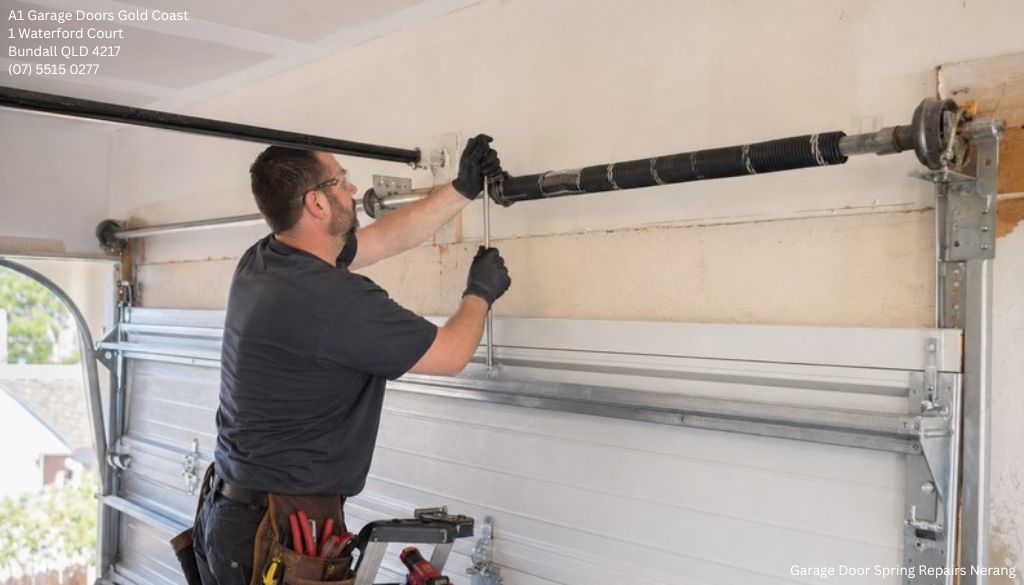
Garage door balance matters because the opener should not be fighting the full dead weight of the door. The springs do much of the lifting work. When the balance is off, the opener may strain, the door may move unevenly, and safety performance can become less predictable. Torsion springs are under significant tension, and adjustment is not a casual do-it-yourself task. The same caution applies to garage door cables and related lifting hardware. When those parts are involved, professional inspection is usually the safer path.
Garage door lubrication also plays a role in smooth operation, although it should never be used as a substitute for repair. Lubrication can help appropriate moving parts operate with less friction, but it will not fix a bent track, a broken roller, a sensor problem, or an opener that fails to reverse. In the field, it is common to hear a noisy door and find more than one issue. A little maintenance may quiet one symptom while a more serious safety problem remains.
That is why a proper garage door inspection looks at movement, sound, alignment, hardware condition, and safety reversal. A door that sounds rough, jerks in the tracks, or strains the opener deserves attention even if it still completes a full open-close cycle.
Children and garage door safety
Children should be taught garage door safety, and remote controls should be kept out of their reach. That guidance can sound basic until you watch how children behave around a moving door. They run under it, race it, push the wall button repeatedly, or treat the remote like any other household gadget.
The safest household rule is straightforward: the garage door is not a toy. Children should not play with the wall control, the remote, or the sensors. They should not stand or walk under a moving door. They should not try to beat the door as it closes. Adults should model the same behavior, because children notice when parents duck under a closing door with grocery bags or press the remote without looking.
In homes with young children, the remote control deserves the same kind of respect given to car keys or power tools. It should not be left where a child can experiment with it. Wall controls should be used deliberately, with eyes on the door opening whenever practical. If the garage connects directly to the house, it is especially easy to press the button and walk away. That habit may be convenient, but safety improves when someone confirms the path is clear.
Pets create a similar concern. A dog can move into the opening after the button is pressed. A cat can linger near the threshold. Safety sensors help, but they are not a reason to stop watching the door.
Repair work has its own hazards
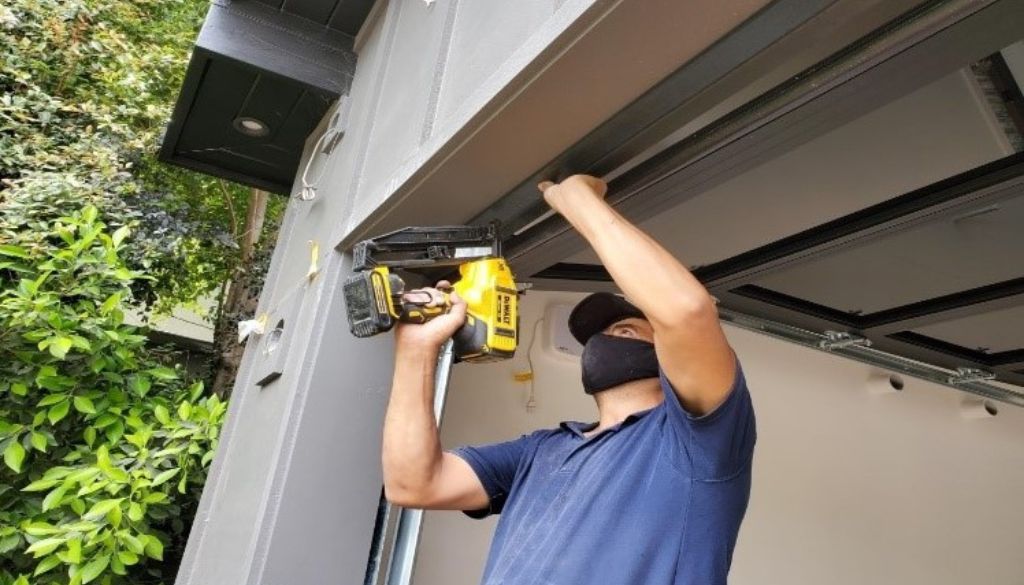
Garage door opener installation and repair are not just electrical or mechanical tasks. They often happen at ceiling height, in cramped garages, around stored items, vehicles, ladders, tools, and awkward body positions. Installation and repair work can involve physical hazards from working overhead, using hand tools, and reaching into tight areas.
This matters because entrapment protection problems sometimes tempt homeowners into quick fixes. A sensor bracket gets kicked loose, so someone grabs a stool and tries to bend it back. An opener rail shakes, so someone climbs a ladder while the system is still powered. A door reverses unexpectedly, so someone starts adjusting parts without understanding how the door, opener, and safety system interact.
There is a difference between basic observation and repair. Looking to see whether a box blocks the sensor beam is sensible. Cleaning around the sensor area may be reasonable. But working on opener wiring, moving installed components, adjusting the operator, or handling spring-related hardware can cross into professional territory quickly.
Professional garage door repair is not only about having the right parts. It is about staging the work safely, controlling the door, understanding the forces involved, and knowing when a symptom points to a larger problem. A technician who has spent time around garage doors learns to respect stored spring tension, overhead hardware, and the way a heavy door can move unexpectedly when something releases or shifts.
When adjustment is enough and when replacement is the better conversation
If a garage door opener fails a safety reversal test, the remedy depends on the cause. Sometimes the owner’s manual provides adjustment instructions that address the problem. Sometimes a sensor alignment issue or obstruction is the culprit. In other cases, especially with older equipment or unreliable safety performance, garage door replacement or opener replacement becomes the more responsible recommendation.
The hard part is judgment. Homeowners often ask, “Can it be repaired?” The honest answer may be yes, but that is not always the same as saying repair is the best choice. If the opener lacks required entrapment protection, behaves inconsistently, or has a history of failing to reverse, the cost comparison should include safety, not just parts and labor.
A similar judgment applies to the door system. Replacing an opener on a door with serious mechanical problems is poor practice. The new opener may be modern, but the door may still bind, strain, or move unpredictably. A responsible garage door installation looks at the full system before mounting equipment and calling the job done.
Here is a concise way to think about the repair-or-replace discussion:
That last point is not meant to alarm anyone. It is simply practical. The more often people pass through the garage, and the more unpredictable those people or pets are, the more important reliable entrapment protection becomes.
What a professional safety inspection should cover
A good safety-focused visit is more than a quick look at the opener head. The technician should observe the full travel of the door, check the presence and operation of the photoelectric sensors or equivalent system, evaluate whether the door reverses when appropriate, and look for mechanical issues that may interfere with safe operation.
Garage door rollers and tracks deserve attention because they guide the door. If the rollers bind or the tracks are damaged, the opener may work harder than it should. Garage door cables and springs should be visually assessed for condition and proper operation, with the understanding that spring systems are not to be handled casually. Torsion springs, in particular, store substantial force and require appropriate training and tools.
The opener’s mounting and travel behavior should also be observed. A shaky, strained, or noisy system may not automatically be unsafe, but it is telling you something. Sometimes the noise is simple wear. Sometimes it points toward a door that is not moving freely. Sometimes poor garage door lubrication contributes to the sound, but lubrication alone should never be used to dismiss a safety concern.
The technician should also ask how the door is used. A single-car garage used twice a week has a different wear pattern than a family garage that opens and closes a dozen times a day. A rental property may require clearer instructions for occupants. A household with children may need a more direct conversation about remote storage and safe habits.
The owner’s role after the technician leaves
Even the best installation can be undermined by neglect. Boxes get stacked in front of sensors. Yard tools fall against brackets. A child bumps a sensor while retrieving a ball. Dust and garage clutter make small problems harder to notice. A car mirror clips the side of the opening. Nobody calls for service because the door still works “most of the time.”
That phrase, “most of the time,” is not good enough for a safety system. A garage door opener that reverses only sometimes has a problem. A sensor that works only when you jiggle it has a problem. A door that closes if you hold the wall button but refuses to close normally may be warning you about the safety circuit.
Monthly testing gives the owner a routine way to catch these changes. It also builds familiarity. When you know how your door usually sounds and moves, you notice when it starts behaving differently. That is the heart of effective garage door maintenance: not constant repair, but attentive ownership.
Documentation helps too. Keep the owner’s manual accessible, whether in a drawer or saved digitally. If an adjustment is recommended by the manual and within the owner’s ability, follow it carefully. If the manual’s instructions are unclear, the door behaves unpredictably, or any repair involves components under tension or overhead work, bring in a professional.
Common warning signs that should not be ignored
Entrapment protection problems often show garage door replacement services up in ordinary ways. The door starts down and reverses immediately. The opener light flashes. The door closes only when the wall button is held. The sensors appear loose or misaligned. Someone has taped, tied, or repositioned parts to “make it work.” The door moves unevenly or sounds strained.
None of these signs should be treated as just an inconvenience. They are invitations to inspect the system. Sometimes the fix is simple. Sometimes it reveals a deeper issue. What matters is not forcing the door to operate while bypassing the warning.
The same applies after any garage door repair, garage door installation, or garage door replacement. The safety system should be tested as part of the finished work. A new opener that has not been checked for proper reversal is not truly finished. A repaired door that moves smoothly but has unverified entrapment protection still leaves an important question unanswered.
A safer way to live with an automatic garage door
A reliable garage door opener should feel uneventful. It should open, close, stop, and reverse according to its design. The best systems are not dramatic. They are properly installed, reasonably maintained, and tested often enough that problems do not linger unnoticed.
Entrapment protection is the dividing line between convenience and responsible operation. Federal safety requirements exist because the risk is real, and the monthly reversal test exists because safety devices can fall out of adjustment or fail. Children should be taught to respect the door. Remotes should be kept out of their reach. Sensors should remain installed and working. Non-reversing openers should be treated as hazards, not quirks.
For homeowners, the practical standard is simple: if the door does not reverse properly, stop and address it. Use the owner’s manual where appropriate. Call a qualified professional when the problem involves adjustment beyond your comfort level, overhead work, electrical components, springs, cables, tracks, or unclear symptoms.
A garage door is one of the largest moving systems in a typical home. The opener makes it convenient. Entrapment protection helps make that convenience acceptable. Treat it as a core safety feature, test it regularly, and do not wait for a close call to take it seriously.