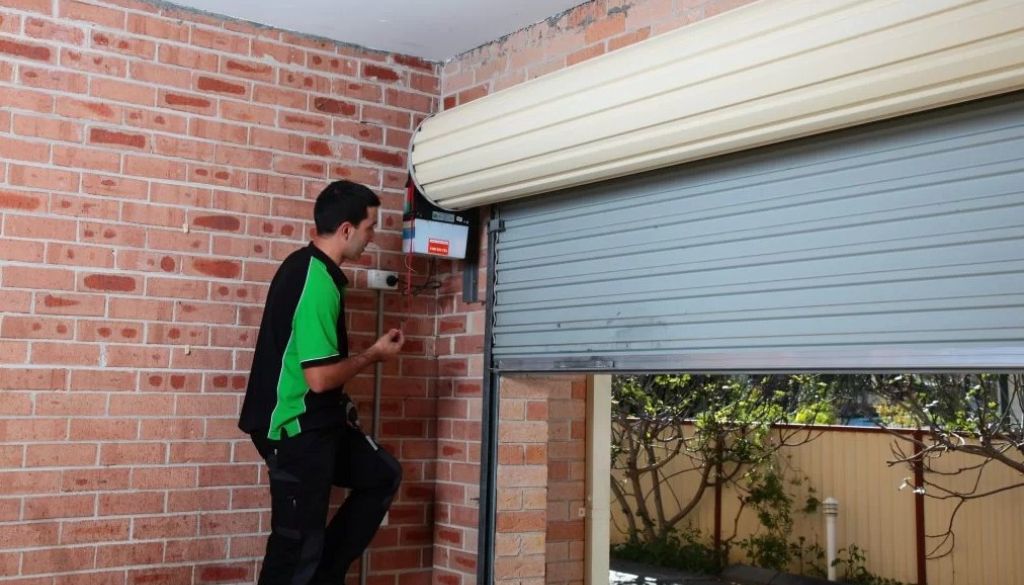
Garage Door Replacement Guide: Panels, Tracks, Rollers, Hinges, Springs, Cables, and Openers
A garage door is not one part. It is a balanced mechanical system made of panels, tracks, rollers, hinges, springs, cables, brackets, an opener, and safety devices that all have to work together. When one part wears out or moves out of position, the symptoms often show up somewhere else. A noisy door may not have a “noise problem.” It may have dry rollers, worn hinges, dirty tracks, or a door that is no longer moving smoothly. A door that strains the opener may not need a new opener. It may need a garage door balance check or spring service.
Homeowners commonly search for garage door help under several different subjects: spring replacement, opener troubleshooting, sensor problems, noisy operation, roller and hinge maintenance, track alignment, cable issues, panel damage, door balance, and full garage door replacement. This guide brings those subjects together from a replacement standpoint, so you can understand which parts are practical to maintain, which parts deserve professional attention, and when replacing the whole door system makes more sense than repairing one component at a time.
Start with the system, not the symptom
A sectional garage door looks simple from the driveway, but it carries a lot of stored force and moving weight. The panels create the door face. Hinges let the sections bend as the door travels. Rollers ride inside the garage door tracks. Cables connect the lower part of the door to the spring system. Springs balance the door’s weight so it can move with reasonable effort. The opener moves the door, but it is not meant to carry the full weight by itself.
That last point matters. A garage door opener is often blamed for slow movement, jerking, humming, or stopping halfway. Sometimes the opener is the problem. Just as often, the door has become harder to move because of neglected garage door maintenance, dry hardware, damaged rollers, binding tracks, or spring trouble. Replacing the opener without correcting the door can leave the same problem in place, only with a newer motor struggling against it.
Before deciding what to replace, observe the door carefully. Listen for squeaks, grinding, rattling, or scraping. Watch whether the door moves evenly on both sides. Notice whether it hesitates in the same spot every time. Check whether the opener lights flash or whether the garage door sensors seem to interrupt closing. These clues help separate an electrical or safety-device issue from a mechanical one.
Panels: when visible damage becomes a replacement question
Garage door panels take the most visible abuse. They get bumped by cars, hit by balls, affected by weather, and stressed when the door operates out of balance. A small dent in one panel may be mostly cosmetic, while a bent or cracked section can affect how the door travels through the tracks.
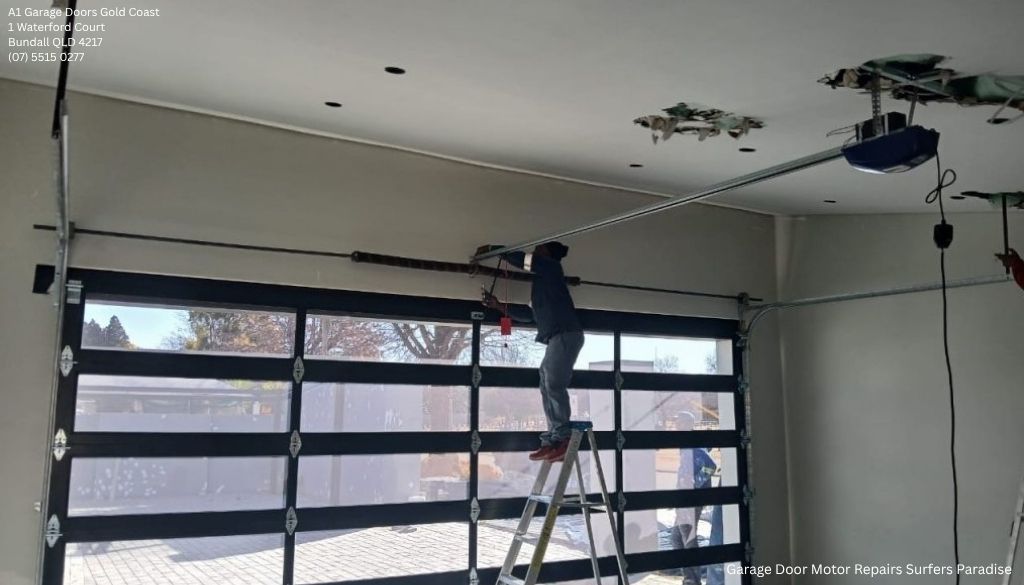
On a sectional door, each panel depends on the panels above and below it. Hinges fasten to the sections and transfer movement as the door bends along the track radius. If a panel is bowed, split, or distorted around hinge locations, the rollers may no longer sit goldcoastgaragedoorrepair.com.au squarely in the tracks. That can create rubbing, popping, and uneven travel. Over time, a damaged panel can contribute to strain on hinges, rollers, and the opener.
Panel replacement can be practical when the rest of the door is in good condition and a matching section is available. The decision becomes less attractive when several panels are damaged, the hardware is worn, or the door has recurring balance and movement issues. At that point, garage door replacement may provide a better long-term result than installing a new panel into an aging system.
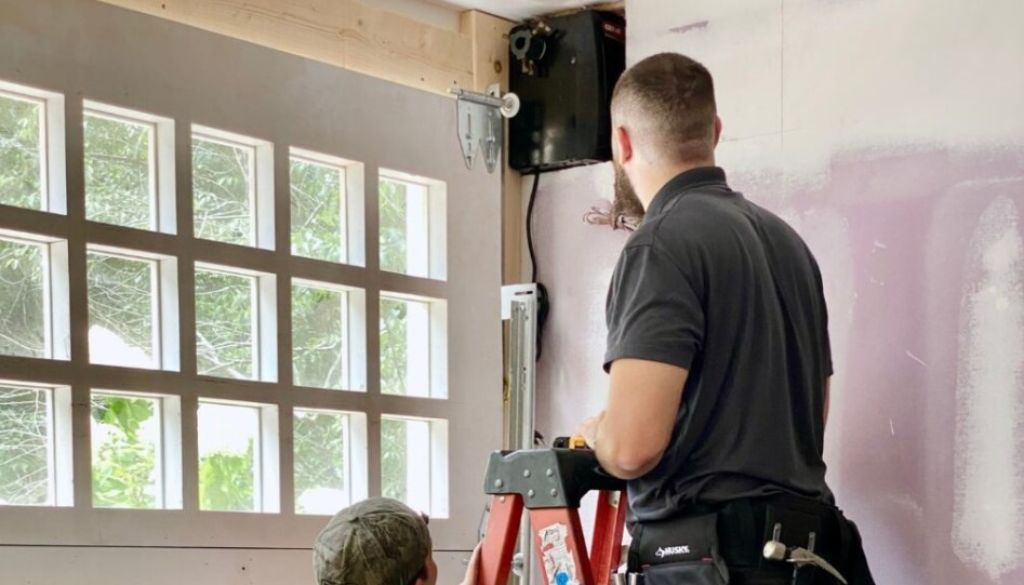
A common homeowner mistake is treating panel damage as purely cosmetic. If the door opens and closes, it can feel harmless to leave a bent section alone. The better question is whether the damage changes the path of movement. If the panel causes the roller to sit at an angle, rub against the track, or pull on the hinge, the issue is mechanical. That kind of damage deserves prompt inspection.
Tracks: the path the door must follow
Garage door tracks guide the rollers and control the door’s path from closed to open. They do not lift the door. They direct it. When tracks are clean, properly positioned, and firmly supported, the door can move smoothly. When they are dirty, loose, bent, or misaligned, the door may bind, scrape, or shake.
Tracks are sometimes overlooked during garage door troubleshooting because they look passive. In practice, they reveal a lot. Scrape marks, shiny wear spots, loose fasteners, or gaps around brackets can indicate that the door is not traveling evenly. Dirt and debris inside the track can also contribute to rough movement. Tracks should be kept clean, but they should not be treated as a place to pack grease. Lubrication belongs on appropriate moving parts such as hinges, rollers, and springs, using a suitable garage door lubricant.
A track problem can look like a roller problem, a spring problem, or an opener problem. For example, if one side binds, the opener may reverse or stop because the force needed to move the door changes suddenly. If the door rubs in the track curve, the opener may sound strained even though the motor itself is not defective.
Track replacement or adjustment is usually a job for a qualified garage door repair technician, especially if the door is under tension or not sitting properly. A small track bend near the bottom might seem easy to straighten, but the track position affects the entire travel path. An incorrect adjustment can make the door worse, not better.
Rollers: small parts with a large effect on movement
Garage door rollers carry the door through the tracks. When rollers are clean, intact, and suited to the door, movement feels smoother and quieter. When rollers wear, seize, wobble, or collect grime, the door may rattle, grind, or jerk. Many noise complaints begin with rollers and hinges rather than the opener.
Rollers are also one of the parts homeowners can observe without taking the door apart. Look for rollers that appear crooked, chipped, cracked, or reluctant to turn. Listen near each side of the door while it moves. A repeated clicking or grinding from one roller location can point to a specific trouble spot.
Garage door lubrication can help rollers if they are the type with serviceable moving surfaces, but lubrication is not a cure for damage. A worn roller may quiet down briefly after lubrication, then return to the same noise because the underlying part has failed. Silicone-based lubricant is commonly recommended for hinges, rollers, and springs. Oil-based products that attract dirt can make the problem worse over time by turning dust into a sticky paste.
Replacing rollers can improve a door noticeably, but the safety risk depends on the roller location and door design. Some rollers are connected to brackets and hardware that may be under spring tension. Homeowners should be cautious about removing parts without understanding the load path. If a roller is part of a lower bracket connected to the cable system, it is not a casual do-it-yourself repair.
Hinges: the joints that let sectional doors bend
Hinges connect the panels and allow the door to curve from vertical to horizontal as it opens. They also hold many of the roller stems. When hinges loosen, wear, or crack, the door can shift slightly at each section. That slight shift may show up as rattling, uneven gaps, or a roller that no longer enters the track cleanly.
Hinges deserve routine attention during a garage door inspection. Fasteners should be secure, the hinge leaves should not be cracked, and movement should be smooth. A squeak at a hinge is often a simple lubrication issue. A metallic pop or visible movement around the fasteners may indicate wear or looseness.
Because hinges repeat across the full width and height of the door, a problem can develop gradually. One dry hinge is annoying. Several dry hinges can make the entire door sound rough and require more effort to move. That extra resistance may then be blamed on the opener. In many cases, careful maintenance restores quiet operation before a major replacement is needed.
Hinges are also tied to panel condition. If the panel material around a hinge is damaged, replacing only the hinge may not solve the problem. The fastener needs solid material to hold. If the hinge pulls against a weakened section, a panel repair or replacement may be part of the answer.
Springs: the part that makes the door feel lighter
Garage door springs are central to safe, reliable operation. They store and release energy to balance the door’s weight. Without a working spring system, the door becomes far heavier to move, and the opener may not be able to operate it properly.
Torsion springs are mounted above the door. As the door opens, torsion springs unwind and help lift the weight. They are commonly preferred for heavier doors or doors that see frequent use. Other spring systems exist, but the principle is the same: the spring counterbalances the door so the door can move without the opener doing all the lifting.
A broken or weak spring can cause several symptoms. The door may feel extremely heavy if lifted manually. It may rise only a short distance and stop. It may close too quickly. It may sit unevenly or strain the opener. A homeowner may notice a sudden loud sound from the garage when a spring breaks, although spring trouble can also develop gradually as tension changes with wear.
Spring replacement is not ordinary household maintenance. Springs hold significant energy. Adjusting or replacing torsion springs without proper training and tools can be dangerous. This is one of the clearest lines between homeowner inspection and professional garage door repair. A homeowner can observe symptoms, stop using the door, and call for service. The actual spring work should be handled by someone qualified.
Cables: the connection between the door and the lifting force
Garage door cables work with the spring system to help lift and lower the door evenly. They are usually attached near the bottom of the door and routed through the lifting system. When cables are in good condition, both sides of the door move together. When a cable frays, loosens, slips, or breaks, the door can become crooked or unsafe.
Cable problems deserve immediate attention. A door that hangs lower on one side, jams partway open, or appears to have a loose cable should not be forced with the opener. The opener may worsen the situation by pulling against a door that is no longer properly supported. In some cases, a crooked door can damage tracks, rollers, hinges, and panels within a short period.
Cables are not simply “strings” that can be reattached by hand. They are part of the spring and counterbalance system. If a cable has come off or appears damaged, the safest approach is to leave the door alone and arrange professional inspection. Continuing to operate the door can turn one failed cable into a larger garage door replacement conversation.
Openers: helpful operators, not weightlifters
The garage door opener provides convenience, controlled movement, and connection to safety systems. It is not a substitute for a balanced door. A properly operating door should not depend on the opener to overcome major mechanical resistance.
Residential automatic garage door openers in the United States are required to follow entrapment-protection requirements for operators manufactured on or after January 1, 1991. Modern safety expectations include devices such as photoelectric sensors or reversing-edge protection. The purpose is direct: if a person, child, pet, or object enters the closing path, the door should reverse rather than continue closing.
When replacing a garage door opener, safety devices matter as much as horsepower, remote controls, or quiet operation. Photoelectric garage door sensors must be installed correctly and kept aligned. If the door refuses to close and reverses immediately, the opener may be responding to a sensor problem rather than a motor failure. Sunlight, dirt, impact, wiring issues, or misalignment can interfere with sensor operation, but the basic troubleshooting step is always the same: treat the safety system as important, not as a nuisance to bypass.
A new opener is worth considering when the existing unit is unreliable, incompatible with required safety features, or unable to work properly with a sound, balanced door. It is not the first solution for a door that binds, sags, or has spring trouble. Installing a new opener on a poorly maintained door can shorten the life of the opener and leave safety problems unresolved.
Safety sensors and reversing systems are not optional details
Garage door safety systems protect against entrapment and closing-path hazards. The electric eye, often called the photoelectric sensor, is typically mounted near the lower part of the door opening. If the beam is interrupted while the door is closing, the opener should reverse the door.
Proper installation and maintenance are essential. A sensor mounted loosely, blocked by stored items, covered with dust, or knocked out of alignment can stop the door from closing. Some homeowners respond by holding down the wall button, disconnecting the opener, or searching for ways to defeat the system. That is the wrong lesson. A sensor interruption means the system needs attention.
The reversing function should be treated as part of regular garage door maintenance. A safe door is not only one that opens. It is one that stops and reverses when it should. The more often children, pets, guests, or delivery workers pass through the garage, the more important this becomes. Even a well-built door can become dangerous if safety devices are ignored or disabled.
A practical replacement decision framework
Replacement decisions are rarely about one part in isolation. A technician may point to rollers, springs, cables, or tracks, but the homeowner has to decide whether the repair fits the age and condition of the entire system. A door with one worn roller and otherwise clean operation is a repair candidate. A door with damaged panels, noisy hinges, worn rollers, questionable cables, and an old opener may be better approached as a system replacement.
Use this short framework when deciding between repair and replacement:
That framework helps avoid two expensive mistakes. The first is replacing a major part when a smaller maintenance issue caused the symptom. The second is paying for repeated small repairs on a door that is already near the end of useful service as a system.
The role of balance in every replacement decision
Garage door balance is the hidden test behind many visible problems. A balanced door is counterweighted by its spring system so it does not feel excessively heavy or race downward. When balance is off, the opener strains, cables may not track evenly, rollers and hinges see extra stress, and the door can become unsafe.
A homeowner can often sense balance problems without performing risky adjustments. If the door seems unusually heavy when disconnected from the opener, if it will not stay in a reasonable position, or if it slams shut, the spring system may not be doing its job. Because spring adjustment is hazardous, the homeowner’s role is observation, not correction.
Balance should be checked before installing a new opener. It should also be checked after garage door guide major panel work, spring replacement, or any repair involving cables. A door can look repaired but still operate poorly if the counterbalance is wrong. Good garage door installation and repair work account for how the whole door moves, not just whether the replaced part is new.
Maintenance that delays replacement
Routine garage door maintenance is not complicated, but it has to be consistent. Many premature replacements begin with small issues that were easy to ignore: dry hinges, dirty tracks, a loose fastener, a noisy roller, or a sensor bracket bumped by a trash can. A short inspection a few times a year can catch problems before they spread.
The most useful homeowner maintenance tasks are visual and auditory. Watch the door open and close from inside the garage. Listen for new sounds. Look at the rollers, hinges, tracks, cables, and sensor area. Clean debris from the tracks. Keep sensor lenses clear. Use silicone-based lubricant on appropriate moving parts such as hinges, rollers, and springs, following the product directions and the door manufacturer’s guidance. Avoid treating WD-40 or similar oil-based products as a long-term garage door lubrication solution, because products that attract dirt can contribute to buildup.
A simple maintenance routine can stay brief:
The purpose is not to turn every homeowner into a garage door technician. It is to notice early changes while they are still manageable.
When garage door installation becomes the smarter path
A full garage door installation makes sense when replacement parts no longer solve the larger problem. This can happen after severe panel damage, repeated hardware failures, unsafe movement, or long-term neglect. It can also happen when an older door and opener no longer meet the homeowner’s expectations for safety, reliability, or daily use.
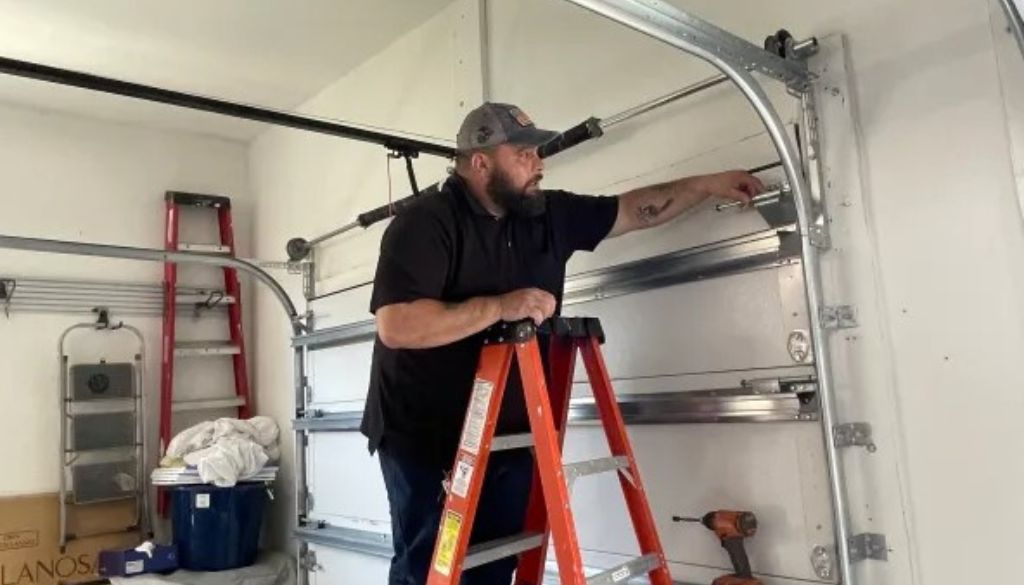
A new installation should be treated as a system project. The door, tracks, spring system, cables, rollers, hinges, opener, and garage door sensors all need to work together. Installing a new door on poor supporting hardware, or installing a new opener on an old binding door, defeats the purpose of replacement. Good installation includes correct track positioning, appropriate spring setup, smooth roller travel, properly secured hinges, functioning cables, and correctly installed safety devices.
Homeowners should be careful with partial upgrades that create mismatched performance. For example, a quiet opener will not make a door quiet if the rollers and hinges are worn. New panels may not travel well in damaged tracks. New sensors will not fix a door that is physically binding. The best replacement plan starts with a full garage door inspection, then separates safety issues from comfort improvements.
DIY judgment: what to inspect and what to leave alone
There is a reasonable place for homeowner care. Cleaning, observing, lubricating approved parts, keeping sensors clear, and noticing changes are practical tasks. Many homeowners can also tighten obviously loose non-tensioned fasteners if they understand what they are touching and the door is otherwise stable. The danger comes from assuming every visible part is safe to remove or adjust.
Springs, cables, bottom brackets, and any part connected to stored lifting energy deserve special caution. Torsion springs in particular should not be adjusted casually. Cable problems should not be forced back into place while the door is under load. A crooked or jammed door should not be powered repeatedly with the opener in the hope that it will “work itself out.”
The line is simple: inspect and maintain what does not expose you to stored spring force or unsupported door weight. Call a qualified technician when the door is heavy, crooked, jammed, off track, connected to damaged cables, or showing spring failure symptoms.
Common homeowner questions about replacement parts
Can I replace only one damaged panel?
Sometimes. If the door is otherwise sound, the panel is available, and the damage has not affected tracks, hinges, or rollers, replacing one section may be practical. If several panels are distorted or the hardware is already worn, a single-panel repair may be a short-term patch.
Why does my opener struggle after I replaced rollers or hinges?
The door may still be out of balance, the tracks may be binding, or the replacement parts may not have addressed the real source of resistance. The opener should be evaluated only after the door moves smoothly as a mechanical system.
Are noisy garage doors always dangerous?
Not always, but noise is useful information. Squeaks often point to lubrication needs. Grinding, scraping, popping, or binding can indicate worn rollers, hinge trouble, track issues, or other mechanical problems. A new noise should be inspected rather than ignored.
Should tracks be lubricated?
Tracks should generally be kept clean so rollers can move freely. Lubrication is more appropriate for moving mechanical points such as hinges, rollers, and springs, using a suitable silicone-based lubricant. Heavy oil or sticky buildup in the tracks can attract dirt.
Why does my door reverse when nothing is in the way?
The garage door sensors may be misaligned, blocked, dirty, or otherwise not communicating properly with the opener. Since the reversing system is a safety feature, the right response is to inspect and correct the sensor issue, not bypass it.
The best replacement choice is the one that restores safe movement
A garage door replacement decision should begin with safety and movement, not appearance alone. Panels matter because they hold the shape of the door. Tracks matter because they guide the path. Rollers and hinges matter because they control smooth travel. Springs and cables matter because they balance and support the door. The opener matters because it operates the system and works with required safety devices. Sensors matter because a closing garage door must respond to people and objects in its path.
The smartest homeowners treat garage door troubleshooting as a process of finding cause and effect. A noisy door may need lubrication. A heavy door may need spring service. A crooked door may involve cables or tracks. A reversing door may have a sensor issue. A repeatedly strained opener may be reacting to a mechanical problem somewhere else.
When the parts are inspected as a system, replacement decisions become clearer. Some doors need a single component and a good maintenance routine. Others need professional repair to restore balance and safety. Some have reached the point where a full garage door replacement is the more reliable long-term choice. The goal is not simply to make the door move today. It is to make it move safely, predictably, and smoothly every time someone presses the button.