Garage Door Sensors Guide for Photoelectric Eye Safety
A residential garage door is one of the heaviest moving systems most people use every day, yet it is often treated like a light switch. Press the wall button, hear the motor, watch the door move, and forget about it. That habit is understandable, but it can become dangerous when the safety system stops doing its job.
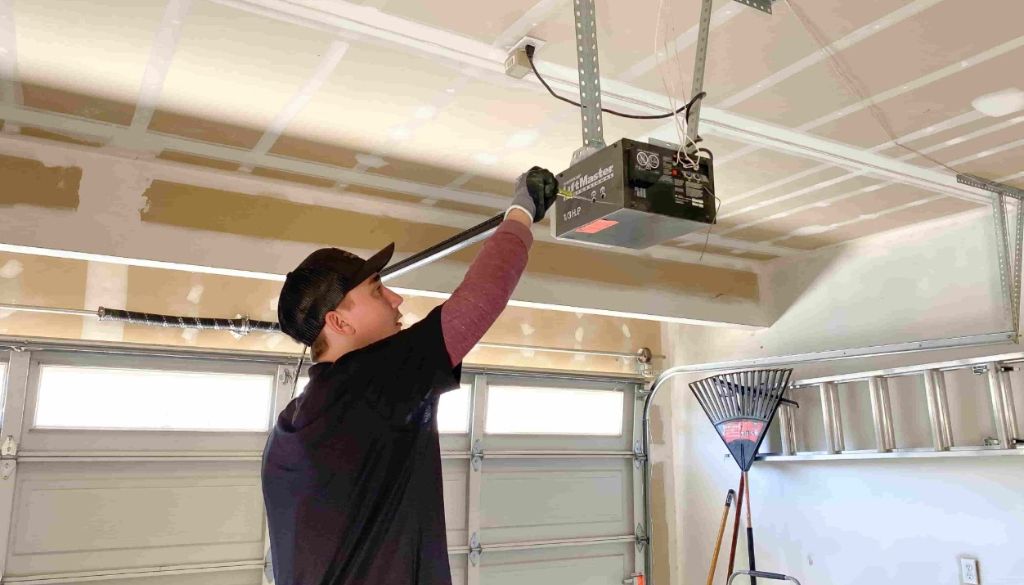
For automatic residential garage door openers in the United States, safety is not an optional accessory. Federal safety rules require entrapment protection, such as a photoelectric eye sensor or an equivalent safety system. The reason is straightforward: a closing garage door must not keep pushing down when something or someone is in its path. A properly functioning opener should reverse when closing onto an obstruction, and the safety reversal system should be tested monthly.
Photoelectric garage door sensors are a familiar part of that protection system. They are the small sensor units placed near the lower sides of the door opening, facing each other across the path of the door. When the system is working correctly, the opener uses that safety input to help prevent the door from closing on an obstruction. When it is not working correctly, the door may refuse to close, may reverse unexpectedly, or may expose the household to a serious safety risk.
Good garage door maintenance is not only about quiet rollers, smooth tracks, and a clean opener rail. It is also about confirming that the safety features still work after months of vibration, dust, bumps, repairs, storage changes, and ordinary use.
Why photoelectric eye sensors matter
The Consumer Product Safety Commission has warned repeatedly that non-reversing garage door openers are a hazard. That warning is not theoretical. Fatal entrapment incidents involving automatic garage doors have been documented, which is why the safety rules exist and why monthly testing is recommended.
The garage door opener is only one part of the system, but it is the part most homeowners interact with. It responds to wall controls, remote controls, and sometimes keypads. If the opener commands the door to close and the safety reversal system fails, the result can be severe. Children are especially vulnerable because they may not understand how quickly a door can move, how much force it can apply, or why playing near the opening is dangerous.
Garage door safety also depends on habits. Children should be taught garage-door safety, and remote controls should be kept out of their reach. That may sound simple, but in real homes, remotes end up in cup holders, backpacks, kitchen drawers, and on low shelves. A curious child does not need to understand the mechanism to activate it.
Photoelectric sensors help reduce the risk, but they do not replace supervision, monthly testing, or proper garage door inspection. They are one safety layer in a system that includes the opener, door balance, springs, cables, rollers, tracks, and the behavior of the people using the door.
How the photoelectric eye system fits into the opener
A garage door opener does not lift the door by itself in the way many people imagine. The door system is meant to be counterbalanced by garage door springs, often torsion springs on many residential setups. The opener moves a door that should already be reasonably balanced. If the door is heavy, binding, damaged, or out of balance, the opener and safety system can be placed under stress.
The photoelectric eye sensor system is part of the opener’s entrapment protection. The two sensor units face one another across the garage door opening. When the closing path is interrupted, the opener should not continue closing as though nothing happened. In normal use, this protects against an object, pet, child, or person being in the path of the door.
That does not mean the sensors can solve every mechanical problem. A door with damaged garage door cables, worn garage door rollers, bent garage door tracks, or a serious garage door balance issue needs mechanical attention. The sensors can tell the opener about an obstruction in the doorway, but they cannot make a neglected door safe by themselves.
This is why garage door troubleshooting should never stop at the first obvious symptom. A door that will not close may indeed have a sensor issue. It may also have a mechanical issue, an opener issue, or a combination of problems. A door that closes but fails a reversal test is a more urgent concern. The CPSC guidance is clear: if the door fails to reverse, it should be adjusted according to the owner’s manual or inspected by a professional.
The monthly safety test homeowners should not skip
Monthly testing is one of the simplest and most important garage door maintenance habits. It does not require special expertise to recognize that the safety system must respond when tested, but it does require consistency. Many households only think about garage door sensors after the door refuses to close on a busy morning. Safety testing works best before the urgent moment.
A practical monthly check should focus on whether the safety reversal system works as intended and whether the photoelectric sensors are present and functioning. The federal standard requires a sensor or equivalent entrapment protection on residential automatic openers, so a garage door inspection should always include that safety feature.
Use the owner’s manual for the exact testing and adjustment procedure for the specific opener model. If the test shows that the door does not reverse properly, do not ignore it because the door “mostly works.” A non-reversing opener is a recognized hazard. If the manual does not resolve the issue, or if you are unsure what the result means, the safer choice is professional garage door repair.
A short monthly routine can be kept simple:
That list is intentionally short. The goal is not to turn every homeowner into a technician. The goal is to catch a failed safety system before someone depends on it.
When the door will not close
One of the most common calls involving garage door sensors starts with a simple complaint: “The door goes down, then comes back up,” or “The opener runs, but the door will not close.” In many cases, the homeowner has already tried the wall button several times, moved a box or bicycle, and checked the remote control battery. By the time they call, frustration has taken over.
From a safety standpoint, a door that refuses to close may be doing exactly what it was designed to do. If the opener believes the closing path is obstructed, the system should not blindly force the door down. That can be inconvenient, especially when the car is outside in bad weather or the homeowner is leaving for work, but inconvenience is preferable to a failed entrapment protection system.
Photoelectric sensors can be affected by ordinary garage life. The area near the door opening collects dust, yard tools, toys, storage bins, and seasonal equipment. The sensors also live in a vulnerable location because they must monitor the lower part of the opening. Anything that interferes with their ability to function can create a closing problem.
Even so, it is important not to treat the sensors as the only possible culprit. A door can reverse or refuse to close because the opener needs adjustment under the owner’s manual, because a mechanical part is interfering with travel, or because the door itself is not moving correctly. Garage door tracks, rollers, cables, and springs all influence how the door behaves. If the opener is fighting a door that does not move freely, the symptoms can look like an opener or sensor problem.
There is also an important safety distinction between a door that will not close and a door that closes but does not reverse when tested. The first problem is annoying and may indicate that the safety system is interrupting operation. The second problem can be dangerous because it suggests the safety reversal system is not protecting the opening as it should.
When the door closes but safety is uncertain
The most concerning garage door problems are not always the loudest. A grinding roller, a visibly loose cable, or a crooked door usually gets attention quickly. A failed reversal feature may go unnoticed because the opener still seems to close the door.
That is why monthly testing matters. If the door closes every night but does not reverse when it should, the household may believe the system is safe when it is not. CPSC guidance specifically says safety reversal systems should be tested monthly. If the door fails to reverse, it should be adjusted according to the owner’s manual or inspected by a professional.
This is also where age and past service history matter. A garage door opener that has gone through years of use, repairs, power interruptions, and mechanical wear deserves a closer look. If garage door installation work has been done recently, if the opener was replaced, or if a technician performed garage door repair on nearby parts, the safety features should be checked afterward. A good repair is not complete until the door operates correctly and the safety system responds correctly.
A homeowner does not need to diagnose every internal cause. The practical question is whether the system passes the required safety checks. If it does not, continued use should be limited until the problem is corrected.
The relationship between sensors and the rest of the door
Garage door sensors are sometimes blamed for problems that begin elsewhere. That is not surprising. Sensors are visible, easy to point at, and tied directly to closing issues. But a garage door is a connected mechanical system. The opener, springs, cables, rollers, tracks, and door sections all affect the final movement.
Garage door springs carry serious responsibility. Torsion springs, where present, help counterbalance the door. If the balance is wrong, the opener may struggle. Garage door balance is not just a comfort issue, it influences safety and wear. A door that is too heavy for the opener or does not move as intended can create symptoms that lead people to suspect the opener or sensors first.
Garage door cables guide and support the door’s movement in coordination with the spring system. Damaged or mispositioned cables can affect travel and alignment. Garage door rollers and tracks guide the door through its path. If rollers are worn or tracks are damaged, the door may bind or move unevenly. Garage door lubrication can help appropriate moving parts operate smoothly, but lubrication does not repair damaged hardware or correct an unsafe spring issue.
This is why professional garage door inspection often looks broader than the customer expected. A technician may arrive for “garage door sensors” and spend time observing the door’s travel, checking the opener response, looking at the tracks, and considering the balance. That is not padding the visit. It is how safe troubleshooting works. The sensor system must be evaluated in context.
Installation and repair require more care than they appear to
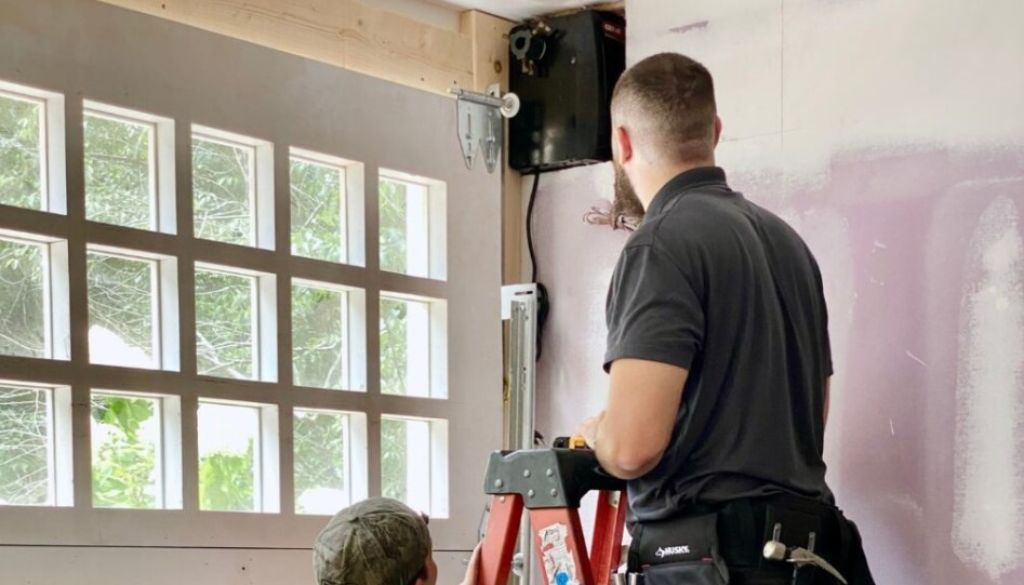
Garage door installation and opener repair work can look simple from the ground. The parts are familiar, the tools are common, and videos make the process seem manageable. The working conditions tell a different story. Installation and repair often require work at ceiling height, in tight areas, with hand tools and awkward postures. Those conditions increase the chance of mistakes or injury.
That matters for sensor work too. The photoelectric eyes may be low on the opening, but they connect to the opener system and must be installed so the safety function works reliably. A sloppy installation can create nuisance reversals, inconsistent operation, or a false sense of security. The goal is not merely to make the indicator lights appear normal or the door close once. The goal is to ensure the opener’s entrapment protection operates as required.
For homeowners, the dividing line is judgment. Cleaning the area around sensors, making sure nothing obvious blocks the doorway, and following the owner’s manual for testing are reasonable homeowner tasks. Adjusting an opener after a failed reversal test may be covered in the manual for some situations, but if the instructions are unclear or the result remains uncertain, professional service is the safer route.
Work involving garage door springs, torsion springs, cables, or a door that is out of balance deserves particular caution. Those components are not casual weekend repair items for most homeowners. A sensor problem can sometimes lead to the discovery of a more serious mechanical issue, and that is where experience matters.
A professional approach to sensor troubleshooting
Good garage door troubleshooting starts with the symptom but does not stop there. A door that reverses during closing, a door that will not close, and a door that fails to reverse during a test are different problems with different risk levels. The last one deserves immediate attention because it points directly at a safety function.
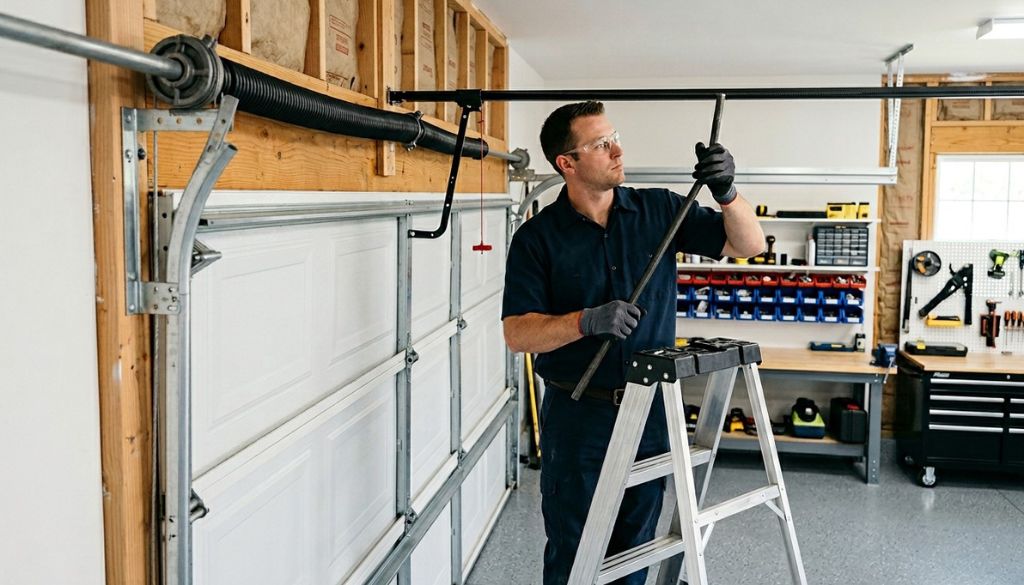
A careful inspection usually begins with observation. How does the door move? Does it hesitate? Does the opener sound strained? Are the sensors present? Does the door reverse when tested according to the owner’s manual? Are children’s controls and remotes being stored safely? These questions may seem basic, but they prevent a narrow repair from missing the hazard.
The next step is separating opener behavior from door behavior. If the door itself has balance or travel problems, correcting only the opener or sensor setup may not solve the underlying issue. If the opener’s safety reversal system fails, the system needs adjustment or professional inspection. If the door is mechanically compromised, garage door repair may involve rollers, cables, tracks, springs, or other hardware rather than only garage door sensors.
A professional also thinks about repeatability. A door that works once while someone is watching is not necessarily repaired. The system should behave consistently. Safety testing should produce the expected response, and the owner should know how to continue monthly checks.
What homeowners can safely observe before calling
Before scheduling garage door repair, a homeowner can gather useful information without disassembling anything. This helps the technician and often speeds up the visit. The key is to observe rather than force the system.
Look at whether the photoelectric sensors are present and aimed across the door opening. Notice whether objects, storage bins, tools, or debris are near the path of the door. Watch the door from a safe position while someone operates it, keeping children and pets away. Listen for changes in opener sound or door movement. Think about when the issue began. Did it follow a recent garage door installation, opener replacement, power event, cleaning, impact near the door opening, or another repair?
These observations are useful because sensor problems are often intermittent. A technician who hears “it sometimes reverses halfway down after the kids move their bikes near the opening” has a better starting point than one who only hears “it is broken.” The same is true for safety testing. If the door failed the monthly reversal test, say so directly. That changes the urgency and the diagnostic path.
There are also things homeowners should avoid:
A garage door that will not close can make a home feel unsecured, but bypassing a safety system creates a different risk. The better answer is proper diagnosis and repair.
Sensor issues after opener replacement or door replacement
Garage door replacement and opener replacement are moments when safety checks deserve extra attention. Any time major parts change, the system should be tested as a whole. A new opener connected to an old door still depends on the door moving correctly. A new door connected to an existing opener still depends on the opener’s safety features working correctly.
During garage door installation, the photoelectric sensor system or equivalent entrapment protection must be treated as essential, not optional. The federal requirement for automatic residential openers exists because the risk is real. A clean installation includes correct operation, safety reversal testing, and clear instruction for the owner on monthly checks.
The same principle applies after garage door repair. If the work involved tracks, rollers, springs, cables, opener settings, or anything affecting travel, the safety system should be verified afterward. Homeowners should expect that. A repair that leaves the door moving but does not confirm safety is incomplete.
The role of the owner’s manual
The owner’s manual is not exciting reading, but it matters. CPSC guidance refers homeowners to the owner’s manual for adjustment when the door fails to reverse. That is because opener models differ, and the correct procedure depends on the specific equipment.
The manual also helps prevent guesswork. Guesswork around a moving garage door can create hazards, especially when someone repeatedly tests the door while standing too close, reaches near moving parts, or changes settings without understanding the result. The better process is controlled, staged, and documented by the manufacturer’s instructions.
If the manual is missing, many homeowners are tempted to rely on general advice. General advice can help explain concepts, but it should not replace the correct procedure for the installed opener. When the system fails a safety test and the proper instructions are not available or not clear, professional inspection is justified.
Children, remotes, and everyday garage safety
The best sensor system cannot compensate for careless use. Children should be taught that the garage door is not a toy, not a race challenge, and not something to duck under while it is moving. Remote controls should be kept out of their reach. These are simple rules, but they need repetition because garage doors are part of the daily background of family life.
A common unsafe habit is pressing the remote and walking away before the door finishes closing. Another is letting children activate the opener from the car or the wall control for fun. Even when the sensors work, those habits normalize risky behavior. The safer habit is to operate the door with attention, watch that the opening is clear, and make sure the door completes its travel properly.
Garage storage also affects safety. Items stacked near the door opening can garage door services Gold Coast shift. Sports equipment, garden tools, and boxes can end up near the sensor line or in the door path. A tidy threshold area supports reliable operation and makes monthly testing easier.
When repair becomes replacement
Not every sensor or opener problem means garage door replacement is needed. Many issues are resolved through proper adjustment, repair, or replacement of specific components. Still, there are times when replacement enters the conversation. If an opener does not provide the required entrapment protection, if it cannot be made to reverse properly, or if the door system has broader mechanical problems, a larger upgrade may be the prudent choice.
The decision should be based on safety and reliable operation, not only convenience. A homeowner may tolerate a noisy door for years, but a failed reversal system should not be tolerated. Likewise, repeated repairs to a poorly functioning system may cost less in the short term but leave the owner dealing with uncertainty. Professional judgment is valuable here because the right answer depends on the condition of the opener, door, springs, cables, rollers, tracks, and the availability of proper repair options.
Garage door replacement also creates an opportunity to reset safety habits. The new system should be installed correctly, tested carefully, and maintained monthly from the start. Owners should know how to test the safety reversal system and when to call for service.
A safer garage door starts with consistent attention
Photoelectric eye sensors are small parts with a large responsibility. They help the automatic opener recognize when the closing path is not clear, and they are part of the entrapment protection required for residential automatic garage door openers. When they work properly, they are easy to take for granted. When they fail, or when the opener fails to reverse as it should, the risk becomes immediate.
The most reliable safety routine is not complicated. Confirm the sensors are present and functioning. Test the safety reversal system monthly. Follow the owner’s manual for adjustment. Keep remote controls away from children. Teach children to stay clear of the moving door. Treat a failed reversal test as a serious problem, not a minor inconvenience.
Garage door maintenance should include the whole system: opener, sensors, springs, rollers, cables, tracks, lubrication where appropriate, balance, and visible condition. Garage door repair should restore safe operation, not just temporary movement. Whether the issue leads to sensor adjustment, opener service, spring work, or garage door replacement, the standard remains the same. The door should operate reliably, and the safety system should protect the opening every time it closes.