Garage Door Troubleshooting When the Opener Will Not Reverse
A garage door opener that will not reverse is not a small nuisance. It is a safety defect until proven otherwise.
When a residential automatic garage door closes onto an obstruction, it is supposed to reverse. That expectation is not just a convenience built into modern garage door opener design. In the United States, automatic residential garage door openers are covered by a mandatory federal safety standard, and they must include entrapment protection such as a photoelectric “electric eye” sensor or an equivalent safety system. The point is simple: a heavy moving door, powered by a motor, must have a reliable way to stop or reverse before it traps a person, pet, or object.
I have seen homeowners treat a non-reversing opener as if it were an adjustment problem they can get to later. The door still opens, the car still gets in, and the household routine continues. That is exactly why this issue deserves a sharper response. A garage door that does not reverse can seem normal right up until the moment it is not. Safety systems are often noticed only after they fail.
Good garage door troubleshooting starts with separating two questions that are easy to mix together. First, is the opener’s safety reversal system working? Second, is the door itself moving properly? The opener, sensors, springs, cables, rollers, tracks, and door balance all play different roles. A problem in one area can make another area look guilty. The safest path is to test carefully, stop when the risk increases, and know when garage door repair needs a trained professional rather than another turn of a screwdriver.
Why a non-reversing opener is treated as a hazard
The danger with a non-reversing garage door opener is entrapment. The federal safety requirements exist because automatic doors have caused severe and fatal injuries. That history is uncomfortable, but it is the reason modern openers are expected to include working entrapment protection.
Two safety ideas matter most to the homeowner. The first is that a properly functioning opener should reverse when the closing door encounters an obstruction. The second is that photoelectric sensors, or an equivalent system, should prevent the door from continuing to close when the path is blocked. If either protection fails, the opener should not be treated as dependable.
This is also why monthly safety testing is recommended. Monthly testing may sound frequent if the door has been operating normally for years, but garage doors live in a hard environment. They vibrate. They collect dust. They are exposed to humidity, temperature changes, insects, stored boxes, bicycles, and the occasional bump from a trash bin or lawn tool. A photoelectric sensor that was aligned last spring may not be aligned now. A door that moved smoothly before a season of use may have changed just enough to interfere with safe operation.
There is another practical reason to take the issue seriously. The opener is only one part of the system. If a door is heavy because the garage door springs are not supporting it correctly, the opener may struggle in ways that mask the real fault. If garage door tracks are damaged or garage door rollers bind, the door may behave unpredictably. If garage door cables are compromised, the door may not travel evenly. A non-reversal complaint can open the door, so to speak, to a broader garage door inspection.
Start with the safest assumption
When a customer tells me, “The opener will not reverse,” I do not start by asking how old the motor is or whether the remote still works. I start with the basic safety assumption: until the system proves otherwise, do not stand under the door, do not let children near it, and do not keep using it as if it is simply out of adjustment.
Children should be taught that garage doors are not play equipment, and remote controls should be kept out of their reach. That advice is not fussy. A child pressing a wall button or remote while another child is near the opening is exactly the type of ordinary household moment safety standards are meant to protect against.
A garage door opener has power, momentum, and mechanical leverage behind it. The fact that it moves slowly can make it seem harmless. It is not. The right way to approach garage door troubleshooting is deliberate and boring. Boring is good here. Boring means nobody is reaching under a moving door to “see what happens.” Boring means the test area is clear, the lighting is decent, and the person testing the door is focused on the door rather than a phone call.
A short safety check before testing
Before you test anything, make sure the area around the door is clear and the people in the home know not to operate the opener. If the door has already failed to reverse, do not keep repeating the same failed test. One controlled test can tell you something. Five uncontrolled tests only increase the chance of damage or injury.
Use this brief check to decide whether troubleshooting should stop immediately and shift to professional garage door repair.
That last point matters with older systems, replacement equipment, and homes where past owners may have altered the installation. Modern residential automatic openers are expected to have entrapment protection. If the photoelectric sensors are missing, disconnected, bypassed, damaged, or not functioning, the opener needs attention before normal use continues.
Understanding what “reverse” really means
Homeowners often use the phrase “will not reverse” to describe several different behaviors. One door touches an object and keeps pushing. Another door starts down, stops, and goes back up before reaching the floor. Another closes most of the way, hesitates, and then reverses for no obvious reason. These are different symptoms.
The most concerning symptom is a door that closes onto an obstruction and does not reverse. That is the direct safety failure. A door that reverses when nothing is in the way may still need service, but it is a different kind of problem. It may involve the safety sensors seeing a false obstruction, the door not moving smoothly, or the opener reacting to resistance. The owner’s manual is the proper reference for opener adjustments, because designs vary and the controls are not identical across models.
A working photoelectric sensor system usually involves two small units facing each other across the lower part of the door opening. Their job is to detect when something interrupts the path. If the beam is blocked while the door is closing, the opener should not continue closing. The federal requirement allows a photoelectric sensor or an equivalent entrapment protection system, so not every system looks exactly alike. Still, during a garage door inspection, confirming the presence and function of the safety system is not optional.
The reversal feature and the photoelectric sensor feature are related, but they should not be treated as the same thing. One responds to obstruction or resistance during closing. The other is designed to detect an obstruction in the door path before the door makes contact. A safe system depends on entrapment protection working as intended.
The photoelectric sensors deserve careful attention
Many non-reversal calls begin and end near the garage door sensors. They sit low, they are easy to bump, and they live where dust, cobwebs, storage bins, shovels, and children’s toys gather. It does not take much to block or disturb them.
The practical inspection is straightforward. Look at both sides of the door opening. The sensors should be present, physically secure, and aimed at each other. The path between them should be clear. If the brackets are bent, the housings are damaged, or the wiring appears disturbed, the opener should not be trusted until the safety system is restored. If the system uses an equivalent form of entrapment protection rather than the familiar sensor pair, the same principle applies: verify that the intended safety device is installed and operating.
A common mistake is to treat sensors as an annoyance because the door refuses to close when the beam is interrupted. That refusal is not a flaw. It is the system doing its job. The dangerous situation is the opposite, when the opener closes despite a blocked path or fails to reverse when it should.
If you adjust or clean around the sensors, test carefully afterward. If the door fails to reverse or the sensors do not respond as expected, stop. The owner’s manual may provide model-specific adjustment guidance, but a persistent failure calls for professional garage door repair. Guessing at safety controls is poor judgment, especially when the problem involves entrapment protection.
When the opener is blamed but the door is the problem
The opener gets blamed because it is the part with the button, the motor sound, and the light. But an opener is attached to a large moving assembly, and that assembly has to be in good condition. A door that drags, binds, shifts, or travels unevenly can confuse the diagnosis.
Garage door balance is a key part of this. The door should not rely on the opener alone to lift and control its weight. Garage door springs, including torsion springs on many systems, do the heavy lifting. If the spring system is not supporting the door correctly, the opener may be forced to do work it was never meant to do. That can show up as strained movement, inconsistent travel, or unusual behavior during closing.
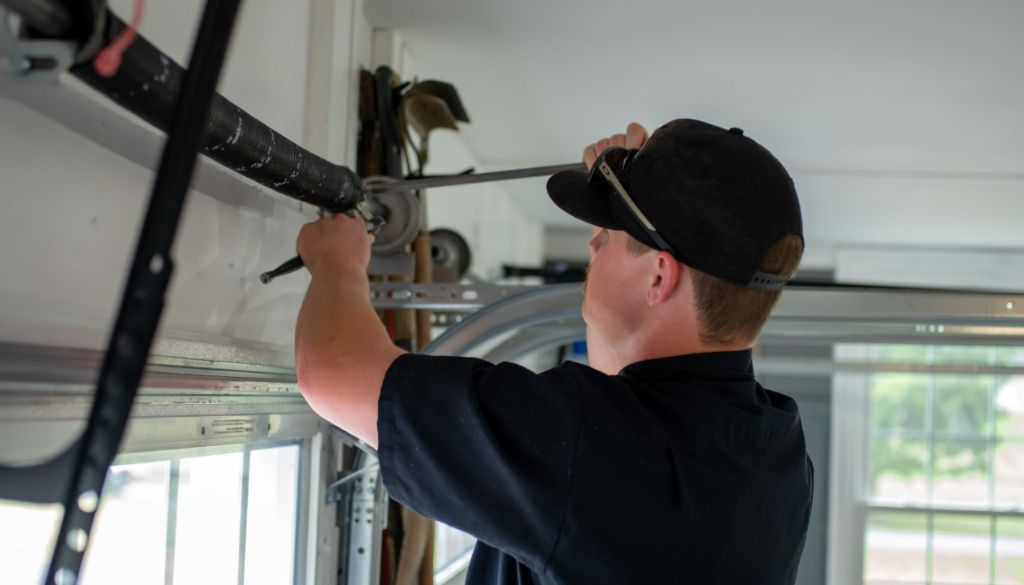
This is where the limits of homeowner troubleshooting become important. Garage door springs and related hardware can be dangerous. Torsion springs store significant energy. Garage door cables also carry load and can be hazardous if mishandled. If inspection suggests a spring, cable, or balance problem, that is not the moment to search for a quick adjustment and start loosening parts. It is the moment to call a qualified technician.
Garage door rollers and garage door tracks can also affect movement. Rollers that do not travel smoothly, tracks that are bent or misaligned, or obstructions in the track area can all interfere with normal operation. Some maintenance items, such as keeping the area clean and using appropriate garage door lubrication where the door manufacturer or service professional recommends it, fit within routine garage door maintenance. Structural alignment, cable issues, spring work, and anything that changes the load path belong in professional hands.
The owner’s manual matters more than guesswork
Many openers have adjustment procedures, but they are not all the same. The wording may vary, the controls may be placed differently, and the correct response to a failed test may depend on the model. That is why federal safety guidance points homeowners back to the owner’s manual for adjustment, and to professional inspection when the door fails to reverse.
The manual is also useful because it distinguishes normal owner checks from service operations. It may explain how to test the reversal system, how to identify sensor status, and what warning signs require service. If the manual is missing, the opener model information may help you obtain a replacement from the manufacturer. Until then, avoid improvising.
One of the worst habits in garage door troubleshooting is turning adjustment screws or changing settings without first identifying the fault. If the sensors are blocked, adjustment will not solve the underlying issue. If the door is out of balance, increasing opener force can make the system less safe. If the tracks or rollers are binding, the opener may be reacting to a mechanical resistance that deserves repair rather than override.
A safe repair culture asks, “Why is the opener behaving this way?” before it asks, “How do I make it stop doing that?”
Monthly testing is not busywork
The recommendation to test the safety reversal system monthly is easy to ignore because a garage door is part of the background of the home. It opens, it closes, the light comes on, everyone leaves for work or school. But monthly testing is one of the simplest forms of garage door safety.
A monthly test does not need to become a full Saturday project. It should be controlled, consistent, and followed by action if the door fails. The important part is not simply performing the test. The important part is respecting the result. If the door does not reverse when it should, the opener should be adjusted according to the manual or inspected by a professional.
This habit also helps catch gradual changes. A homeowner who tests only after something seems wrong may miss weeks or months of declining performance. A homeowner who tests regularly is more likely to notice when the door sounds different, moves unevenly, or starts reacting differently near the floor.
Garage door maintenance works best when it is steady rather than dramatic. A little attention at regular intervals usually prevents the rushed call that begins with, “The door is stuck halfway and my car is inside.”
What to observe before calling for service
A professional can diagnose faster when the homeowner describes the symptom clearly. That does not mean you need to inspect dangerous parts or perform repeated tests. It means you can pay attention to what happened, when it happened, and what the opener did.
Useful observations include whether the door failed to reverse after contacting an obstruction, whether the photoelectric sensors appear present and unobstructed, whether the problem happens every time or intermittently, and whether the door has recently been bumped, serviced, painted, or affected by storage changes near the opening. If the opener light flashes, the wall control behaves differently, or the door stops at a consistent point, those details may help the technician, though the meaning depends on the specific opener.
For safety, avoid turning the service visit into a demonstration with people standing near the opening. Explain what you observed, then let the technician control the test. Garage door repair professionals are used to staging their work so they can inspect the opener, sensors, tracks, rollers, springs, and cables without adding unnecessary risk.
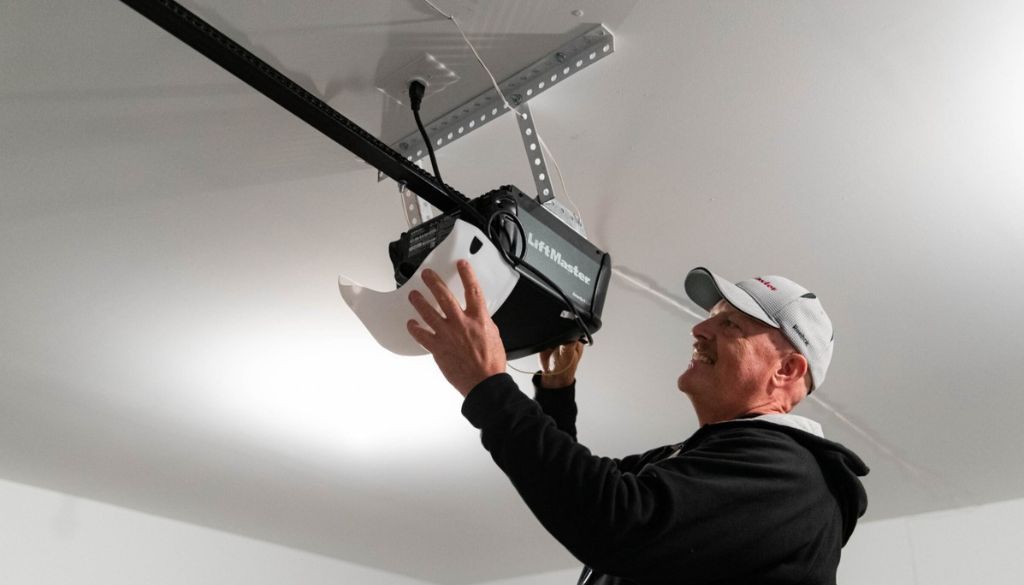
Installation and repair work around garage doors can involve ceiling-height equipment, cramped spaces, hand tools, and awkward body positions. Those are not abstract hazards. Anyone who has worked above a garage door header or near opener rails understands how quickly a simple task becomes physically awkward. Good technicians move deliberately for that reason. Homeowners should do the same, and should not put themselves on a ladder under pressure just to avoid a service call.
Repair, replacement, or adjustment
Not every non-reversing opener needs garage door replacement. Some problems may be corrected through proper adjustment according to the owner’s manual. Some may involve restoring sensor function. Others may require professional repair to the door system before the opener can operate safely. The right answer depends on the condition of the opener and the door.
Garage door installation quality also matters. A properly installed opener should work with the door, not fight it. The safety sensors or equivalent entrapment protection should be installed as intended. The door should travel cleanly through its tracks. The spring system should support the door’s weight. If an opener was installed poorly or altered later, correcting the installation may be part of the repair.
Replacement becomes a serious discussion when the opener lacks required safety features, when safety components cannot be restored reliably, or when the broader door system is no longer dependable. A technician may also recommend garage door replacement if the door itself has damage or wear that makes safe operation difficult to maintain. The key is not age alone. The key is whether the complete system can meet modern safety expectations and operate reliably.
A homeowner sometimes asks whether they can keep using the opener manually watched by an adult. That is not a satisfying compromise. If the opener will not reverse, the automatic function should be considered unsafe until corrected. Manual operation may be possible in some situations, but only if the door itself is safe, balanced, and not creating another hazard. When springs, cables, or balance are questionable, even manual use can be risky.
A practical troubleshooting path
The safest troubleshooting path is short. It does not try to turn a homeowner into a door technician. It helps identify obvious safety issues, then draws a firm line when the system does not respond correctly.
That sequence may feel conservative. It is meant to be. Garage door safety is not an area where repeated trial and error pays off. The goal is not to make the door close at any cost. The goal is to make sure the door closes only when the safety systems and mechanical parts are doing their jobs.
The role of the rest of the door system
A residential garage door is a coordinated machine. The opener supplies controlled motion. The springs counterbalance weight. The tracks guide movement. The rollers reduce friction. The cables help transfer load. The sensors monitor the path. When all of those parts are in good condition, the door looks simple. When one part falls out of line, the simplicity disappears.
During a professional garage door inspection for a reversal issue, the technician should be thinking beyond the motor. They will typically want to know whether the door moves freely, whether the spring system appears sound, whether the cables track properly, whether the rollers and tracks allow smooth travel, and whether the safety devices function. The details of that inspection depend on the door type and opener model, but the mindset is consistent: diagnose the system, not just the symptom.
Garage door lubrication deserves a careful word here. Lubrication can be part of good garage door maintenance, but it is not a cure for a failed safety reversal system. It may help moving parts operate more smoothly when used appropriately, but it will not fix missing sensors, damaged cables, unsafe springs, or a misadjusted garage door repair opener. Over-relying on lubricant is like putting air in a tire with a sidewall tear. It may make you feel like you did something, but it does not address the real hazard.
The same caution applies to tightening hardware, pushing tracks, or bending brackets back by hand. Some visible issues are safe to note but not safe to correct without the right training. The closer the work gets to springs, cables, heavy door sections, or overhead opener components, the more important it is to step back.
When repeated nuisance reversals point to safety, not inconvenience
Although this article focuses on an opener that will not reverse, the opposite symptom deserves mention because it often leads homeowners down the wrong path. If a door reverses unexpectedly while closing, the temptation is to defeat the safety feature or increase force until the door closes. That can create a dangerous condition.
An unexpected reversal can mean the safety system sees an obstruction, the sensors are not aligned, the door is meeting resistance, or the opener requires proper adjustment. It should be investigated, not overridden. The same family of components is involved: garage door sensors, opener settings, door balance, tracks, rollers, cables, and springs. A nuisance reversal may be the system warning you that something is not right.
The professional judgment here is simple. A garage door opener should never be adjusted to overpower a mechanical problem or ignore a safety device. If adjustment is needed, it should follow the owner’s manual. If the cause is not clear, a professional should inspect it. The safety standard exists because the consequences of getting this wrong are severe.
Keeping the household safe after the repair
Once the opener reverses properly again, the job is not finished forever. Safe garage door ownership is ongoing. Monthly testing should become part of the home’s routine. The sensors should remain visible and unobstructed. Storage should not creep into the sensor path. Children should know not to play with the door or remote controls. Adults should resist the habit of pressing the close button and walking away without noticing whether the opening is clear.
After any garage door repair, garage door installation, opener replacement, or major adjustment, safety testing should be treated as part of the work, not an optional add-on. If a technician services the springs or tracks but does not verify safe opener behavior, ask about it. If a new opener is installed, make sure the entrapment protection is present and working before normal use resumes.
The best garage door systems disappear into daily life because they work safely and predictably. That reliability comes from properly installed equipment, functioning safety devices, and maintenance habits that catch problems early. When the opener will not reverse, the system is telling you that reliability has been broken.
Do not ignore that message. Stop using the automatic opener, protect the people in the home, check only what can be checked safely, and have the system adjusted or inspected. A garage door is too heavy, and the history behind the safety rules is too serious, for anything less.