
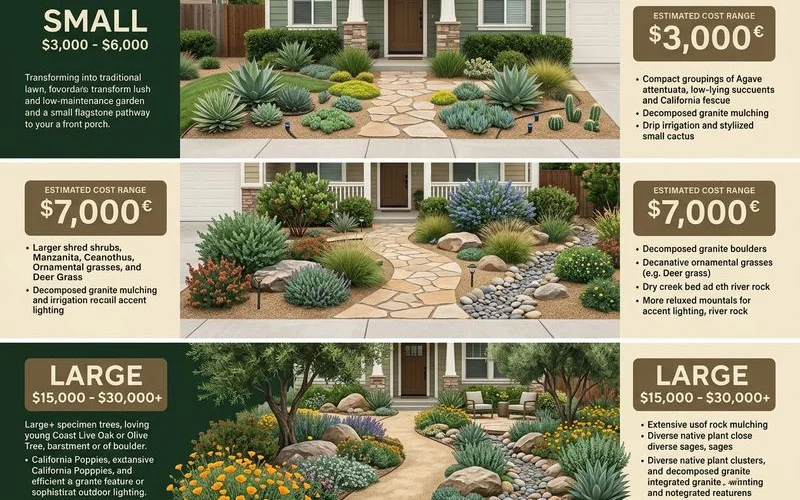
Erosion-Resistant Landscaping for Foothill Homes
Foothill properties ask more of a landscape than flat lots ever do. Water moves faster, soil is more exposed, and every storm has a way of revealing weak points that looked harmless in dry weather. On a hillside, a thin patch of turf, a bare strip of soil, or a poorly graded corner can become the start of runoff, rilling, or a muddy slide that keeps returning after each rain. That is why erosion-resistant landscaping is not just a visual choice for foothill homes, it is a practical design problem with long-term water, maintenance, and safety implications.
In the San Gabriel Valley, that conversation comes with an added layer of urgency. The region’s hillside character is part of its identity, and the landscape has to support that reality rather than fight it. Water-efficient landscapes, drought-tolerant planting, and erosion control are not separate goals here, they are parts of the same plan. A good design has to hold soil in place, manage stormwater runoff, fit the slope, and still look like it belongs in the foothills.
Start with the slope, not the plant list
One of the most common mistakes in hillside landscaping is beginning with favorite plants and hoping the site will cooperate. On a slope, the site always gets the final say. Before turf is removed or new planting is installed, the practical questions come first: how irrigation is functioning now, what the soil is doing, how much sun the area receives, and which plants are appropriate for the microclimate. That sequence matters because a plant that thrives in one exposure can struggle on a hot, dry bank only a few yards away.
That is especially true in foothill neighborhoods, where the same property can hold several microclimates at once. A west-facing slope may bake in the afternoon while a tucked side yard stays cooler and slightly moister. A retaining wall can change water movement completely. Even the same plant species can behave differently depending on whether its roots are sitting in fast-draining soil or collecting runoff near a low point. Good landscape design starts with that kind of site reading.
For San Gabriel Valley homeowners, it also helps to think beyond appearance. Water conservation is not just a preference, it water-efficient landscaping is built into California’s landscape standards through the Model Water Efficient Landscape Ordinance, which encourages efficient irrigation, climate-appropriate plant selection, and the use of alternative water sources where possible. That framework fits naturally with foothill conditions, where a landscape that wastes water is often the same landscape that erodes easily.
Soil protection is the real foundation
Erosion usually begins where soil is left exposed. Bare ground between new plants, thin mulch that blows away, and compacted slopes that shed water all create conditions for runoff to gather speed. The solution is not one dramatic fix. It is a layered approach that covers the soil, slows water, and gives roots time to establish.
In practice, that often means using plant masses rather than isolated specimens, especially on a hillside. Plants with spreading root systems help knit the soil together, while ground cover and low shrubs reduce the amount of exposed surface available to rain and splash erosion. On steeper areas, it is also worth thinking in bands or terraces rather than trying to treat the whole slope as one continuous plane. Water moves differently when the ground is broken into smaller sections, and those breaks can reduce the force of runoff.
Hardscaping has a useful role here, but only when it is used deliberately. A walkway, retaining edge, or carefully placed path can interrupt water flow and give a hillside structure. At the same time, too much hardscape can push water toward the wrong place if drainage is not planned carefully. The best hardscaping in hillside landscaping does not just look finished, it works like a quiet piece of stormwater management.
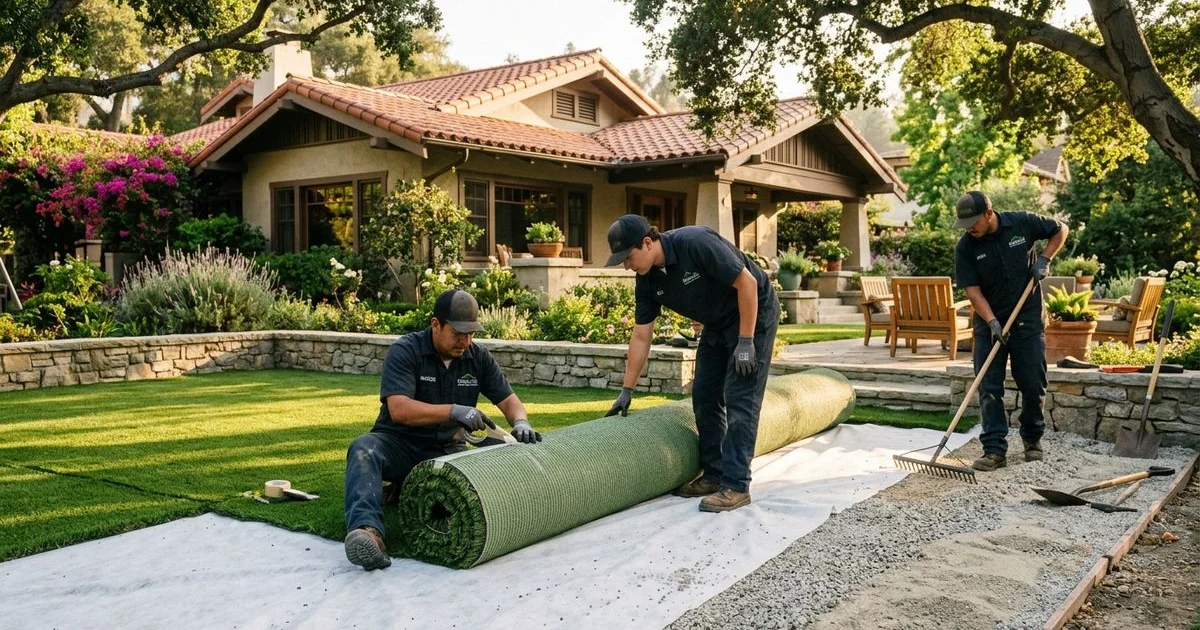
Why drought tolerance and erosion control belong together
People sometimes treat drought-resistant landscaping and erosion-resistant landscaping as separate specialties. In foothill settings, they overlap almost completely. Plants adapted to low water use often have the deep, fibrous, or spreading root systems that help stabilize slopes. They also tend to perform better in hot, sunny conditions where irrigation has to be measured carefully.
That does not mean every drought-tolerant plant is automatically right for every slope. It means the plant palette should be chosen with both water demand and soil-holding ability in mind. California native plants are especially useful in this setting because they are adapted to local climate patterns and can support a more water-wise landscape. WUCOLS, the state’s plant water-use reference, is a useful guide when selecting plants with region-appropriate water needs. That kind of matching matters more than broad labels like “low water” or “native” alone.
A hillside landscape also has to be realistic about establishment. Even drought-tolerant plants need regular irrigation while they root in. The goal is not to starve the landscape, it is to build a planting system that can eventually function with less water and less intervention. If the first season is under-watered, the result is often patchy coverage, weak roots, and more soil loss. A properly staged installation gives plants enough moisture to anchor themselves, then gradually shifts them toward a more conservative schedule.
The plants that tend to earn their place
For foothill homes in and around the San Gabriel Valley, the most reliable plant choices are often the ones already suited to the local environment. California buckwheat, California sagebrush, manzanita, ceanothus, monkeyflower, foothill penstemon, bunchgrasses, and San Gabriel oak are all examples of plants that fit naturally into a water-wise, erosion-conscious design. They do more than survive. They contribute texture, habitat value, and a look that suits the area’s hillside character.
These plants are not interchangeable, though. Some work better as larger anchors, others as mid-slope fillers, and others as lower accents that help close gaps in the planting. Bunchgrasses, for example, can be valuable because they hold soil without reading as heavy or formal. Shrubs like ceanothus and manzanita create stronger structure, while California buckwheat can help bridge spaces and keep the surface covered. Monkeyflower and foothill penstemon can soften edges and add color without demanding a lot of supplemental water once established.
A useful way to think about the planting plan is in layers, not as a shopping list. The slope needs a mix of root patterns, heights, and textures so that water slows down as it moves. If everything is the same size and habit, the hillside is more likely to channel runoff in a single line. Variety, used with discipline, is part of the erosion-control strategy.
Firewise planting is part of responsible hillside design
Foothill landscaping in the San Gabriel Valley has to account for fire risk as well as water and erosion. The foothills and the San Gabriel Mountains sit in a region where defensible-space planning and ember-resistant zone rules matter. That does not mean a landscape needs to feel stripped or bare. It means plant selection, spacing, and maintenance all need to be deliberate.
Firewise planting and erosion control can work together when the landscape is designed with structure and clearance in mind. Dense, continuous fuel beds in the wrong place are risky, but so are bare zones that wash away in winter storms. The right balance depends on using plants with appropriate spacing, keeping irrigation efficient, and paying close attention to the areas closest to the house and any hardscape.
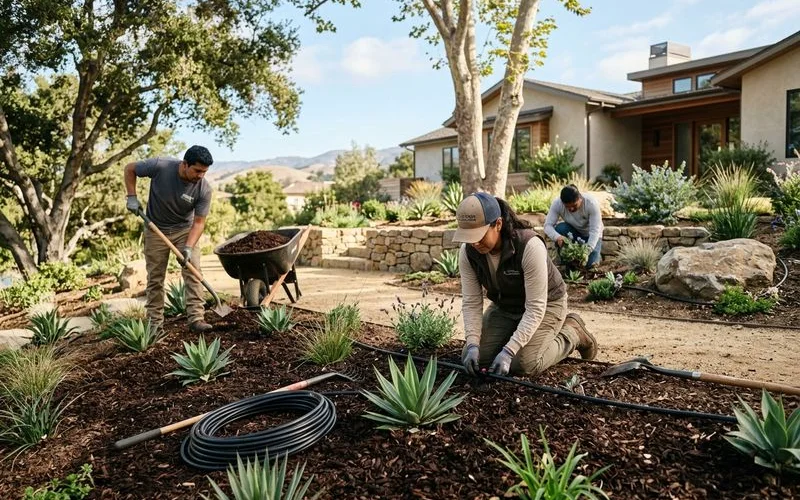
Native and climate-appropriate plants are often a good fit here because they can support the overall landscape without depending on constant moisture. Still, placement matters. A plant that is excellent on a dry outer slope may not belong immediately against a structure. Near the house, the design needs extra judgment, especially where embers, reflected heat, and foot traffic overlap. That is where hardscaping, careful edging, and lower-profile planting can be used to create a cleaner transition between the home and the rest of the slope.
Water-wise irrigation is a structural issue, not a finishing touch
On a hillside, irrigation is never just about plant health. It is part of erosion control. Overwatering can push soil downhill, saturate weak spots, and undermine the very plants meant to stabilize the slope. Underwatering, especially during establishment, can leave roots shallow and ineffective. The system has to be tuned so water reaches the root zone without creating runoff.
That is why irrigation retrofits are often one of the highest-value upgrades in foothill landscaping. If a property still relies on an outdated spray pattern, uneven emitter placement, or watering that ignores slope and exposure, the landscape is working against itself. Water should be applied slowly enough to soak in. On slopes, that usually means more careful scheduling and distribution rather than simply increasing volume.
California’s landscape guidance also emphasizes evaluating irrigation before taking out turf, which is sensible on hillside homes. Sometimes the issue is not the entire landscape plan, but one or two inefficient zones that create waste and erosion at the same time. Fixing those systems can be a more immediate and economical step than starting over. It also creates a better base for turf removal, native planting, or conversion to a more drought-resistant landscape.
Turf removal makes sense only when the replacement is ready
There is strong momentum in California toward reducing unnecessary turf, but on a hillside that step has to be handled carefully. Removing grass without a replacement plan can expose soil, increase runoff, and leave the property looking unfinished for months. If turf is coming out, the replacement should already be designed to cover the ground, route water appropriately, and establish quickly enough to protect the site.
That is where landscape design becomes more than an aesthetic exercise. The replacement area may need a mix of shrubs, grasses, mulch, and hardscape to hold the slope. In some cases, a less thirsty planting scheme is enough. In others, the most stable solution combines planting with steps, terrace-like breaks, or a path that helps manage movement across the grade.
The key is resisting the temptation to think of turf removal as a single event. It is really a transition from one soil condition to another. The soil has to stay protected throughout that transition, especially during the first wet season after conversion.
What a practical foothill plan usually includes
A hillside project that performs well over time usually has several elements working together. The exact mix depends on the property, but the recurring themes are familiar.
That sequence sounds simple, but it reflects a lot of field experience. The most resilient properties are rarely the ones with the most dramatic plant palette. They are the ones where the soil is covered, water is used carefully, and the design respects the hillside instead of pretending it is flat.
HOA rules and homeowner flexibility
Homeowners in planned communities sometimes worry that water-wise landscaping will run into association restrictions. California water-restriction guidance is clear that homeowners’ associations cannot prohibit certain water-efficient landscaping choices during drought-related restrictions. That matters in foothill neighborhoods where landscape changes often happen under HOA oversight and where residents want to conserve water without getting caught in avoidable disputes.
This does not mean every project is free of review. It does mean that drought-tolerant landscaping, native planting, and efficient irrigation should not be dismissed as decorative preferences. They are legitimate responses to regional conditions, and in many settings they are the most responsible choice available.
For homeowners, that distinction can help the conversation stay practical. Rather than asking whether a landscape looks “natural enough” or “formal enough,” the better question is whether it manages water well, protects the slope, and fits the neighborhood’s visual character. In the San Gabriel Valley, that visual character often includes hillsides that feel planted, not paved over, and maintained, not overwatered.
The landscape should work in both dry months and storm season
The best erosion-resistant landscapes hold up across seasons, not just during the long dry stretch when everything looks calm. In summer, they need to conserve water and survive heat. In winter, they need to slow runoff and keep soil in place. That dual test is where many designs fail, because a slope that seems stable in August may reveal weak points in the first real rain.
A mature hillside landscape should feel settled. Plants should be rooted deeply enough that the soil no longer shifts with every watering cycle. Mulch should still be doing its job without piling into drains or bare patches. Hardscape should be cleanly integrated, not fighting erosion around its edges. Irrigation should be balanced enough that the slope is supported without being saturated. Those are modest goals, but they are the difference between a landscape that merely looks finished and one that holds together year after year.
Foothill homes deserve landscapes that respect the terrain they sit on. When hardscaping, plant selection, water use, and slope management are treated as one system, the result is sturdier, easier to maintain, and better suited to the realities of the San Gabriel Valley. That is what erosion-resistant landscaping should do: protect the soil, use water wisely, and keep the hillside beautiful without asking it to be something it is not.