
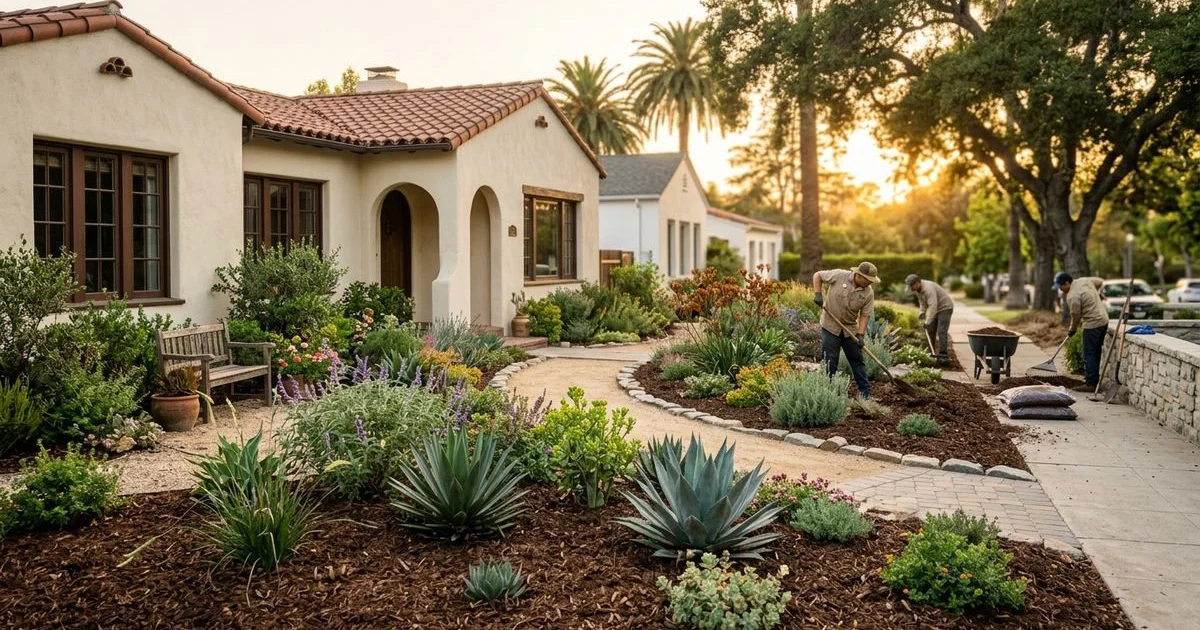
How to Create a Fire-Resistant Planting Plan
A fire-resistant planting plan is not a matter of filling a yard with a few “safe” plants and hoping for the best. It starts with reading the site the way a seasoned landscape designer would, then making choices that work together under real conditions: slope, sun, irrigation, runoff, and maintenance habits. In the San Gabriel Valley, that approach matters even more. The visual character of the hillsides, the presence of foothill properties, and the mix of dry weather and water-conscious regulations all push a planting plan toward something that is both resilient and restrained.
The strongest plans are not built around a single idea. They combine drought resistant landscaping, sensible hardscaping, erosion control, and plant selection that fits both the microclimate and the practical realities of the property. A fire-resistant landscape in this region usually looks tidy, well-spaced, and deliberate. It is not barren, and it is not a wildfire cliché of gravel and isolation. Done well, it feels rooted in the place.
Start with the site, not the plant list
Many planting plans fail because they begin with shopping, not observation. Before removing turf or ordering plants, assess how the property behaves through the day. Where does the sun hit hardest? Which areas dry out fastest? Where does water collect after irrigation or rain? Which slopes shed soil, and which flat areas hold moisture too long?
That sequence matters because California water guidance places real emphasis on irrigation, soil, sun exposure, and plant selection before turf removal. In practice, that means you do not strip out a lawn and replace it with random low-water shrubs. You first decide what the site can support and how the space should function. On a hill, for example, the soil and runoff pattern often matter as much as the plant palette. On a flat, exposed front yard, the issue may be heat load and irrigation efficiency.
The best time to notice these things is before you buy anything. A landscape that looks good in a nursery can struggle badly on a south-facing slope or in a pocket of reflected heat near masonry. Site conditions should drive the design, not the other way around.
Treat the plan as water management first
In California, landscape design and water management are inseparable. The state’s Model Water Efficient Landscape Ordinance makes that point clearly by regulating water usage in new and renovated landscapes and encouraging climate-appropriate and native plants, alternative water sources, and efficient irrigation. For anyone designing in the San Gabriel Valley, that is not an abstract policy detail. It shapes the whole logic of the planting plan.
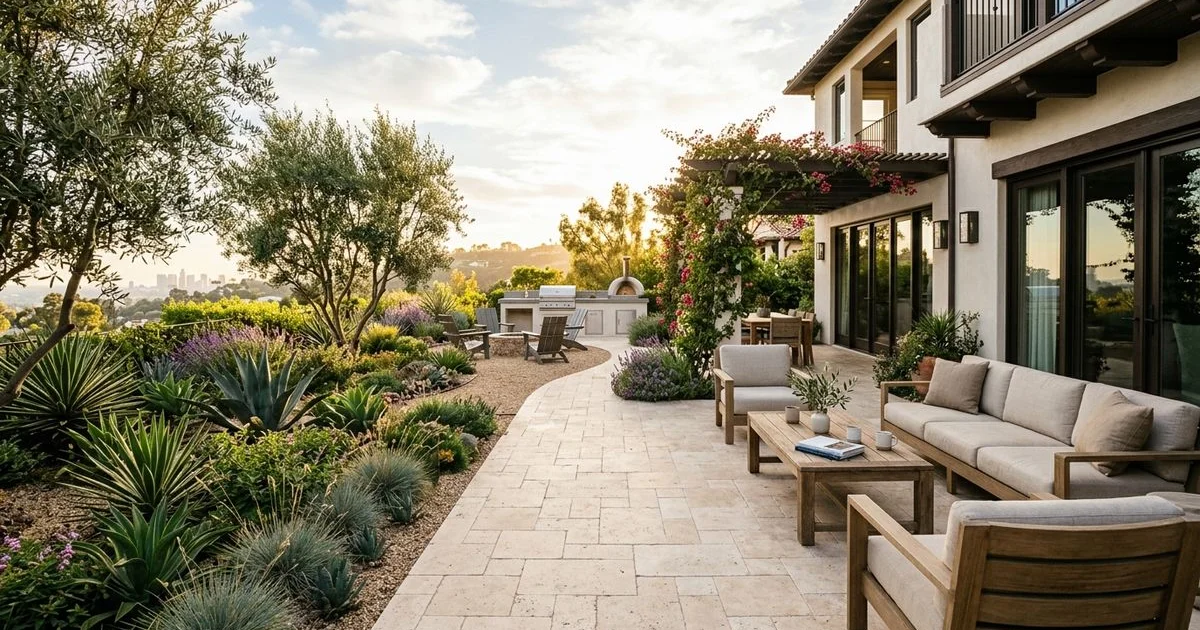
A fire-resistant planting plan should be conservative with water from the beginning. That does not mean every plant must be a desert plant. It means grouping plants by water need, using efficient irrigation, and avoiding the common mistake of mixing thirsty and dry-loving species in the same zone. If one side of the yard needs frequent watering and the other side prefers infrequent irrigation, separate them. Good hydrozoning reduces stress on plants, which in turn helps keep the landscape more stable and easier to maintain.
Water-wise design also protects you from the more subtle failures that show up over time. A plant that receives the wrong irrigation schedule may survive for a while and then decline just when it should be performing its job. In a fire-conscious design, weak plant health is a problem. Plants that are stressed from poor watering or bad placement do not stay attractive, and they are harder to maintain in a disciplined way.
Use hardscaping to define structure and reduce clutter
Hardscaping is often undervalued in fire-resistant planting plans, probably because people think of it as a decorative choice rather than a structural one. In reality, it is one of the most useful tools in landscape design. Paths, patios, retaining elements, and other nonplant features help break up the yard into manageable areas and reduce the amount of continuous planting mass.
That matters on properties where the ground tilts, especially in hillside landscaping. Slopes are not just harder to plant, they are harder to keep stable. Thoughtful hardscaping can slow runoff, create usable terraces, and make maintenance safer and simpler. It can also help preserve the visual character of a hillside property while reducing the need for heavily planted ground that may be difficult to irrigate evenly.
A well-placed hardscape edge can also give the planting plan a clear boundary. That is useful in fire-resistant design because it keeps the landscape from becoming an undifferentiated thicket. You want plants grouped intentionally, with space for access and upkeep. Hardscaping gives the design some discipline, which is often what a property needs more than another ornamental flourish.
Respect the slope, especially in foothill areas
Hillside landscaping in the San Gabriel Valley deserves special care. Slopes need erosion control, drought tolerance, and firewise planting, and those requirements are not optional if you want the landscape to hold together over time. A steep or even moderately inclined yard can shed soil quickly if the planting plan is loose or poorly staged.
The plant palette should do some of the stabilizing work. Deep-rooted, drought-tolerant plants are useful because they help anchor soil and reduce the churn of constant watering and replanting. But slope planting is not only about what goes in the ground. It is also about how the ground itself is prepared. If the soil structure is poor or the drainage is unmanaged, even the right plants may struggle.
On a hillside, spacing is especially important. Overcrowding makes maintenance difficult and can trap runoff in awkward ways. Too much bare soil, on the other hand, invites erosion. The balance is site-specific, which is why borrowed formulas rarely work well. A careful plan uses enough plant cover to protect the slope, while keeping each plant accessible enough for pruning, inspection, and irrigation adjustment.
Choose plants for function, not just appearance
In fire-resistant planting, plant selection should be deliberate and regionally grounded. For the San Gabriel Valley, California native plants and other climate-appropriate species are particularly useful because they fit local conditions and support water conservation goals. The California Native Plant Society and related local resources point to species that fit this kind of work, including California buckwheat, California sagebrush, manzanita, ceanothus, monkeyflower, foothill penstemon, bunchgrasses, and the locally named San Gabriel oak.
That list is not a shopping cart. It is a starting point for understanding plant behavior. Some of these plants are better as structural anchors, some work well as lower fillers, and some add seasonal color without demanding constant irrigation. The broader point is that native habitat gardening can be both beautiful and practical when it is matched to the site.
It also helps to remember that the San Gabriel Mountains are home to many rare, threatened, and endangered species. That ecological context should make a gardener more careful, not less. Using regionally appropriate plants is not only about appearance or convenience. It is part of working with the local landscape rather than against it.
Build the planting plan around microclimates
One of the most common mistakes in drought resistant landscaping is assuming that one part of the property behaves like every other part. In reality, microclimates can differ sharply even on a small lot. A side yard shaded by a wall may hold moisture longer than the front yard. A corner exposed to afternoon sun may need a very different plant than an area protected by a mature tree or a slope.
This is where a careful planting plan becomes more than a catalog of species. Group plants according to light, water need, wind exposure, and drainage. A plant that looks perfect on paper may struggle if placed in a hot reflected-heat zone or in a pocket where water lingers. Matching plants to microclimate reduces replacements later, and replacement work is where premium landscape construction many “low-maintenance” landscapes quietly become expensive.
In San Gabriel Valley landscape design, this step often separates a generic front yard from a landscape that actually feels tuned to the region. The best plans show respect for exposure and elevation. They acknowledge that hillside landscaping, street-facing planting beds, and interior courtyard spaces all behave differently.
Keep irrigation efficient and adjustable
A fire-resistant planting plan cannot rely on casual watering habits. Efficient irrigation matters because it supports plant health while avoiding waste. It also makes the landscape easier to manage as conditions change through the season or as plants mature. A newly installed landscape usually needs different irrigation than one that has been established for several years, and a good plan anticipates that difference.
Irrigation retrofits are often worthwhile when replacing turf or reworking an older yard. Older systems may water too broadly, too inconsistently, or in ways that do not match the current plant palette. If the plan includes native plants or climate-appropriate species, the irrigation strategy should reflect their needs rather than forcing them into a lawn-style schedule.
This is also where homeowners can prevent a lot of frustration. A landscape may be labeled drought tolerant, but if it is overwatered, it can still fail to thrive. The goal is not just to use less water. The goal is to irrigate smartly enough that the planting plan can actually do its job.
A practical sequence for shaping the plan
The order of operations matters. A lot of failures come from skipping steps, especially when a yard has slope, turf, or outdated irrigation. A simple planning sequence keeps the project grounded:
That sequence sounds basic, but it prevents a great deal of trouble. It keeps the design from becoming a patchwork of incompatible choices. It also helps you make better use of native plants, drought resistant landscaping principles, and slope-sensitive construction.
Account for HOA rules without overestimating them
In some neighborhoods, people worry that an HOA will block any move toward water-efficient landscaping. California guidance is helpful here, because homeowners’ associations cannot prohibit certain water-efficient landscaping choices during drought-related restrictions. That does not mean every plan proceeds without review, but it does mean homeowners have room to make practical, conservation-minded decisions.
This matters because people sometimes delay useful changes out of fear that a board will reject them. In reality, a well-prepared plan that emphasizes water conservation, efficient irrigation, and climate-appropriate planting is usually easier to defend than a vague request to “make it prettier.” If you can show that the design is organized, restrained, and regionally appropriate, the conversation is more straightforward.
Fire resistance and beauty can share the same design language
A common misunderstanding is that fire-resistant landscapes must be stark or uninviting. That is rarely true. The most successful plans in the San Gabriel Valley usually feel layered and intentional. They use plants with different forms, but not in a way that creates tangled growth. They include hardscaping that gives the property shape. They keep maintenance realistic. They respect the hillside when there is one, and they support water-wise design without making the yard look exhausted.
Think of the planting plan as a long-term composition. California buckwheat can provide structure and seasonal interest. Sagebrush can support a more regional, brushy character without looking manicured to death. Ceanothus and manzanita add form and texture. Bunchgrasses can soften edges and help the design read as cohesive rather than overly built. When these choices are placed carefully, they do more than reduce water use. They make the garden feel rooted in the local landscape.
The key is restraint. Fire-resistant planting rewards clarity, spacing, and maintenance discipline. It does not reward clutter or sentimental overcrowding. A yard that is easy to walk, inspect, and adjust is much more likely to stay healthy over time.
Designing for the San Gabriel Valley specifically
The San Gabriel Valley has its own set of pressures. Hillside visual character, drought-tolerant planting expectations, and water-efficient landscape requirements all shape what counts as good design here. A planting plan that makes sense in another region may look out of place, or perform poorly, on a slope in this part of Southern California.
That is why local references matter. Native and climate-appropriate species fit better, and so do plans that address erosion control and runoff. Turf removal can be smart, but only when the replacement plan is equally thoughtful. A stripped lawn replaced with poor drainage and thirsty plants is not an improvement. A turf conversion that respects irrigation, soil, and slope usually is.
There is also a visual dimension that should not be ignored. Many homeowners want a yard that feels connected to the foothills, not one that erases the setting. Fire-resistant planting plans can support that goal. They can echo the region’s native character, use hardscaping to frame views, and create a landscape that feels both careful and natural.
A strong fire-resistant planting plan is not built on fear. It is built on observation, restraint, and the willingness to let the site tell the truth. When irrigation, plant selection, slope, hardscaping, and water conservation all line up, the result is a landscape that is easier to maintain and better suited to the San Gabriel Valley. That is usually where the real success shows up, not in the first week after planting, but in the years that follow, when the yard still makes sense.