
How to Improve Drainage in a Water-Wise Landscape
Drainage and water-wise design are often discussed as if they sit on opposite sides of a landscape plan. In practice, they are inseparable. A yard that conserves water but lets runoff pool near the foundation, erode a slope, or oversaturate planting beds has not really solved the problem. It has just moved it around.
That tension shows up often in California landscapes, especially in the San Gabriel Valley and similar foothill communities where slope, heat, seasonal rainfall, and fire risk all shape the way a property should be planted and graded. A good landscape design in this part of the state does more than look restrained on water. It handles runoff, respects the soil, works with the sun exposure on each part of the site, and uses plant choices that are suited to the local climate rather than fighting it.
Improving drainage in a water-wise landscape is usually not a single fix. It is a series of decisions, some small and some structural, that start with observation and end with a planting plan that can handle the site as it actually behaves. The best results come from seeing drainage as part of landscape design, not as an afterthought.
Start by reading the site, not the symptoms
A wet patch in the lawn or a muddy strip along a path is the symptom. The real issue may be compacted soil, poor grading, too much irrigation, runoff from a neighbor’s hardscaping, or a plant palette that asks for more water than the site can absorb. Before changing anything, spend time watching how water moves after irrigation and after rain.
This is especially important in drought resistant landscaping, where every gallon should be doing useful work. A dry climate landscape does not need to be barren, but it does need to be disciplined. That begins with understanding where water collects, where it sheds too quickly, and where it disappears into the soil without helping the plants.
I like to walk a site after a light rain and again after a deep watering cycle. The patterns are often different. A shallow depression might hold water for hours, while a slope sends it racing toward the street. A shaded side yard may stay damp because evaporation is slower, while a hot south-facing strip may dry so fast that the irrigation is compensating for design flaws rather than plant need.
That kind of observation matters because drainage problems are rarely isolated. They usually connect to irrigation, soil texture, planting density, and even the layout of hardscaping.
Soil, sun, and irrigation have to be considered together
California water guidance consistently points landscapers toward three basics before making major changes: irrigation, soil, and sun exposure. That is not abstract advice. It is the core of drainage planning.
Soil determines how quickly water enters the ground and how long it stays there. Sun exposure influences how quickly the surface dries and which plants can thrive without excess irrigation. Irrigation design decides whether water is being applied evenly and in the right amount. If any one of those pieces is off, drainage problems can appear even in a landscape that otherwise looks well planned.
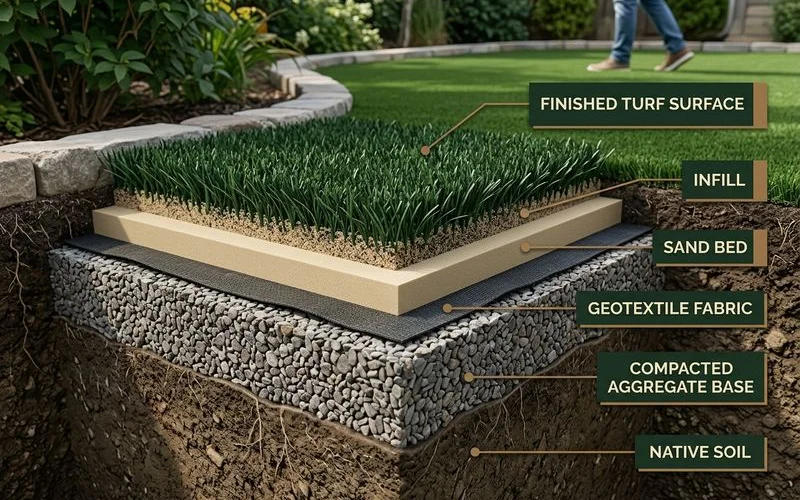
A common mistake is to increase watering frequency when paver patio specialists plants look stressed, then blame drainage when the real problem is plant placement. Another is to strip turf, replace it with mulch and drought tolerant plants, and then discover that runoff has nowhere to go because the subgrade was never corrected. Turf removal can reduce water use, but it also changes the way the surface behaves. A renovation should account for that shift from the beginning.
Water-efficient landscapes work best when irrigation is zoned by plant need and site conditions. A sunny slope with native shrubs should not be on the same schedule as a shaded courtyard planting bed. In many cases, drainage problems are amplified by uniform watering that ignores microclimates.
The slope tells you a lot, especially on hillside properties
Hillside landscaping deserves special attention because slopes naturally shed water and are prone to erosion if the design is too rigid or too thirsty. In foothill communities, that is not a niche concern. It is a major design issue.
On a slope, the aim is not to force water to stay put everywhere. The goal is to slow it down, spread it out safely, and help the ground absorb what it can without washing away topsoil. That is where the relationship between drainage and erosion control becomes obvious. A slope planted with the wrong species or watered too heavily can fail even if the irrigation system is technically efficient.
For hillside landscaping, plants with deep or fibrous roots are valuable because they stabilize soil. Groundcover, bunchgrasses, and drought-adapted shrubs can help anchor the surface while reducing the open soil that erosion loves. In the San Gabriel Mountains and surrounding areas, native and climate-appropriate plantings are especially useful because they are suited to local conditions and can be arranged to complement the hillside’s visual character rather than fight it.
The challenge is that slopes also need careful hardscaping. Terracing, swales, and retaining features can make a property workable, but if those elements are designed without a drainage path, water can back up and saturate areas that were supposed to stay stable. Hardscaping should support drainage, not interrupt it.
Smart drainage often begins with small corrections
Not every drainage problem requires major excavation. Some of the most effective improvements come from modest corrections that let water move where it should.
Shallow surface grading can redirect sheet flow away from foundations and toward planting beds that can absorb it. A slight regrading may be enough to eliminate low spots where water lingers. In other yards, the answer is a simple adjustment to the irrigation schedule or emitter placement. I have seen landscapes where one overwatering zone created the impression of a soil failure, when the real issue was a few emitters placed too close together in the wrong part of the bed.
Mulch also plays a role, but only when it is used intelligently. A proper mulch layer helps protect the soil surface from crusting and reduces splash erosion, but it will not fix a drainage issue buried below grade. Too much mulch, especially if piled against trunks or stems, can make matters worse by trapping moisture where it does not belong.
A useful way to think about drainage is this: first move the water safely, then help the soil accept it, then choose plants that can live with the final moisture pattern. If you reverse that order, you end up compensating for design errors with constant irrigation.
Hardscaping can either solve the problem or create a new one
Hardscaping is one of the most powerful tools in water-wise landscape design, but it is unforgiving when poorly planned. Walkways, patios, edging, and retaining features define how water travels across the site. They can direct runoff to planted areas, or they can trap it against a fence, slab, or slope.
Permeable or well-drained hardscaping areas are often valuable in landscapes that need to conserve water and manage stormwater runoff at the same time. The details matter more than the material label. A patio that looks attractive but slopes toward the house can cause more trouble than a simpler path that sheds water correctly. Likewise, a retaining wall without adequate drainage behind it can become a hidden problem during wet weather.
In drought resistant landscaping, hardscaping should be judged by how it supports the planted portions of the yard. A dry creek bed, for example, is not just decorative when it is properly placed. It can help carry runoff through a site while reinforcing the design language of the landscape. The mistake is treating such features as ornaments rather than functional pieces of the drainage system.
The best hardscaping usually looks understated because it is doing its job quietly. It shapes flow, keeps feet dry, and gives roots and soil a fighting chance.
Plant selection affects drainage more than many homeowners expect
Plant choice is often framed as a water use issue, but it also affects drainage. Dense canopies, deep root systems, and plant spacing all influence how quickly soil dries and how much runoff gets intercepted before it reaches the lowest point in the yard.
California native plants are especially useful here because many of them are adapted to the region’s climate rhythms rather than to constant irrigation. In the San Gabriel Valley, that makes them practical as well as attractive. California buckwheat, California sagebrush, manzanita, ceanothus, monkeyflower, foothill penstemon, bunchgrasses, and San Gabriel oak are all part of a planting conversation that fits the area’s character. These plants can be arranged to stabilize slopes, reduce open soil, and support a more resilient drainage pattern.
The key is to match the plant to the microclimate. A plant that thrives on a sunny slope may struggle in a shaded corner where water lingers. A species that tolerates summer dryness may still fail if it sits in a compacted pocket that never drains. Regional plant lists are useful, but they are not enough on their own. Site conditions matter more than the label on the nursery pot.
This is where careful landscape design makes a real difference. Instead of filling a yard with a single idea, a thoughtful plan layers shrubs, grasses, and groundcovers in ways that suit the site’s water movement. That approach helps with drainage, reduces maintenance, and makes the planting feel more natural.
Firewise goals and drainage goals can work together
In this region, drainage planning should not ignore firewise concerns. The same thoughtful plant selection that helps reduce water demand can also support ember-resistant zone planning and defensible-space goals. The point is not to make the landscape sparse. The point is to create a planted environment that is both functional and defensible.
Native and climate-appropriate plants are often a good fit here because they can be chosen for spacing, structure, and maintenance needs that align with fire-resistant planting goals. A slope planted with well-spaced shrubs and grasses can drain better than one crowded with thirsty ornamentals. That is not a coincidence. It is a sign of coherent design.
There is also a practical benefit to this overlap. Landscapes that resist overwatering are less likely to produce the lush, weak growth that demands constant trimming and watering. That makes them easier to maintain in a dry climate and more predictable over time.
Irrigation retrofits are often the fastest path to better drainage
When a landscape is already in place, the quickest improvements often come from the irrigation system. If water is applied where the soil cannot absorb it, drainage problems will keep returning no matter how attractive the planting design may be.
Modernizing irrigation does not always mean installing a brand-new system. Sometimes it means reducing spray over hard surfaces, correcting broken or poorly aimed emitters, adjusting run times, or splitting plant types into more appropriate zones. In water-wise landscape design, precision matters more than volume.
A few practical checks tend to reveal a lot:
- Make sure sprinklers or emitters are not watering pavement, walls, or mulch mounds.
- Watch for runoff during the first few minutes of a cycle. If water moves before it can soak in, the schedule is probably too aggressive.
- Compare dry and shaded planting zones separately, since they rarely need the same amount of water.
- Look for places where overwatering is hiding a grading problem, especially near structures or at the bottom of slopes.
- Revisit irrigation after turf removal or major planting changes, because the whole water pattern may have changed.
Those are simple checks, but they often identify the real source of a drainage complaint faster than a full rebuild.
Turf removal is a chance to fix the whole system
Removing turf is often part of California water conservation, but the job should not stop when the grass is gone. Turf masks a lot of drainage issues. Once it is removed, the site becomes more honest. Low spots show up. Hard soil reveals itself. Water paths become visible.
That is why the California approach to landscape transformation emphasizes assessing irrigation, soil, sun exposure, and plant selection before removing turf. If the goal is a durable water-wise landscape, the post-turf plan matters as much as the removal itself.
A good replacement design often includes a mix of native shrubs, grasses, and groundcovers, along with hardscaping elements that direct runoff appropriately. The result should be a landscape that uses less water, not one that requires more intervention because the surface can no longer absorb what it receives.
This is one reason many successful renovations feel more like reconstruction than cosmetic change. The surface changes are visible, but the deeper success comes from what happens below them.
Local rules and HOA rules still matter
Landscape drainage is not just a design question. In California, the regulatory environment encourages water-efficient landscapes in new and renovated settings, and the Model Water Efficient Landscape Ordinance reflects that broader direction. Efficient irrigation, climate-appropriate planting, and alternative water sources are all part of the conversation.
Homeowners’ associations also come up frequently in real projects, especially when residents want to replace thirsty lawn or adjust plantings for better water use. During drought-related restrictions, HOAs cannot simply prohibit certain water-efficient choices in the way some people assume they can. That matters when a homeowner is trying to fix drainage and reduce water use at the same time.
The practical takeaway is straightforward. If the landscape changes affect drainage, irrigation, or plant selection, those changes should be considered within the local rules and community framework from the start. That avoids rework and keeps the project moving.
A landscape that drains well usually looks calmer
The best drainage solutions rarely announce themselves. They simply make the yard easier to use and easier to maintain. The soil stays in place. The slope holds. The plants look better because their roots are not sitting in water one week and baking dry the next. After rain, the site recovers quickly instead of turning into a set of muddy excuses.
That calm appearance is not accidental. It comes from design that respects the real shape of the land, the local climate, and the water needs of each plant zone. In the San Gabriel Valley and other California foothill areas, that means combining erosion control, drought tolerant landscaping, irrigation efficiency, and firewise planting into a single plan rather than treating them as separate goals.
Drainage improves when the landscape is built to receive water deliberately. A water-wise yard does not try to eliminate runoff entirely. It manages it with intent. It sends water where soil and roots can use it, keeps it away from structures, and uses grading, hardscaping, and planting to turn a problem into part of the design.
That is the standard worth aiming for.