
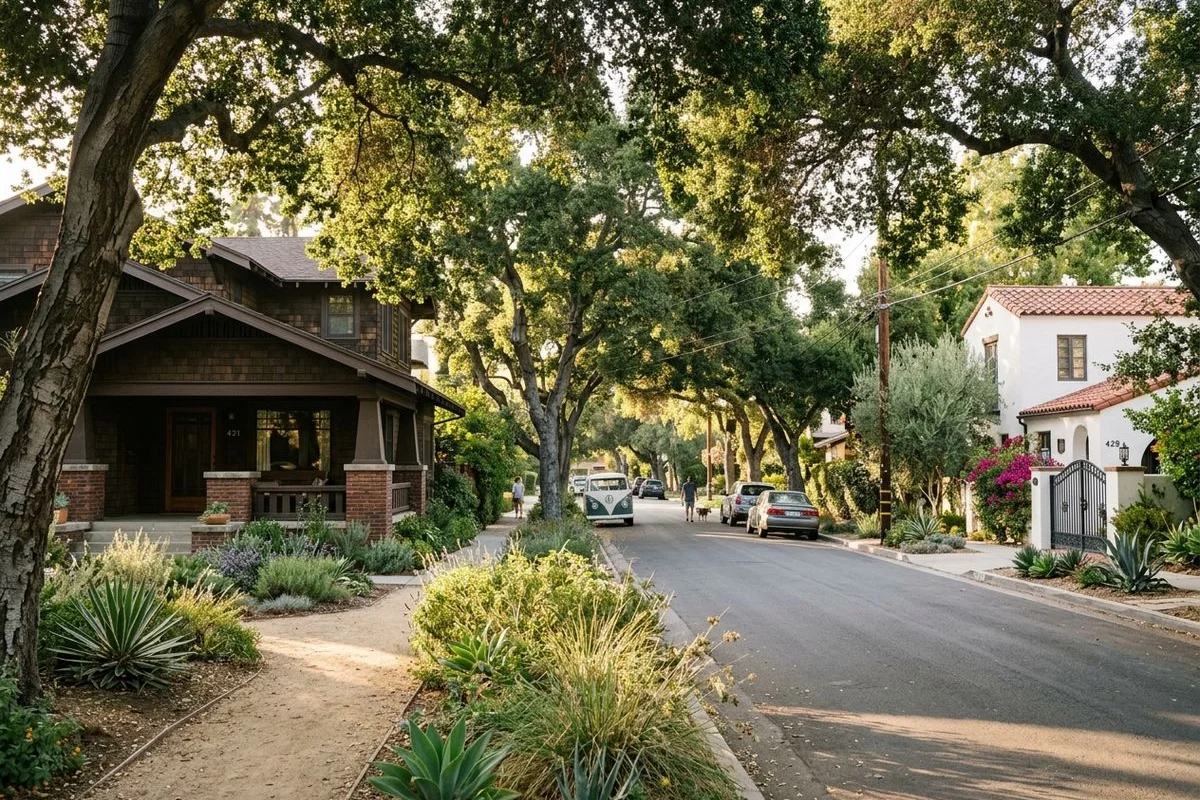
Landscape Design Ideas for California Native Habitat Gardens
A California native habitat garden asks for a different kind of design thinking. It is not just about replacing turf with shrubs and calling it a day. In the San Gabriel Valley, where hillside homes, warm sun, and seasonal water pressure shape nearly every planting decision, the garden has to work as a living system. It needs to hold soil, slow runoff, support local habitat, handle long dry stretches, and still feel intentional from the curb and from inside the house.
That is where landscape design becomes more than visual planning. A well-built native garden balances hardscaping, plant selection, irrigation, drainage, and firewise concerns without losing the character that makes Southern California gardens feel grounded in place. Done well, it can look quiet and natural while performing far better than a conventional landscape that relies on high-water turf and thirsty ornamentals.
Start with the site, not the shopping list
The biggest mistake I see is starting with plants before understanding the site. California’s water conservation guidance is clear on this point: before removing turf or changing a landscape, assess irrigation, soil, sun exposure, and plant selection. That sequence matters. A plant that thrives on a shaded, moisture-retentive flat lot may fail quickly on a hot slope with thin soil and strong reflected heat. The same species can behave very differently from one part of a yard to another.
In the San Gabriel Valley, microclimate often changes within a few steps. A front yard may get full afternoon sun and run hot against a wall, while the side yard stays cooler and more sheltered. A backyard may drain quickly on one side and collect water on another. These differences should drive the design. When the site is mapped honestly, the garden stops fighting itself.
This is also where WUCOLS, the regional guide to plant water needs, becomes useful in practical terms. It is not a decorative reference. It is a decision-making tool. If you match plant water use to the actual conditions on the property, you spend less time compensating with irrigation and more time letting the garden settle into a stable rhythm.
Native habitat gardens work best when the structure is strong
A California native habitat garden does not mean loose, unplanned planting. The best ones have a clear structure underneath the plant palette. In many San Gabriel Valley settings, that structure comes from a careful mix of paths, low walls, steps, planting terraces, and dry-stacked or masonry elements that manage grade and guide movement.
Hardscaping earns its keep here because it solves multiple problems at once. A retaining wall can stabilize a slope. A decomposed granite path premium hardscape construction can define access without asking for a lot of water. A terrace can create a flat planting pocket where runoff would otherwise rush downhill. The point is not to make the garden hard or formal. The point is to give the plants a reliable frame.
On hillside properties, hardscaping is often the difference between a garden that survives and one that erodes. Slopes need erosion control, drought tolerance, and firewise planting, especially in foothill and hillside landscapes. If water runs unchecked, it strips away fine soil, undercuts roots, and leaves bare patches that invite more runoff next season. Thoughtful grading and terracing reduce that cycle. Even modest interventions, if they are well placed, can improve the whole site.
Plant communities feel more natural than isolated specimens
A native habitat garden usually looks strongest when it borrows from plant communities rather than using plants as isolated accents. California buckwheat, California sagebrush, manzanita, ceanothus, monkeyflower, foothill penstemon, bunchgrasses, and San Gabriel oak all belong in this conversation because they fit the region and reinforce the habitat idea. They also work well when grouped by water need, sun exposure, and soil depth.
This is one reason California native gardens often feel more convincing than highly mixed landscapes. A cluster of ceanothus with bunchgrasses at the edge, for example, reads as a living system rather than a random assortment. California buckwheat has a different texture and seasonal presence than manzanita, which makes it useful for layering. Monkeyflower and foothill penstemon can bring color into lower layers without pushing the design into high-maintenance bedding plant territory.
The best planting plans I have seen do not try to force every species into every corner. Instead, they assign roles. Some plants hold the slope. Some fill space. Some soften edges. Some offer seasonal bloom. Some provide a visual transition between hardscape and open ground. When those roles are clear, the garden develops a coherent rhythm.
Drought resistant landscaping does not have to look sparse
People still hear “drought resistant landscaping” and imagine gravel, a few lonely shrubs, and lots of empty space. That stereotype comes from poor design, not from the idea itself. A water-wise landscape can be layered, varied, and rich in texture. It just gets there with plants and materials that respect the climate instead of working against it.
In practice, drought resistant landscaping succeeds when it avoids excess. Too many different plants, each with different water needs, create irrigation headaches. Too many high-water focal points make the whole system unstable. Too much mulch piled against trunks creates its own problems. The strongest designs use restraint as a strength. They repeat a handful of species, use hardscaping to hold visual weight, and rely on seasonal changes in bloom, foliage, and seed heads for interest.
That kind of restraint also works well in the San Gabriel Valley’s hillside visual character. In many neighborhoods, the land itself is already expressive. The garden does not need to compete with the topography. It needs to complement it. Native grasses moving in the wind, low flowering shrubs, and carefully placed boulders or steps can feel far more site-specific than a crowded ornamental palette.
Firewise planting and habitat design can coexist
One of the more useful lessons from local native gardening is that habitat value and firewise thinking are not mutually exclusive. In fact, they often reinforce one another when the plan is disciplined. The CNPS San Gabriel Mountains chapter highlights ember-resistant zone rules and native plants suitable for local gardens, which reflects the reality many homeowners face in foothill communities. If you are designing near a slope or in a fire-prone area, plant selection and placement matter as much as aesthetics.
That does not mean stripping a site of all vegetation. It means thinking carefully about spacing, maintenance access, and the relationship between plants and structures. Shrubs should not be crammed against walls. Dense litter should not be allowed to accumulate in critical areas. Low, open planting near buildings can reduce fuel continuity while still supporting a native palette. Hardscape can also help create separation and easier maintenance access around the home.
The most successful projects do not treat firewise planning as a separate agenda. They build it into the design from the beginning. That is much easier than trying to retrofit a dense garden later, especially on a slope where access is already limited.
Irrigation should support the design, not define it
Too many landscapes are built first and irrigated second, which leads to overwatering, under watering, or both. California’s statewide Model Water Efficient Landscape Ordinance has pushed the market toward better water use in new and renovated landscapes, encouraging native and climate-appropriate plants, efficient irrigation, and even alternative water sources where appropriate. That matters because irrigation systems are part of the design, not an accessory.
For a native habitat garden, irrigation usually needs to be more restrained than people expect. New plants may need establishment watering, but that is not the same as permanent high-volume irrigation. Grouping plants by water needs, using efficient distribution, and reducing turf all help the system make sense. If a yard still contains turf, turf removal can free up water and simplify the layout, but only if the remaining planting zones are designed with equal care.
A water-wise design also respects the fact that soils and slopes affect how water behaves. On a hillside, excess irrigation can encourage runoff before roots ever benefit. On a flat site with heavier soil, too much water can linger around roots and create stress. The goal is not just to use less water. It is to place water where plants can actually take it in.
Think in layers, especially on slopes
Hillside landscaping rewards layered thinking. On a slope, there is no single correct answer for all elevations. Upper zones may be drier and hotter, while lower pockets collect more moisture. A garden that reflects this reality is usually easier to maintain and more believable visually.
The upper slope often suits tougher, smaller plants that tolerate heat and leaner soil. Mid-slope areas can support a broader mix, especially where irrigation and soil improvement have been built in carefully. Lower areas may take advantage of slight moisture retention, but they still need drainage that keeps water from pooling. That is where erosion control, drainage planning, and plant selection work together.
It is worth saying plainly that slope gardens are not forgiving of shortcuts. If the soil preparation is poor or the irrigation is uneven, failures show up quickly. Bare patches expand. Water channels form. Plant roots remain shallow. So the design has to anticipate pressure points, not merely fill them with foliage.
A practical planting framework for a native habitat garden
When homeowners ask where to begin, I usually suggest thinking in terms of function first, then species. A short, focused framework can keep the project realistic:
That sequence is simple, but it keeps the garden from becoming expensive guesswork. It also aligns with what California water guidance emphasizes, which is careful assessment before turf removal and intelligent plant selection after. A beautiful plan that ignores water and soil conditions usually costs more in the long run than a restrained one that fits the site from the start.
HOA rules, local water policy, and homeowner reality
In communities with homeowners’ associations, the rules can feel like another layer of friction. Still, California’s water-restriction guidance makes an important point: HOAs cannot prohibit certain water-efficient landscaping choices during drought-related restrictions. That does not remove every local review process, but it does matter when homeowners are trying to replace lawn with native plantings or reduce irrigation demand.
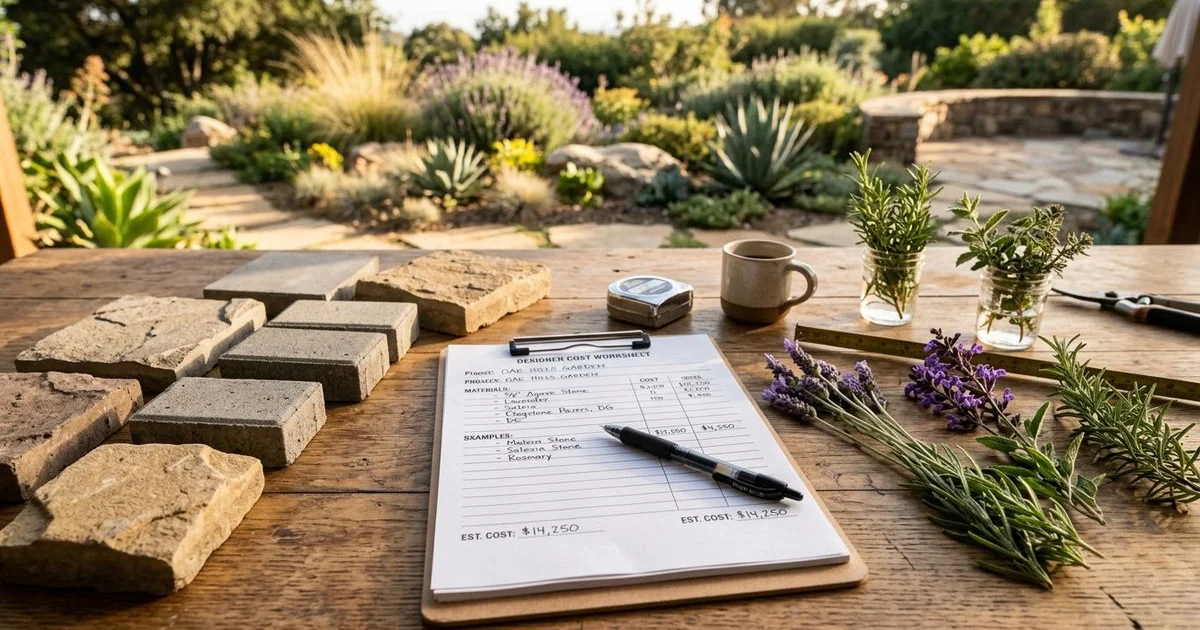
This is where good documentation helps. Clear plans, plant lists, and a simple explanation of how the landscape supports drought resistant landscaping can make a project easier to approve and easier to build. Homeowners are often more successful when they can show that the garden is not just decorative, but intentional, water-wise, and compatible with local conditions.
The same is true for new construction. In the San Gabriel Valley, planning discussions increasingly recognize the hillside visual character of the region and the need for drought-tolerant plantings and water-efficient landscapes. That means the right garden can do more than beautify a property. It can support the broader landscape identity of the neighborhood.
Habitat value comes from details, not slogans
A native habitat garden is only as good as its details. The right plants matter, but so do timing, spacing, irrigation, and maintenance. If you want habitat value, think about what the site offers through the year. Bloom windows, seed heads, shelter, and layered cover all contribute more than a simple “native” label ever will.
This is one reason locally adapted species are so compelling. California buckwheat and California sagebrush can carry a landscape through dry stretches. Manzanita and ceanothus provide structure. Monkeyflower and foothill penstemon add seasonal variation. Bunchgrasses give movement and a sense of continuity. San Gabriel oak connects the garden to place in a way that imported ornamentals never quite can.
The San Gabriel Mountains are especially significant in this conversation because they support many rare, threatened, and endangered species. A home garden will never replicate that habitat, of course, but it can still function as a small piece of the larger ecological picture. That shift in perspective changes design choices. You start asking not just what looks good, but what belongs here and what will last.
The best native gardens feel inevitable
When a California native habitat garden works, it feels almost inevitable, as if the plants and hardscape were always meant to be there. The slope looks calmer. The irrigation feels lighter. The garden has texture without fuss. Water runs where it should, roots hold where they can, and the space begins to read as part of the land rather than an interruption of it.
That sense of ease is earned. It comes from matching the design to the site, respecting microclimate differences, using hardscaping where structure is needed, and selecting plants that can do real work in a hot, variable climate. It comes from treating drought resistant landscaping as a design discipline, not a compromise. And in the San Gabriel Valley, where hillside properties, firewise concerns, and water efficiency all overlap, it often produces the most durable and satisfying landscapes of all.
A good native habitat garden does not ask for constant rescue. It asks for good judgment at the start. After that, it gives back in ways that are visible every season: cooler ground, steadier soil, lower water use, and a landscape that finally seems to understand where it is.