
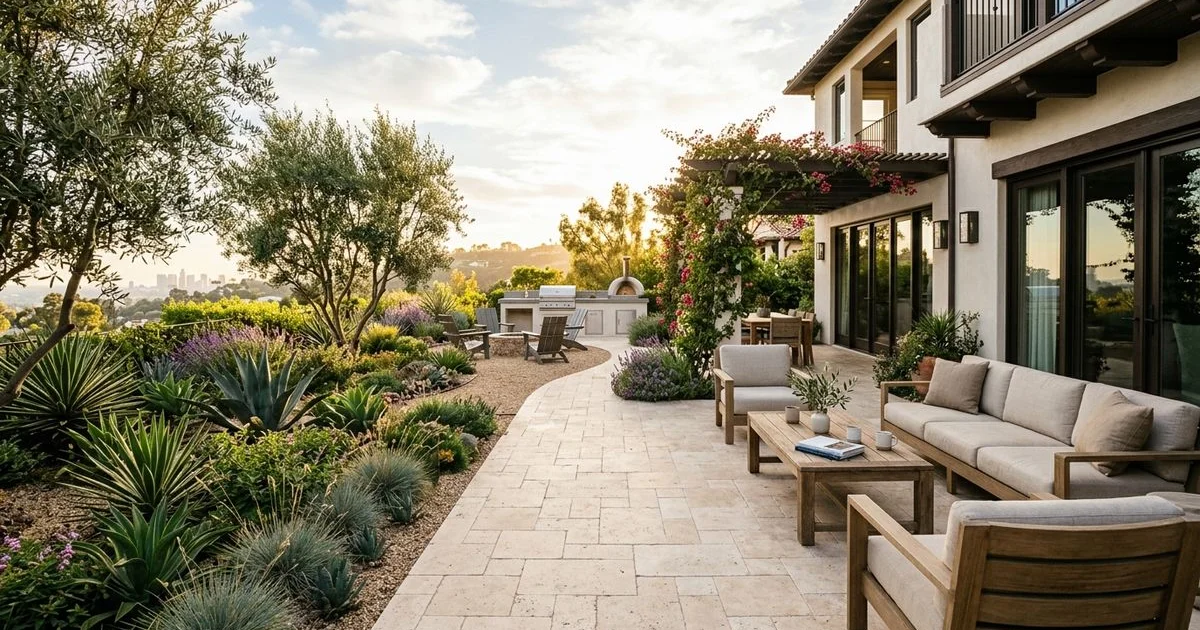
Water-Efficient Landscape Design for Sunny California Lots
Sunny lots in California can look effortless from the street and still be demanding behind the scenes. Full sun exposes every weakness in a landscape. A plant that tolerates shade but struggles with heat will burn through water and still look tired by August. A yard that depends on broad turf panels will ask for more irrigation than many homeowners want to give, especially in places like the San Gabriel Valley, where the landscape has to work with intense sun, hillside grades, drainage concerns, and the visual character of the foothills.
Water-efficient landscape design is not about stripping a property bare or settling for a yard that feels austere. It is about shaping an outdoor space so it uses water where it actually matters. That means paying attention to irrigation, soil, sun exposure, and plant selection before any turf comes out. It also means understanding how hardscaping, drainage, slope stability, and firewise planting fit into the same plan. On a sunny California lot, those pieces are linked. If one is ignored, the whole system tends to show it.
Start with the site, not with the plant palette
The most reliable water-saving landscapes start with observation. A lot of trouble comes from skipping this step and jumping straight to a plant list because a plant looks attractive in a nursery container. A hillside corner in afternoon sun behaves very differently from a flatter front yard that gets reflected heat from a driveway. A narrow side yard may dry out faster than the main garden because wind moves through it. Even within one property, the soil can vary enough to change how long water stays available to roots.
That is why the first practical question is not, "What can I plant?" It is, "Where does the water go, where does it linger, and what kind of sun is the site actually getting?" California’s water conservation guidance points homeowners toward exactly that kind of assessment before turf removal or major redesign. Once you know the conditions, the rest of the work becomes more rational. You are no longer forcing a plant into an awkward place and hoping irrigation will compensate.
The same logic applies to irrigation itself. A system may technically be installed and still be poorly matched to the landscape. Sprinkler heads that overspray pavement, emitters that sit too close to a trunk, or schedules that ignore seasonal need can quietly waste a surprising amount of water. The point of water-efficient landscape design is not simply to install a controller and call it done. It is to make the whole yard easier to water correctly.
Why sunny lots need a different strategy
High sun changes the entire balance of a yard. Evaporation landscaping companies in Los Angeles rises. Soil dries faster. Mulch breaks down more quickly. Plants with broad, thirsty foliage can look stressed even when they are receiving regular irrigation because the root zone heats up and dries out between watering cycles.
This is where drought resistant landscaping earns its reputation, but the phrase can be misleading if it suggests a one-size-fits-all solution. There is no single drought-tolerant recipe that works on every lot. A front yard in Pasadena, a steep slope in the foothills, and a level courtyard in a dense subdivision each call for different plant combinations and different structural elements. What they share is the need for restraint, good drainage, and plant choices that make sense for the amount of sun and heat they actually receive.
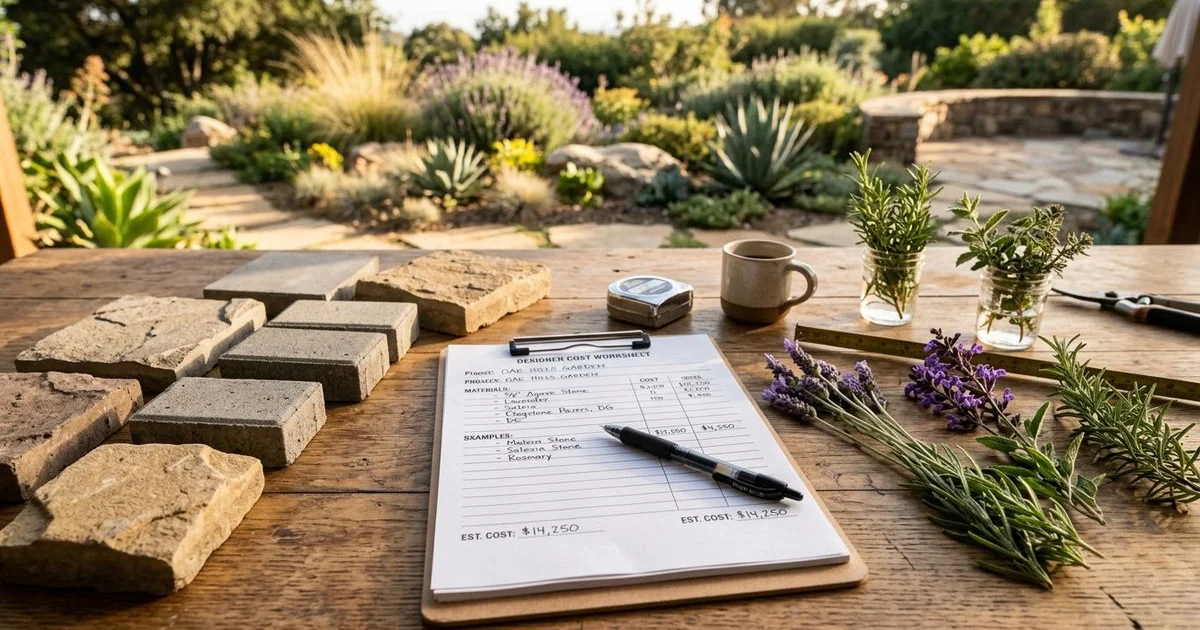
In practice, the best sunny-site landscapes often use fewer water-demanding plants and more strategic surfaces. Hardscaping can create outdoor rooms, direct foot traffic, reduce the total planted area, and break up large expanses that would otherwise need constant irrigation. That does not mean replacing a yard with concrete. It means using patios, decomposed granite paths, boulders, retaining elements, and other hardscape features where planting would be inefficient or unstable. A well-placed hardscape section can solve a water problem and a usability problem at the same time.
Hardscaping is not the opposite of planting
Some homeowners think of hardscaping as the "non-plant" part of a landscape. In real projects, it is often the framework that makes the planting possible. On sunny California lots, especially those with hillsides or awkward grade changes, hardscaping can help manage runoff, define spaces, and reduce the total area that needs regular irrigation.
A small patio may keep seating out of the hottest part of the yard. A stepping-stone path can preserve access without turning a side yard into a strip of thirsty turf. Low retaining walls can shape a slope into usable terraces, which often improves both erosion control and plant performance. Even a carefully positioned gravel or rock section can help the eye rest in a landscape that would otherwise feel overly planted and therefore water-hungry.
There is a catch, of course. Hardscaping must be designed with drainage in mind. A beautiful patio that sends water toward the house or creates a puddling problem near a planting bed will create new headaches. On a sunny lot, the best hardscaping works with stormwater runoff rather than fighting it. It gives water somewhere to move safely, while keeping soil in place and protecting the plant root zones that need it most.
Hillside landscaping demands a stronger hand
Hillside landscaping deserves special attention in the San Gabriel Valley because slopes are not just a visual feature, they are a functional reality. A slope changes how water enters the soil, how quickly it runs off, and how exposed plants are to heat and wind. It also raises the stakes for erosion control. If the landscape is designed casually, the first big rain can reveal where the weak points are.
On sloped lots, the goal is not simply to make the hill look green. It is to stabilize the soil, slow water long enough for roots to use it, and avoid planting patterns that concentrate failure in one area. This is where drought tolerance and hillside performance overlap. Plants that can live through hot, dry stretches usually have root systems and growth habits that suit these conditions better than lush, shallow-rooted alternatives.
In local foothill settings, native and climate-appropriate plants often make the most sense because they are adapted to the conditions already present. California buckwheat, California sagebrush, manzanita, ceanothus, monkeyflower, foothill penstemon, and bunchgrasses are all examples that fit this kind of work well when matched to the right microclimate. San Gabriel oak is another locally named native species that belongs in the conversation, especially when the design calls for a stronger regional identity. These plants are not interchangeable, though. One may prefer a slightly different exposure or soil condition than another, so plant placement still matters.
Slopes also benefit from layered structure. Groundcovers, shrubs, and grasses do different jobs. One helps cover soil, another creates root mass that holds a bank in place, and another provides vertical variation so the slope does not look flattened or monotonous. The strongest hillside landscapes use that layering deliberately.
Native plants are practical, not just scenic
California native plants are often recommended because they belong to the region, but that is only part of the story. They also tend to support water-wise design, especially when the landscape must endure long dry periods and repeated summer heat. The California Department of Water Resources points homeowners to plant selection tools like WUCOLS, which helps match plant water needs to regional conditions. That kind of guidance matters because "native" alone does not tell the whole truth. A native plant still needs to fit the specific sun exposure, soil, and irrigation pattern of the site.
There is also a planning benefit. Native and climate-appropriate planting usually creates a landscape that reads as settled rather than forced. It avoids the overly manicured look that often depends on constant inputs. In the San Gabriel Valley, where hillside character is part of the local visual identity, that matters. A landscape should feel at home in the setting, not pasted on top of it.
For many properties, the most successful planting plans mix natives with other water-efficient species that can tolerate the same exposure. The question is less about purity and more about fit. The right mix creates texture through the year, supports lower water use, and reduces the chance that one weak plant will drag down the whole design.
Firewise planning belongs in the same conversation
In areas near the San Gabriel Mountains and other foothill settings, firewise planning is not optional background information. It belongs in the core of the design process. Ember-resistant zone rules and fire-resistant planting guidance are part of how local landscapes are planned responsibly. The point is not to make a yard barren. It is to reduce unnecessary fuel, place plants thoughtfully, and keep the landscape resilient under stress.
That often means choosing plants and spacing that avoid dense, continuous fuel loads near the house. It can also mean using hardscaping as part of the defensible-space strategy, since patios, paths, and other noncombustible areas can interrupt plant mass and create safer transitions. The best firewise landscapes do not look like safety diagrams. They look composed. The safety is built into the composition.
This is another place where drought resistant landscaping and firewise design overlap. Plants that perform well with less water often suit fire-conscious planning better than lush, high-maintenance alternatives. Still, plant selection should be deliberate. A drought-tolerant shrub is not automatically the right choice if it grows in a way that creates dense, continuous mass too close to the structure. Good design uses the right plant in the right place, with enough room to mature without crowding.
Turf removal should be a design decision, not just a reaction
Turf removal gets discussed as if the answer is always obvious, but it deserves more care than that. California’s water guidance recommends assessing irrigation, soil, sun exposure, and plant selection before removing turf. That is wise advice because turf can serve a purpose in some locations. It gives a durable surface for play or gathering, and in limited areas it may still fit the use of the property. The question is whether the turf is helping the landscape, or merely consuming water because it has always been there.
When turf comes out, the replacement should do more than reduce irrigation demand. It should improve function. A former lawn space can become a seating area, a pollinator-oriented planting zone, a native habitat garden, or a blended hardscape and planting composition that uses water more strategically. If the area becomes a patchwork of thirsty plants spaced too far apart, the property may save some water compared with turf, but still underperform as a landscape.
The best results usually come from asking what the old lawn was actually doing. Was it a circulation area, a visual front edge, a play space, or just a leftover rectangle? Each answer suggests a different replacement strategy. That kind of judgment is what separates a useful redesign from a simple swap.
Irrigation retrofits often matter more than people expect
Many landscapes do not need a complete reinvention to become more water-efficient. Sometimes the largest gains come from irrigation retrofits and better scheduling. That may include adjusting spray coverage, replacing inefficient components, or rethinking zones so plants with similar needs are grouped together. Once the system is matched to the landscape, water use becomes easier to control.
This is especially important on sunny lots because overwatering can be as damaging as underwatering. Saturated soil around a slope can trigger instability or runoff, while shallow and frequent watering can encourage roots to stay near the surface instead of reaching deeper. A more thoughtful irrigation layout gives plants what they need without encouraging waste.
The point of a retrofit is not perfection on the first pass. It is reducing mismatch. A good system makes the landscape easier to maintain through the hot months without turning every dry week into a rescue mission.
HOAs and restrictions are part of the reality
For many homeowners, landscape decisions are shaped not only by climate but by neighborhood rules. California water-restriction guidance makes clear that homeowners’ associations cannot prohibit certain water-efficient landscaping choices during drought-related restrictions. That matters in practice because people often assume an HOA can block any change that moves away from traditional lawn. The rules are more nuanced than that.
This does not mean every design choice is exempt from community standards. It does mean homeowners should know their rights when making water-wise changes, especially if they are replacing turf, choosing native plants, or adopting other efficient landscape practices. Sunny California lots are often highly visible, and that visibility can create pressure to preserve a conventional look. Good design helps by creating a landscape that is both compliant and attractive enough that the conversation ends there.
A landscape that feels like it belongs
The strongest water-efficient landscapes in the San Gabriel Valley and similar regions tend to share a quality that is hard to fake. They look like they were planned for the site rather than imposed on it. The slope feels intentional. The hardscape feels useful. The plants look as though they understand the sun. The irrigation is invisible because it is doing its job quietly. Nothing screams for attention, and nothing is overworked.
That kind of result comes from respecting the conditions of the lot. Sunny exposure, hillside grades, drought pressure, drainage, fire risk, and local planting character are not separate problems. They are the actual design brief. When they are handled together, the landscape uses less water and performs better across the year. It also tends to age better, which may be the most practical measure of all.
A well-designed water-wise yard does not look like a compromise. It looks finished. It uses hardscaping where structure is needed, drought resistant landscaping where the climate demands it, and hillside landscaping techniques where the ground is working against you. It gives California native plants and other climate-appropriate species the conditions they need to thrive. And it treats every gallon of water as something worth placing carefully.