
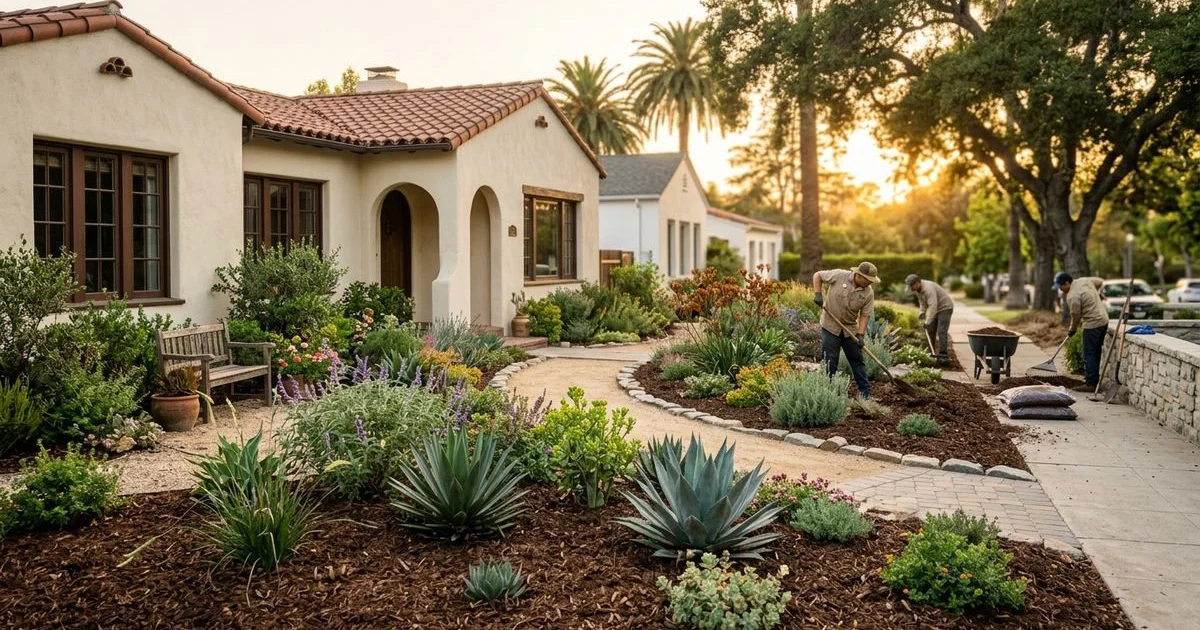
Water-Wise Garden Design with California Buckwheat
California buckwheat has a way of making a landscape feel rooted to place. It is not the flashy plant that demands center stage, but it quietly does much of the work that matters in a water-wise garden. On slopes, in hot exposures, and along the edges of hardscaping, it brings texture, seasonal color, and a sense of restraint that fits the San Gabriel Valley especially well. For homeowners and designers trying to balance beauty, drought resistant landscaping, and long-term practicality, California buckwheat often earns its keep faster than more delicate ornamentals.
That matters because landscape design in this region is no longer just about looks. Water use, hillside stability, firewise planting, drainage, and plant selection all sit at the same table now. In a place where foothill views, steep lots, and intense sun are part of the visual identity, the best gardens are the ones that work with those conditions instead of fighting them. California buckwheat fits that brief because it is a native plant adapted to local climate realities, and because it can be used in ways that support erosion control, habitat value, and the clean structure many homeowners want from a carefully planned yard.
Reading the site before drawing the plan
The most common mistake I see in water-wise gardens is starting with plants before understanding the site. That usually leads to disappointment. California’s water agency recommends a practical sequence that deserves more attention than it gets: assess irrigation, soil, sun exposure, and plant selection before removing turf. That order sounds simple, but it prevents a lot of wasted effort.
A property in the San Gabriel Valley can vary dramatically from one corner to another. A front slope may bake all afternoon, while a side yard remains cooler and gets reflected heat from walls or paving. Soil depth can change near grading transitions, and runoff patterns often reveal where water wants to move after a storm. Those details shape how California buckwheat performs, and whether it should be used as a mass planting, a transitional shrub, or a lower accent in a broader native palette.
This is also where landscape design becomes more than plant shopping. On a hillside, the question is not simply which species survives. It is which plants help hold the slope, how water moves across the grade, and how hardscaping can slow or redirect runoff without creating an overly engineered look. In the San Gabriel Valley, where hillside landscaping is both a practical concern and a strong part of the local visual character, those questions are central. The most successful projects start with observation, not assumptions.
Why California buckwheat fits the region so well
California buckwheat is a natural match for drought tolerant landscaping because it belongs to the climate, not to a watered import model. It is commonly used with other California native plants such as California sagebrush, manzanita, ceanothus, monkeyflower, foothill penstemon, and bunchgrasses. That plant community creates a landscape that looks intentional without looking overdesigned, which is a balance many homeowners want but do not always know how to achieve.
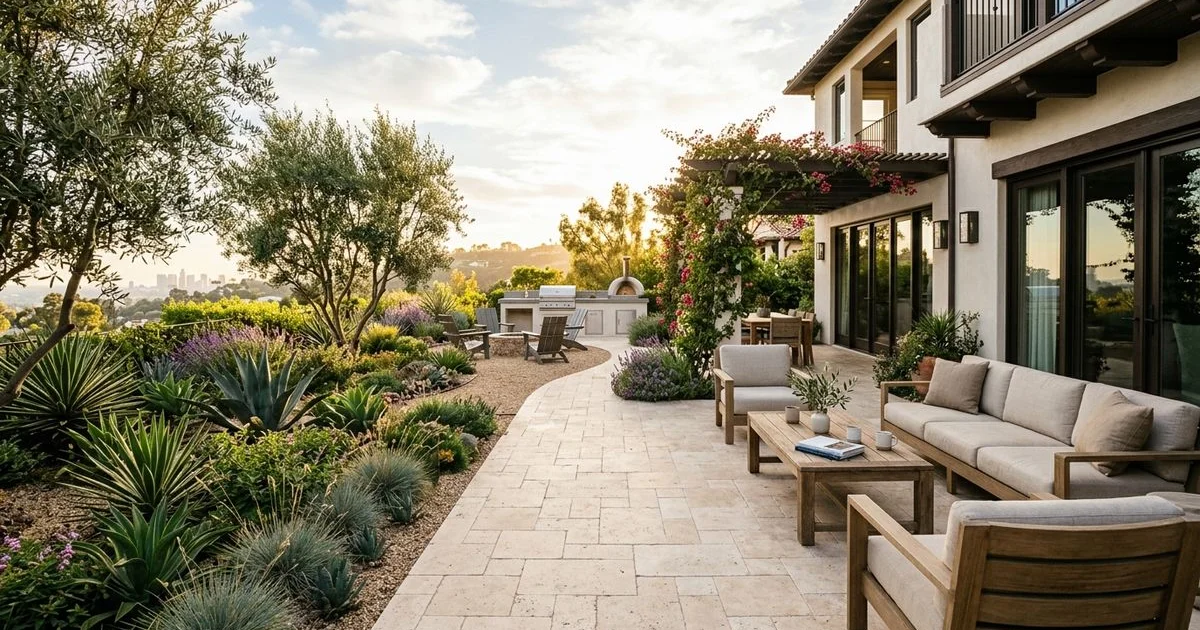
Its value goes beyond appearance. In the dry months, California buckwheat holds its form instead of collapsing into something ragged or needy. When planted thoughtfully, it can create a low, expansive layer that softens stone, gravel, and retaining structures. That makes it especially useful near hardscaping, where a landscape can otherwise feel too stark or too heavily built. The plant’s texture works well against decomposed granite, boulders, paths, and low walls, and it gives a garden a sense of seasonal movement without demanding constant irrigation.
The plant also belongs in gardens where native habitat matters. The San Gabriel Mountains are recognized for their ecological importance and for the many rare, threatened, and endangered species associated with the area. A home garden will never function like protected habitat, but it can still contribute something meaningful when it uses regionally appropriate plants and reduces the pressure on water and maintenance. California buckwheat is one of those species that bridges aesthetics and ecology without asking for special treatment.
Designing around water, not against it
Water-wise garden design works best when it is honest about what the site can support. That means matching irrigation to actual plant needs, not to habit. It also means choosing plants that are appropriate for the region rather than forcing a broad palette that needs more water than the site can comfortably provide. Tools like WUCOLS are useful because they help clarify regional plant water needs instead of relying on guesswork.
This is where California buckwheat often becomes a practical anchor in drought resistant landscaping. It can serve as a unifying plant in areas where the irrigation strategy is intentionally modest. A designer may use it along a driveway edge, in a slope planting, or as part of a larger native matrix where the goal is to reduce turf and simplify water management. In those situations, it helps create visual continuity while keeping the system manageable.
I have seen projects where a homeowner wanted to replace a lawn with something “lush” but low-water. That combination is possible, but it has to be handled with discipline. The answer is usually not a thirsty lawn substitute. It is a layered composition of native shrubs, ground-hugging perennials, bunchgrasses, and a few structural plants that give the space rhythm. California buckwheat often plays the connective role. It fills space without making the planting look thin, and it gives the eye enough movement to avoid the flatness that can happen in overly sparse drought-tolerant beds.
Hillsides, erosion control, and the value of root structure
On a slope, plant choice is never just about appearance. Hillside landscaping has to deal with gravity, rainfall, runoff, and soil movement. CNPS guidance on hot, sunny slopes emphasizes erosion control, drought tolerance, and firewise planting, which is exactly why native species matter so much in this setting.
California buckwheat is especially useful here because it can help knit a planting together. It is not a magic fix for unstable ground, and it should never be treated that way. But as part of a larger strategy that includes suitable grading, erosion-conscious hardscaping, and plant layering, it can contribute to slope stabilization. The key is to think in terms of coverage and connection. Bare soil is the enemy on a hillside. A plant that spreads and fills in the right way can reduce exposure and help protect the surface from the impact of runoff.
That also changes how irrigation should be handled. Hillside gardens rarely benefit from a heavy, broad spray approach. They need carefully considered distribution that keeps water where the root zones are, rather than sending it downhill. If the irrigation layout is poor, even strong transform your backyard plants can struggle because the water either runs off or pools in the wrong places. A good retrofit can do more for a slope than a large pile of new plant material.
Firewise thinking and defensible-space planning
In the San Gabriel Valley, the question of fire resistant planting is not theoretical. It belongs in any serious garden plan, especially where homes meet slopes, canyons, or brush interfaces. CNPS San Gabriel Mountains chapter guidance highlights ember-resistant zone rules and the importance of native plants suited to local gardens. That practical emphasis matters, because a beautiful garden is not truly successful if it ignores the realities of fire exposure.
California buckwheat can fit into a firewise plan, but placement and maintenance matter. No plant should be treated as fireproof. The real value comes from using plants appropriately, keeping them healthy, and avoiding cluttered conditions that create unnecessary fuel near structures. When paired with the right hardscaping, clear separation zones, and thoughtful spacing, native plantings can support a safer landscape without sacrificing character.
Defensible-space planning also affects how a garden feels. Overly dense planting right against a house can look lush in the short term, but it often creates maintenance headaches and complicates risk management. A cleaner approach uses hardscape transitions, well-considered plant masses, and enough openness near the structure to make upkeep realistic. California buckwheat is useful because it can sit comfortably in that middle ground. It has presence, but it does not demand the kind of continuous pruning some ornamental shrubs require.
Turf removal and the new garden language
Many water-wise projects begin with turf removal, but turf removal alone does not create a good landscape. It just creates a blank slate. What happens next determines whether the yard becomes an asset or an ongoing source of frustration.
The state’s water-efficiency standards for new and renovated landscapes encourage native and climate-appropriate plants, efficient irrigation, and alternative water sources where appropriate. That framework reflects a broader truth: the most sustainable garden is the one designed from the ground up to match local conditions. California buckwheat works well in that context because it helps define the new language of the yard. It says this is not a lawn pretending to be a garden. This is a landscape built around climate, slope, and use.
The transition from turf to native planting often requires a hard look at circulation, access, and drainage. If a front yard used to be a lawn, it may now need pathways, seating edges, or stone transitions so the space still functions. That is where hardscaping becomes essential. A few well-placed steps, a path, or a simple terrace can make a slope accessible and turn a once underused strip into a deliberate garden composition. In those settings, California buckwheat helps soften the built elements and keep the design from feeling too rigid.
What to pair with California buckwheat
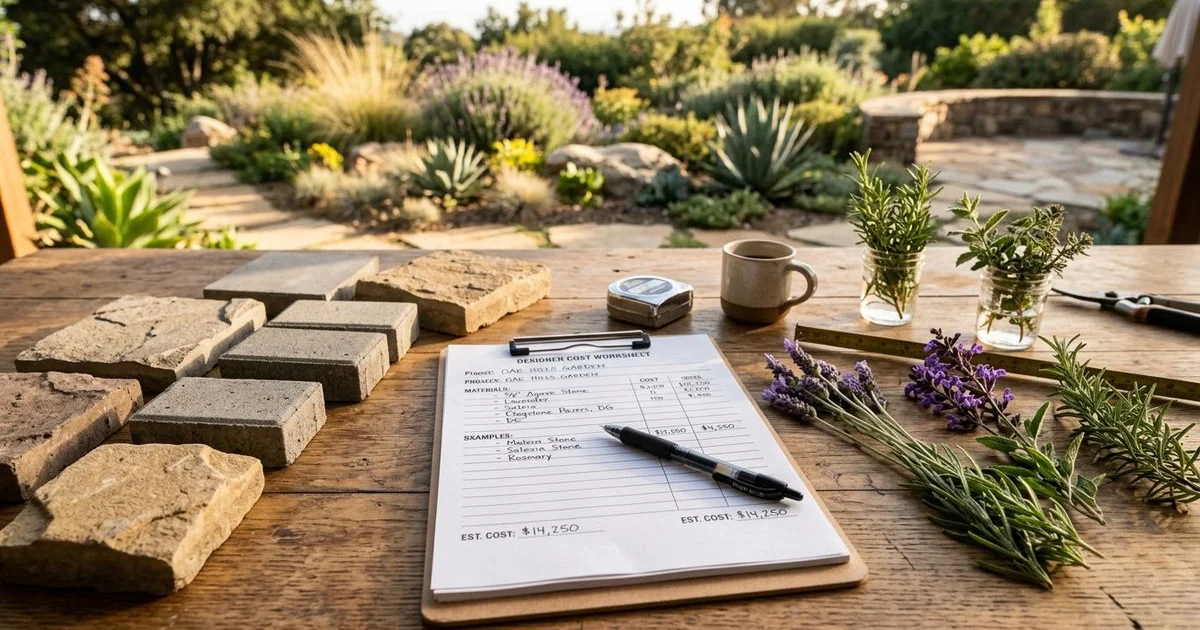
A single plant rarely makes a good garden on its own. The strength of California buckwheat comes from how well it plays with other native selections. In San Gabriel Valley gardens, it often sits comfortably with manzanita, ceanothus, California sagebrush, monkeyflower, foothill penstemon, and bunchgrasses. Each has a different role. Some provide structure, some seasonal bloom, and some a finer texture that contrasts with the buckwheat’s form.
The best combinations usually respect microclimate. A hot, exposed slope may favor the tougher members of the group, while a slightly cooler pocket can support a broader mix. That is where plant selection becomes a design skill, not just a horticultural one. A designer who pays attention to microclimate can create a garden that feels diverse without becoming complicated to maintain.
This is also where restraint pays off. People often want to use too many species in a small area, which makes the garden feel busy and increases maintenance complexity. A tighter palette, repeated with confidence, usually looks better and performs better. California buckwheat is particularly good at repetition. A drift of it across a slope or along a path edge creates coherence that a scattershot collection of plants never quite achieves.
HOA rules, water restrictions, and practical freedom
Homeowners in planned communities sometimes assume their association can block water-wise changes. California guidance says homeowners’ associations cannot prohibit certain water-efficient landscaping choices during drought-related restrictions. That matters because it removes a common excuse for delaying better landscape decisions.
Even so, the real-world process is rarely frictionless. Some associations care about a uniform look, which means plant selection and design presentation matter. A well-composed native garden, especially one that uses California buckwheat in an orderly way, usually reads as intentional rather than scrappy. That can make a difference when a homeowner needs to show that the change is part of a coherent landscape design instead of a neglected patchwork.
It is often easier to move HOA conversations in the right direction when the design already demonstrates discipline. Clean edges, clear pathways, controlled irrigation, and a visible relationship between hardscaping and planting all help. California buckwheat supports that because it looks natural but not wild in the unruly sense. Used well, it signals care.
A practical way to think about the finished garden
The best water-wise gardens in this region do not announce themselves with novelty. They feel settled, compatible with the land, and calm in the heat. That feeling usually comes from a few disciplined choices: reduce unnecessary turf, understand slope and drainage, use region-appropriate plants, and let hardscaping do some of the structural work. California buckwheat fits into that approach because it answers several needs at once.
It helps that the plant aligns with the larger priorities shaping landscape design in the San Gabriel Valley. Water conservation is no longer optional. Hillside stability cannot be treated as a side issue. Firewise planting has to be part of the conversation from the beginning. Native plant habitat gardening is not just a stylistic preference, it is a sensible response to climate and place. California buckwheat sits inside all of those concerns without feeling like a compromise.
For homeowners planning a renovation, the smartest first move is not choosing the prettiest plant image on a mood board. It is walking the property at different times of day, noticing where the sun lands, where water runs, where the slope feels exposed, and where the garden needs hard edges or softer transitions. From there, a well-built drought resistant landscaping plan can take shape. California buckwheat often becomes one of the plants that makes that plan feel complete, because it links ecology, structure, and visual quiet in a way that suits Southern California gardens far better than a thirsty imitation of somewhere else.