
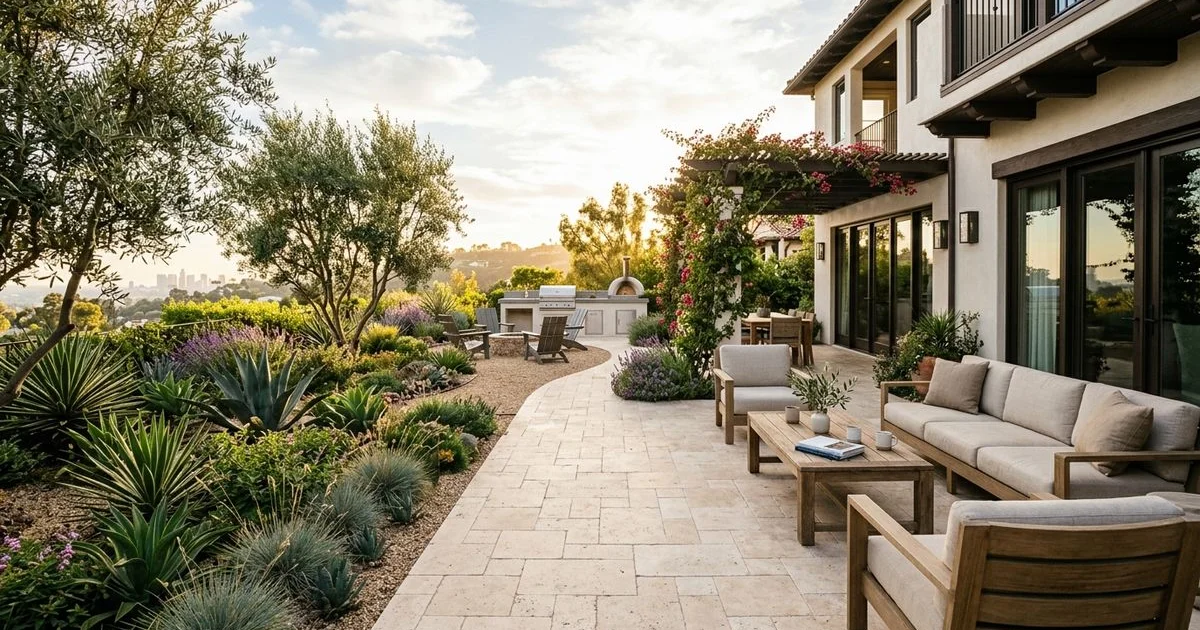
Water-Wise Landscaping Concepts for the San Gabriel Valley Hills
The San Gabriel Valley hills ask a lot of a landscape. They want plants that can hold soil on a slope, survive long dry stretches, fit a neighborhood’s visual character, and still look intentional rather than improvised. A flat suburban yard and a hillside property are not the same design problem. On a slope, every decision has more consequence. The wrong plant can let erosion creep downhill after a storm. A poorly placed sprinkler can waste water and send runoff where it does not belong. A dense planting that looks attractive in spring can become a maintenance burden by late summer if it was chosen without regard for sun exposure, soil, or microclimate.
That is why water-wise landscaping in this part of Southern California is not just about saving water, although that is a major part of it. It is about building a landscape that works with the site instead of fighting it. In the San Gabriel Valley hills, that means treating landscape design as a whole system. Soil, irrigation, plant selection, slope stability, drainage, and firewise concerns all belong in the same conversation. If any one piece is ignored, the rest of the design pays for it later.
Start with the site, not the plant palette
One of the most common mistakes in hillside landscaping is jumping straight to plant shopping. The landscape starts to feel real when people imagine color and texture, so it is easy to get ahead of the practical work. But in a water-wise project, the first questions are almost always the least glamorous ones. How does water move across the property? Where does the slope collect heat? Which areas get reflected sun from hard surfaces, and which areas stay cooler in afternoon shade? What is the soil like after a deep soak and after several dry weeks? Those details shape the landscape more than any mood board ever will.
California’s water conservation guidance emphasizes exactly this kind of assessment before turf removal or major renovation. That order of operations matters. A hillside may need different irrigation zones, different plant water needs, and different soil treatment than a front entry or a patio edge. WUCOLS, which is commonly used for region-appropriate plant water use, is useful precisely because it recognizes that plant performance changes with local conditions. A plant that thrives on one slope may struggle on another just a few yards away if the exposure changes.
This is where experienced landscape design earns its keep. Good design reads the property before it edits it. It notices where a slope wants to shed water and where it needs to slow that water down. It respects the fact that a west-facing bank in the San Gabriel Valley can be punishing in the afternoon, while a tucked-in side yard may hold more moisture and support a broader plant palette. The same yard can contain several microclimates, and each one deserves its own strategy.
Why hillsides demand a different approach
Hillside landscaping carries more risk than level-ground planting, and that risk is not theoretical. When water runs downhill, it can carry soil with it. When a slope is left bare or covered with the wrong kind of planting, the first hard rain can leave gullies, exposed roots, and a repair bill. This is why erosion control is not a side issue. It is the foundation of a successful hillside planting plan.
The San Gabriel Valley hills also sit within a larger foothill and mountain environment where plant communities are adapted to dry conditions, periodic stress, and, in many cases, fire. That matters for residential design. CNPS guidance for sunny slopes emphasizes drought tolerance, erosion control, and firewise planting. Those three goals are linked. A slope covered with durable, climate-appropriate plants is often more stable, easier to irrigate efficiently, and easier to manage in a way that supports defensible-space planning.
The shape of the land influences everything. On steep slopes, large groundcovers may not be enough if they are watered unevenly or if the roots do not anchor well. On gentler banks, a layered approach can work beautifully, especially when the planting plan includes bunchgrasses, low shrubs, and scattered accent plants that break up the visual mass without turning the slope into a maintenance headache. The point is not to overplant. The point is to give the soil something living to hold onto, while keeping access and long-term care realistic.
Plant choice is where water-wise design becomes visible
A landscape earns its water-wise character through plant selection, not by looking sparse. The best drought resistant landscaping in the San Gabriel Valley hills usually combines California native plants with other climate-appropriate species that handle heat, sun, and limited irrigation with less drama. The region’s plant palette can be both practical and beautiful when it is chosen with restraint.
California buckwheat is a classic example of a plant that does real work in a dry hillside setting. It is useful for texture, seasonal interest, and habitat value, while remaining at home in sun-exposed conditions. California sagebrush brings a soft, silvery presence that reads as natural rather than formal. Manzanita adds structure and year-round form, though it needs the right placement and should not be treated like a fast-fill shrub. Ceanothus can be striking, especially when used where drainage is appropriate. Monkeyflower and foothill penstemon bring color without the high water demands of many ornamental choices, and bunchgrasses can stabilize a slope while giving it movement and seasonal character.
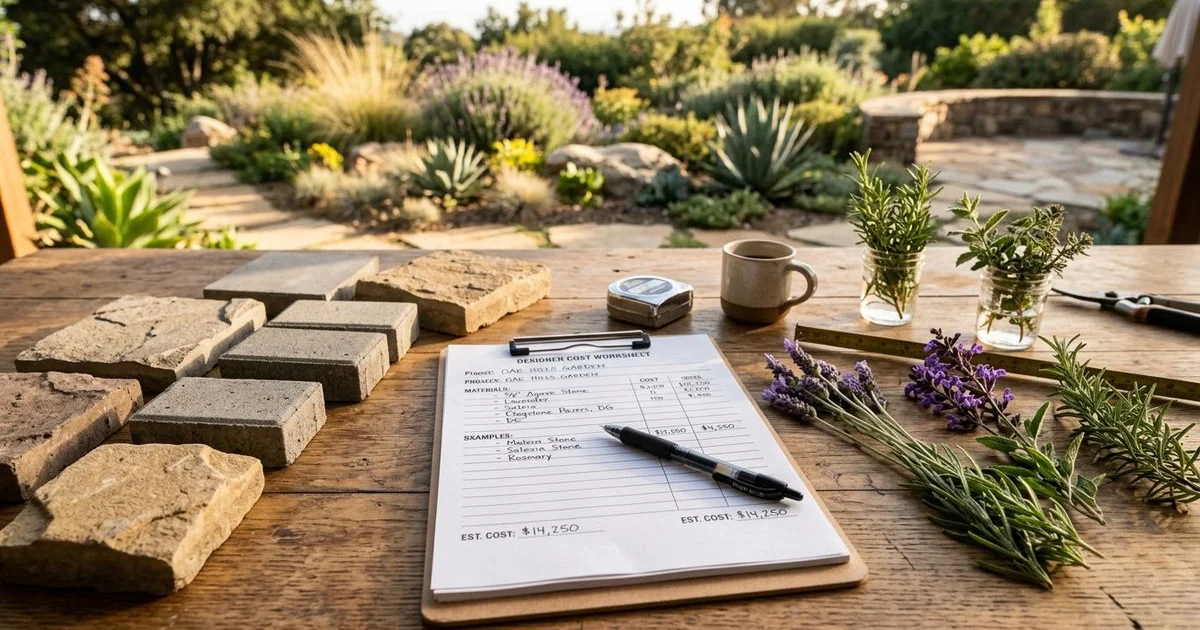
San Gabriel oak is another locally named native that belongs in conversations about native habitat gardening in this area. The broader point is not that every plant must be native, but that the landscape should be built around plants that can tolerate the region’s realities. California’s plant and landscape guidance points homeowners toward assessing sun exposure, irrigation, soil, and plant selection together before making major changes. That advice is especially relevant here. A plant list detached from those conditions is just a wish list.
A water-wise hillside palette often succeeds because it borrows from the feel of native plant communities without trying to imitate them too literally. The arrangement can still be composed and refined. It can include layered masses, clear sightlines, and subtle repetition. What it should not include is a grab bag of plants with conflicting water needs.
Hardscaping should do more than decorate
Hardscaping is often treated as a finishing touch, but on a hillside it can be structural. Retaining edges, steps, decomposed paths, and terraced plant pockets can help shape runoff, manage access, and reduce the amount of exposed soil. In the right hands, hardscaping becomes part of the water strategy rather than a separate aesthetic layer.
That said, hardscaping has to be used thoughtfully. Too much impermeable surface can create runoff problems if water has nowhere to go. Too little structure can leave a slope difficult to maintain, especially if gardeners need safe access for pruning, irrigation checks, or seasonal cleanup. The best hardscaping choices in hillside landscaping tend to be simple and purposeful. They create access points, define planting zones, and help slow stormwater long enough for the soil to absorb what it can.
There is also a visual issue. The San Gabriel Valley has a hillside character that many residents value, and landscape design should respect that context. New construction and major renovations often look best when the landscape feels rooted in the local terrain rather than imported from somewhere flatter and wetter. Hardscaping can support that by echoing the slope instead of flattening it visually. A discreet path, a low retaining element, or a carefully placed landing can make a large property feel settled and usable without turning it into a paved expanse.
Irrigation is a design tool, not an afterthought
Water-wise landscapes fail when irrigation is treated as a generic system. Hillsides usually need zone-by-zone thinking. The top of a slope dries differently from the bottom. A plant near a heat-reflective wall may need more frequent attention than the same species in a shaded pocket. If irrigation runs too long, water can escape downhill before the roots have a chance to use it. If it runs too briefly, the water may never reach the root zone in a meaningful way.
California’s conservation guidance encourages homeowners to evaluate irrigation as part of the landscape plan. That is good practice because a retrofit can solve a lot of problems at once. Drip systems, properly adjusted emitters, and separate irrigation zones for turf, shrubs, and trees can reduce waste and improve plant performance. A hillside retrofit may also reveal where old sprinkler coverage was simply excessive. Many properties have areas that were being watered on habit, not need.
This is also where turf removal often makes sense, but only after the site has been assessed carefully. Removing lawn without replacing it with the right soil preparation, irrigation logic, and plant structure can leave a property looking unfinished and vulnerable to runoff. A former turf area can become a water-wise feature, but the replacement needs to match the slope and exposure. In some cases, that means a low, spreading native planting. In others, it means a combination of hardscaping, accent planting, and a modest amount of carefully selected groundcover.
A practical irrigation retrofit often follows a simple logic:
- divide the yard by sun exposure and plant water needs,
- separate slope plantings from flat planting areas when possible,
- use efficient delivery methods suited to each zone,
- check for runoff during longer cycles,
- adjust seasonally rather than leaving settings untouched all year.
That kind of tuning sounds technical, but it pays back quickly. It also makes the landscape easier to maintain because plants stop swinging between stress and overwatering.
Firewise concerns belong in the planting plan
In the San Gabriel Valley hills, water-wise landscaping and firewise landscaping overlap more than many homeowners realize. A dry, well-chosen plant palette can reduce irrigation demand and support defensible-space planning at the same time. CNPS guidance in the San Gabriel Mountains region highlights ember-resistant zone rules and the use of native plants suitable for local gardens. That is not a reason to strip a property bare. It is a reason to be disciplined.
Firewise planning is often misunderstood as a binary choice between lush and safe. The reality is more nuanced. Plant spacing, material selection, maintenance, and placement matter just as much as species. A healthy, irrigated, thoughtfully spaced landscape can be more resilient than a cluttered one with mixed materials and poor maintenance. The goal is to avoid the conditions that make a fire more likely to spread quickly through the property.
For hillside landscapes, this usually means keeping plants grouped in manageable masses, avoiding continuous ladders of fuel from groundcover to shrub to tree canopy, and selecting plants that suit the local climate instead of depending on frequent supplemental water. Native and climate-appropriate plants often help because they fit the region’s seasonal patterns. The landscape feels integrated rather than forced, which usually makes it easier to maintain over time.
HOA rules and water-wise choices
Homeowners’ associations can create uncertainty, especially when a property owner wants to replace turf or shift toward drought resistant landscaping. California water-restriction guidance is clear that HOAs cannot prohibit certain water-efficient landscaping choices during drought-related restrictions. That matters because many homeowners assume a rules conflict where none should exist.
Still, working through HOA expectations takes tact. The strongest proposals are usually visual as well as practical. If a landscape plan shows how the hillside will remain attractive, stable, and orderly while also reducing water use, the conversation tends to go more smoothly. Good landscape design helps here. A plan that communicates structure, planting intent, and maintenance logic is easier to approve than a vague promise that the space will “look better later.”
This is one of the reasons professionally designed water-wise landscapes often fare better in community settings. They are legible. They show where the hardscaping supports access, where planting creates coverage, and how the design responds to both the site and local constraints. When people can see that the hillside is being treated seriously, not casually, resistance usually drops.
What a strong hillside planting scheme feels like
The best San Gabriel Valley hillside landscapes do not advertise their difficulty. They feel settled. They seem to belong to the slope. They look good in summer because they were built for summer, not because they rely on peak-season overwatering. In winter, they handle rain without turning muddy or unstable. Through the year, they offer texture, form, and seasonal change without demanding constant correction.
That balance usually comes from restraint. Instead of trying to use every plant that can survive in Southern California, the strongest landscapes repeat a smaller set of well-matched species. They combine rounded shrubs with upright grasses, use accents sparingly, and leave enough breathing room for mature growth. They also accept that a hillside is never static. Plants fill in. Soil settles. Irrigation needs change. The landscape is a living system, not a finished object.
In that sense, water-wise design is less about austerity than about judgment. It asks what the property can support, what the slope needs, and how much maintenance the owner can realistically keep up with over time. That is where professional landscape design becomes valuable. The job is not just to make the yard beautiful on day one. It is to make sure the beauty survives contact with heat, runoff, and the practical rhythm of Southern California life.
The most durable projects are the ones that respect limits
The San Gabriel Valley hills reward designs that take limits seriously. Limited water. Limited flat space. Limited tolerance for erosion. Limited margin for error in fire-prone conditions. Those limits are not obstacles to good design, they are the framework for it. When a landscape embraces drought resistant landscaping, uses hardscaping with purpose, and matches plant selection to slope, sun, and soil, it becomes easier to live with and easier to defend.
That is the real measure of success in hillside landscaping. Not just whether the property looks polished after installation, but whether it still looks composed after a season of heat, a dry spell, and a storm. A well-planned landscape in the San Gabriel Valley hills should hold its ground, use water carefully, and feel connected to the place it serves. When it does, the slope stops being a problem to solve and becomes part of the property’s identity.