
Water-Wise Landscaping for HOA Communities
Water-wise landscaping has become a practical necessity for HOA communities across the San Gabriel Valley, not just a design preference. The region’s hillside character, strong sun, seasonal dry spells, and wildfire concerns all push landscape planning in the same direction: lower water use, better drainage, less erosion, and planting choices that can hold up under real conditions. For associations, the challenge is not simply making the grounds look attractive. It is managing shared landscapes that need to satisfy residents, reduce long-term maintenance pressure, and stay aligned with California’s water conservation expectations.
That balance is easier to reach when landscaping decisions start with the site itself. Before turf comes out or new plant palettes go in, the smarter approach is to look at irrigation performance, soil conditions, sun exposure, slope, and the way people actually use the property. California’s water agency recommends that order for a reason. Landscapes fail most often when design decisions ignore the site’s basic behavior. A sunny slope with shallow soil needs a very different treatment than a shaded courtyard with compacted ground. An HOA that understands those differences can build landscapes that use less water and look more intentional at the same time.
Why HOA communities feel the pressure first
HOA properties tend to expose every landscaping mistake. Shared entrances, medians, perimeter slopes, and common open spaces are always visible, so patchy turf, runoff, dying plants, or oversprayed irrigation do not stay hidden for long. Residents also notice inconsistency quickly. One building may have lush green turf that needs constant watering, while the slope around the corner looks stressed because it was planted without regard for sun or drainage.
That is why water-wise landscape design has to work at the community scale. It is not enough to swap a few thirsty shrubs for hardier ones and call the project finished. The real gains come from reducing irrigation demand across large areas, matching plant water needs to microclimates, and using materials that help the landscape function rather than fight the site. In many communities, that means replacing high-maintenance turf where it serves little purpose, then rebuilding those areas with drought resistant landscaping and hardscaping that still feels welcoming and usable.
There is also a policy layer that HOA boards cannot ignore. California’s Model Water Efficient Landscape Ordinance regulates water usage in new and renovated landscapes and encourages native or climate-appropriate plants, efficient irrigation, and alternative water sources. For a board, that should be read less as a paperwork burden and more as a design framework. The communities that plan around it early avoid costly revisions later, because they are already working with the logic the ordinance expects.
Start with the site, not the catalog
The easiest mistake in landscape design is to begin with plant pictures instead of conditions. Pretty plants do not matter much if the slope erodes, the irrigation overshoots, or the sun exposure is wrong. In HOA settings, I have seen healthy-looking plant lists fail because the designer assumed uniform conditions across a site that actually had pockets of intense sun, reflected heat, or runoff from upper elevations.
A better process starts with a simple assessment. How much water does each area really need? Where is the soil thin, sandy, or compacted? Which corners bake all afternoon, and which receive morning shade? Where does water move after a storm, and where does it pool? That kind of site reading is especially important in hillside landscaping, where a slope can dry out quickly at the top and collect water or runoff at the bottom. On those properties, drainage and erosion control are not separate from landscape design. They are the design.
The California plant and landscape guidance also points to WUCOLS, which helps match plants to regional water needs. For HOA communities, that matters because a landscape often spans multiple exposures and conditions. A plant that performs well in one courtyard might struggle on a south-facing edge or a windy ridge. Using region-appropriate guidance helps boards and contractors make decisions that are grounded in how the landscape actually behaves, rather than in assumptions that look good on paper.
Turf removal works best when it is strategic
Turf removal can bring meaningful water savings, but it should never be treated as a blanket solution. Lawns still make sense in some places, especially where residents use them for gathering or recreation. The problem is turf that exists only because it has always been there. Large strips in medians, ornamental patches that get little use, and difficult-to-mow edges often drain irrigation budgets without delivering much value.
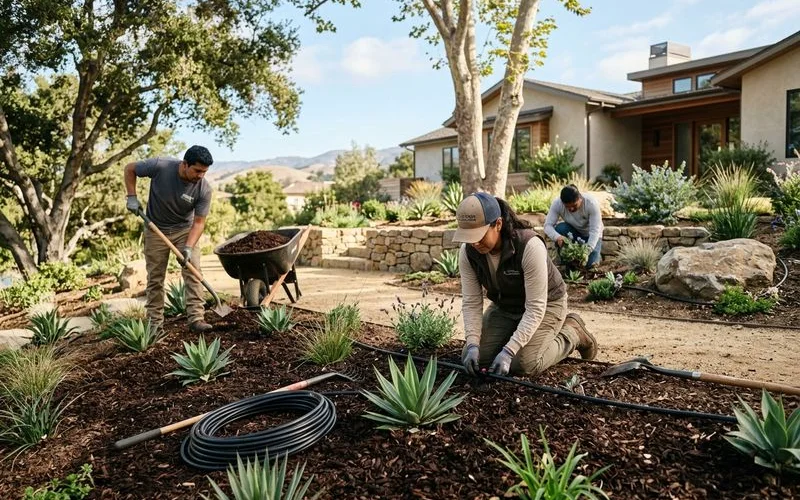
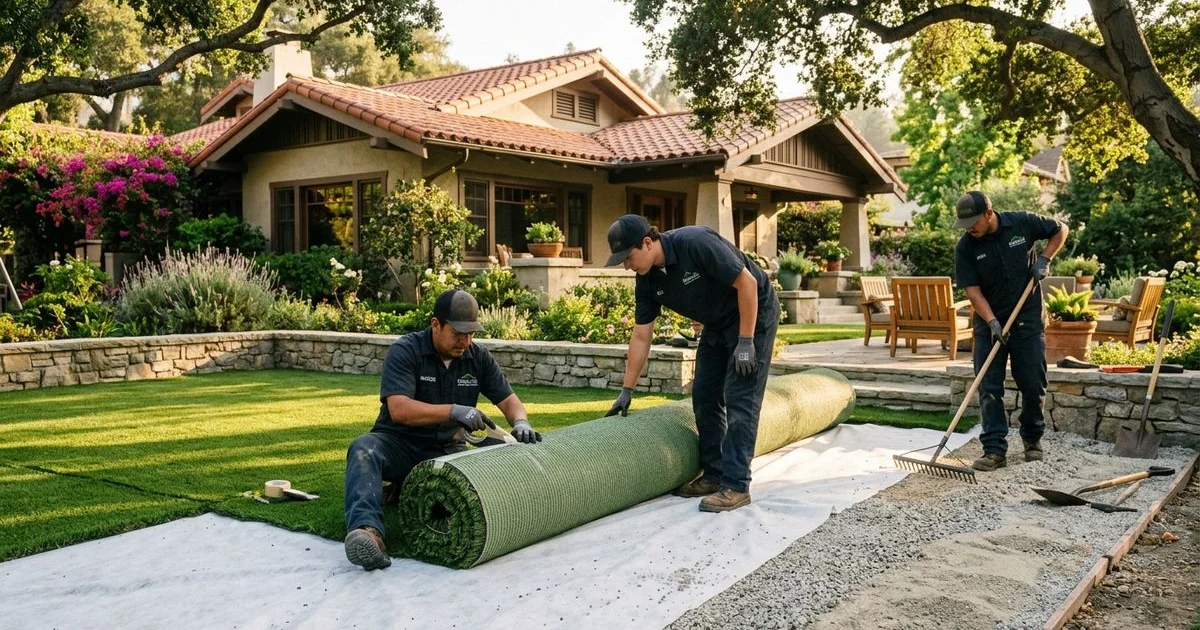
For HOA communities, selective turf removal can be one of the most effective water-saving steps available. The key is to replace turf with a landscape that still feels coherent. A bare expanse of gravel rarely satisfies residents for long. A better result usually combines planting beds, mulch, limited hardscaping, and the right irrigation retrofit. That gives the site structure, reduces water demand, and makes maintenance more predictable.
The practical benefit is not only water use. Turf-intensive landscapes demand mowing, edging, fertilizing, and repeated repair around irrigation heads and foot traffic. Once those areas are converted thoughtfully, maintenance crews spend less time on repetitive work and more time on plants and surfaces that hold their form longer. In a community setting, that can reduce frustration for everyone involved, from the landscape crew to the board members who field complaints about brown spots or water waste.
Drought resistant landscaping has to be layered, not sparse
People sometimes hear “drought resistant landscaping” and picture a lot of empty space with a few hardy plants scattered around. That is not the right model for HOA communities. Good drought-tolerant design has layers, density, and texture. It looks planned, not stripped down.
California native plants are often the best starting point because they are already adapted to local conditions. In the San Gabriel Valley context, that includes plants such as California buckwheat, California sagebrush, manzanita, ceanothus, monkeyflower, foothill penstemon, and bunchgrasses. San Gabriel oak is also locally relevant. These plants can create a landscape that feels tied to the region rather than imported from somewhere else. They also tend to support a stronger sense of place, which matters in communities where curb appeal and identity are part of the value proposition.
The best results come from grouping plants by water demand and exposure rather than mixing everything randomly. This is where microclimate matters. A shaded pocket near a building may support a different palette than an exposed slope. A planting bed near paved surfaces may need more heat-tolerant species than a protected courtyard. When those differences are ignored, irrigation gets generalized and wasteful. When they are respected, water is delivered where it is needed, and the landscape looks more consistent over time.
It is worth remembering that drought tolerance does not mean zero maintenance. New plantings still need establishment care, and even well-chosen natives may require occasional pruning, weed control, and inspection. professional landscape design-build services The difference is that the work shifts from trying to force the site to support the wrong plants to managing a landscape that fits the place from the start.
Hillside landscaping demands respect for gravity
Many HOA communities in and around the San Gabriel Valley contend with slopes, and slopes change everything. Water runs off faster, soil can move more easily, and plant roots have a harder time establishing if the design ignores erosion control. On hillside properties, landscaping must do more than look attractive from a distance. It has to hold the site together.
This is where the overlap between landscape design and hardscaping becomes obvious. Retaining walls, terracing, steps, decomposed paths, and other hardscape elements can slow water, shape access, and reduce the pressure of runoff. They also help create usable planting zones where irrigation can be managed more precisely. Without some hardscaping, a slope often becomes either unstable or difficult to maintain. With it, the landscape can take on structure and function.
Plant selection is equally important. The California Native Plant Society has emphasized that slopes need erosion control, drought tolerance, and firewise planting. That advice fits the foothill and hillside properties found throughout the region. Deep-rooted plants, bunchgrasses, and shrubs that can stabilize soil are often better choices than shallow-rooted ornamentals that struggle once the weather turns hot and dry. The San Gabriel Mountains area also carries special ecological importance, which makes it even more valuable to choose plants thoughtfully and avoid designs that work against the local environment.
There is no single slope solution. A gentle incline near a walkway may need only modest reshaping and plant grouping. A steep embankment, by contrast, may require a more deliberate combination of erosion control, drainage planning, and hardscape support. The board’s job is not to force all slopes into the same template. It is to choose a treatment that fits the grade, the soil, and the level of exposure.
Irrigation retrofits often deliver the fastest savings
A lot of communities focus first on plant replacement, but irrigation retrofits can produce some of the quickest practical gains. Old systems often water too broadly, too frequently, or in ways that do not match plant zones. Overspray onto pavement, mismatched heads, and inefficient scheduling add up fast across a large HOA property.
The first step is to observe how the system actually performs. If turf areas are soaked while adjacent shrubs remain dry, or if water is spraying into streets and walks, that is money going where it should not. Reworking zones so that similar plants share similar irrigation needs is one of the most reliable ways to improve performance. It also makes day-to-day maintenance easier because crews can diagnose problems more clearly.
Alternative water sources and efficient irrigation both fit within California’s landscape guidance. The point is not to chase novelty, but to reduce waste. Drip irrigation can be useful in the right plant beds. Smart scheduling can help match watering to seasonal conditions. Pressure regulation and proper head alignment can prevent water loss without changing the visible character of the site. For HOA communities, these are the kinds of improvements that may not be flashy, but they make a steady difference.
Firewise landscaping belongs in the same conversation
In the San Gabriel Valley, water-wise design and firewise landscaping are closely linked. A plant palette that conserves water should also be evaluated through the lens of defensible space and ember resistance. That does not mean the landscape must become sterile or overly simplified. It means the design should be disciplined.
The CNPS San Gabriel Mountains chapter highlights ember-resistant zone rules and native plants suitable for local gardens, which is a useful reminder that safety and ecology are not mutually exclusive. A well-chosen landscape can be drought-conscious, attractive, and more defensible than a garden that relies on thirsty, highly flammable, or poorly maintained material. For HOA communities, that is an important distinction because fire safety affects the entire property, not just individual units.
Maintenance matters here as much as plant choice. Even good plants can create problems if they are allowed to become crowded, woody, or littered with dry debris. Clear spacing, controlled height, and regular cleanup all support firewise goals. In some cases, a deliberate use of hardscaping can help create visual breaks and safer transitions between planting areas. The goal is not to eliminate character. It is to make sure the landscape supports the community rather than increasing its risk.
The HOA side of the work is mostly about coordination
The technical side of water-wise landscaping is only half the story. HOA communities also need communication, patience, and clear standards. Residents often have strong opinions about turf, trees, color, and maintenance. Some want the lushness they remember from past decades. Others welcome a more ecological approach, as long as the grounds still feel cared for.
Boards do best when they explain the logic behind landscape changes in practical terms. Water savings matter, of course, but so do long-term maintenance, slope stability, and compliance with state landscape expectations. People are more likely to support change when they understand that a planting conversion or irrigation retrofit is not a cosmetic experiment. It is a response to real constraints.
There is also a legal and policy reality that can surprise boards. California water-restriction guidance says homeowners’ associations cannot prohibit certain water-efficient landscaping choices during drought-related restrictions. That makes it especially important to build a thoughtful landscape policy rather than relying on habit or outdated aesthetic standards. An HOA that understands the rules and documents its landscape priorities can avoid conflict later.
The strongest communities usually set expectations before the work begins. They talk about why some turf will be removed, why certain slopes will be planted differently, and why native or climate-appropriate species are being prioritized. That kind of clarity reduces resistance because people can see the project as a coordinated improvement rather than a series of disconnected changes.
What a durable plan tends to include
A successful HOA water-wise landscape rarely happens by accident. It usually combines several decisions that support one another, and each one solves a different problem. A thoughtful plan often includes a site assessment that accounts for soil, irrigation, sun exposure, and drainage; plant selection that reflects local conditions and WUCOLS-based water needs; selective turf removal where lawn does not serve a real function; irrigation retrofits that reduce waste; and hillside treatments that combine planting, erosion control, and hardscaping when needed.
That is not a dramatic formula. It is a practical one. It leaves room for resident expectations, board budgets, and the actual shape of the property. It also recognizes that water-wise landscaping is not only about using less water, but about building landscapes that survive heat, slope, wind, and maintenance pressure without constant correction.
For HOA communities in the San Gabriel Valley, that approach fits the landscape itself. The region’s hillsides, valleys, and exposure patterns reward good planning and punish shortcuts. A landscape that works with the site, uses water carefully, and respects fire and erosion concerns will age better than one built around old habits. That is especially true when the design language is consistent, the irrigation is tuned, and the plant palette is chosen for the place rather than for a catalog photo.
Water-wise landscaping is not a compromise in HOA communities. When it is done well, it is a clearer expression of care. The grounds look intentional, the slopes hold better, the irrigation makes sense, and the community spends less time reacting to problems that could have been prevented. For properties in a region where every drop and every square foot matter, that kind of landscape design is not only sensible, it is durable.