
The Full Range of Non-Surgical Treatments
The range of treatments available through Lipo Freeze is broader than most people expect to find outside a clinic, because the concerns people bring to a consultation are rarely single concerns. Someone troubled by a pocket of fat that will not shift is often equally aware that the muscle beneath has weakened, or that loose skin bothers them more than the fat.
What follows is a treatment-by-treatment account: what each procedure does to the tissue it targets, what it can achieve, how many sessions are involved and when it should not be used at all. The limits are stated as plainly as the benefits, as they are throughout the site, including the general introduction to non-surgical care.
Three Families of Treatment
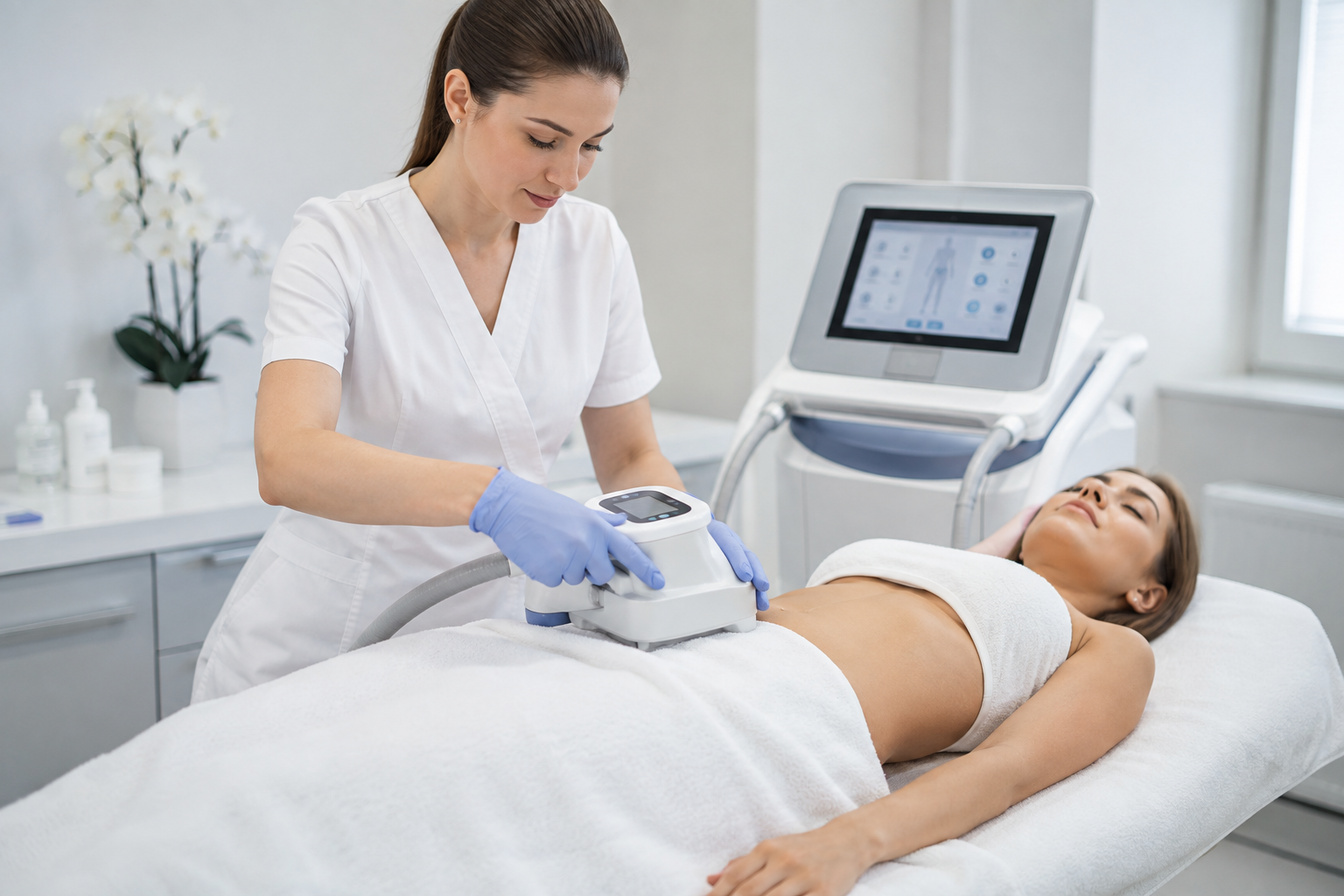
The treatments group into three families, and knowing which one your concern belongs to is the fastest route to what will help. Body contouring and fat reduction removes fat that has resisted diet and exercise, by cooling it until the cells break down or by dissolving smaller pockets with an injectable solution. Muscle, core and pelvic health works the other way, using electromagnetic energy to drive muscle deeper than voluntary effort can reach.
The third family, skin, face and blemish care, covers focused ultrasound that regenerates collagen in the deeper layers, radiofrequency microneedling that remodels texture and firmness, and precision cryotherapy that removes benign blemishes from the surface.
Why Most Plans Draw From More Than One Family
Many plans cross those boundaries: reducing fat across the abdomen achieves more when the core muscle underneath is strengthened at the same time, and fat reduction is often paired with skin tightening where elasticity is a concern. Treatments are ordered across weeks rather than stacked into one afternoon, and you can see how results typically develop before settling on a combination.
Treatment Delivered at Home, Nationwide
Every treatment described here is carried out in your own home: the consultant travels to you, sets up in whichever room you prefer and clears away afterwards. Appointments cover England, Scotland and Wales, including rural counties and smaller towns, and the home visit carries no additional cost — the standards behind that model are set out on the page explaining how Lipo Freeze works.
Suitability Is Decided at Consultation
One thing a website cannot settle is whether any of this is right for you. Suitability is assessed in person, taking account of medical history, current medication, skin condition, the distribution of fat or the state of the muscle, and what you hope to see. Being told that a treatment is not right for you is a normal outcome.
Fat Freezing Treatment (Cryolipolysis)
Fat freezing, known clinically as cryolipolysis, is the treatment most people come to Lipo Freeze for and the most thoroughly understood in the range. Controlled cooling destroys fat cells in a defined area without needles, without anaesthetic and without a recovery period, and the cells it destroys are gone permanently. It is a treatment of shape rather than weight.
How the Treatment Works
The procedure unfolds in three stages. Targeted cooling technology comes first: a gel pad protects the skin, and a specialised applicator draws the fat tissue into its cup and cools it to a temperature that triggers apoptosis, or natural cell death. Selective fat cell freezing makes that possible — fat cells are more sensitive to cold than skin, muscle or nerve tissue, so there is a band cold enough to crystallise them without harming the structures around them.
The third stage is natural elimination: over the following weeks the body clears the destroyed fat cells through the lymphatic system. Nothing is cut or injected, and nothing appears to happen immediately — which is why the change, when it comes, looks like something your body has done.
The result develops from the inside out at the body's own pace, which is precisely why it reads as natural rather than as an intervention.
The Areas That Can Be Treated
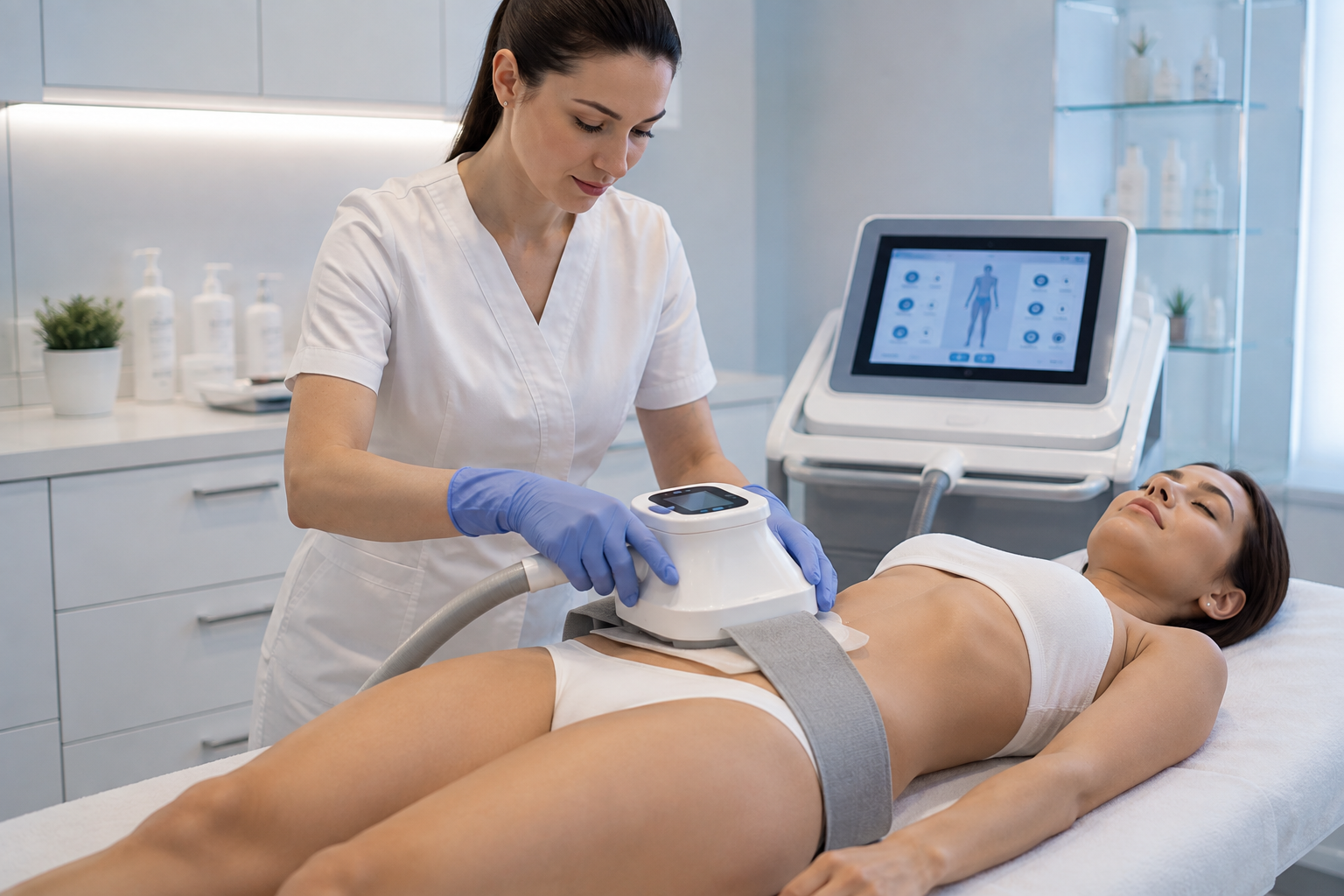
Cryolipolysis suits any area where a pocket of fat can be drawn into an applicator. The stomach is the most commonly requested, treated as the lower and upper abdomen separately or together, with the love handles or flanks alongside it. The inner and outer thighs, the upper arms, the lower back, the upper back, the bra area above the strap line and beneath the chin can all be treated too. Treating several areas within one appointment is more economical, whether one person is treated or two; the published price list sets out how that works.
What a Session Actually Feels Like
The area is assessed and marked, the skin cleaned and the gel pad applied. The first sensation is suction as the tissue is drawn into the cup — a firm tugging, unfamiliar rather than painful — followed by intense cold; within a few minutes the area is numb and the sensation largely disappears. Afterwards you can dress and carry on, since driving, working and exercising are all fine, though slight tingling, aches or tenderness may follow for a few days, occasionally for about a week.
How Many Sessions Are Needed
Only one treatment session per area is normally necessary, which sets cryolipolysis apart. Some people benefit from additional sessions, generally where the pocket of fat is larger than average or where the first result falls short; that decision is best made once the full timeline has run.
The Results Timeline
Most clients notice visible improvements from three to four weeks after treatment. Optimal results are seen at eight to twelve weeks, with the largest effects around the two-month mark, and the body can continue eliminating destroyed fat cells for up to four to six months. The results page explains what a realistic outcome looks like over that period.
The destroyed fat cells are permanently removed, though long-term results depend on maintaining a stable weight and a healthy lifestyle. If significant weight is gained afterwards the new fat will accumulate somewhere, albeit less readily in the treated areas, since fewer cells remain there to store it.
Who Makes a Good Candidate
The best candidates are people already close to their target weight who are contending with localised, stubborn pockets — love handles, inner thighs, upper arms and similar areas that have not responded to consistent effort. Cryolipolysis is not a weight-loss treatment: it improves the contour of a defined area but does not address body weight, and someone significantly overweight is better served by weight-loss interventions first.
Who Is Not Suitable
Several conditions rule the treatment out entirely, and each is checked at consultation rather than taken on trust.
- Cold-related conditions. Cryoglobulinemia, cold urticaria, paroxysmal cold haemoglobinuria and Raynaud's all involve an abnormal reaction to cold and are absolute contraindications.
- Hernias near the treatment site. The suction involved makes any hernia in or near the area unsuitable.
- Pregnancy or breastfeeding. Treatment is deferred in both cases.
- Loose skin or limited fat in the target area. Excessively loose skin, or too little fat to draw into the applicator, means the treatment cannot work as intended.
- Significant overweight. Where weight-loss interventions are more appropriate, that is what will be recommended.
How to Prepare
Preparation is minimal. Do not apply lotions or oils to the area on the day, since they interfere with contact between the gel pad, the applicator and your skin, and wear comfortable, loose clothing. Be well hydrated going in and keep drinking water afterwards, as the lymphatic system is clearing the treated cells.
Side Effects and Honest Risks
Cryolipolysis is considered low-risk because it is non-invasive, and it is FDA-cleared when performed by a trained practitioner using certified equipment. The common side effects — redness, swelling, bruising, tingling and numbness — are mild, temporary and settle on their own, and aftercare advice supports lymphatic drainage and healing.
The Rare Risks, Stated Plainly
Three uncommon complications are documented. Paradoxical Adipose Hyperplasia, or PAH, is a rare reaction in which the treated area becomes filled with more fat rather than less. Changes to skin pigmentation, either darkening or lightening, have also been recorded. Frostbite or cold injury is possible in principle, though extremely infrequent when protocols are adhered to. Rare is not the same as impossible.
Cryolipolysis can also be combined with other non-invasive procedures, skin tightening in particular, with the spacing of the two planned at consultation.
Body Toning Treatment and Muscle Building
Body toning is an energy-based treatment that builds muscle and burns fat in thirty minutes, using high-intensity focused electromagnetic energy — HIFEM — to generate supramaximal contractions. It addresses the half of body shape that fat reduction cannot touch, and it is FDA-approved, with independent studies having assessed its safety and efficacy.
Supramaximal Contractions and Why They Differ From Exercise
When you contract a muscle voluntarily, your nervous system recruits only a proportion of the available fibres: in a gym workout, amateur athletes contract only around thirty-five to forty per cent involuntarily. HIFEM drives the contraction directly, reaching up to one hundred per cent of the muscle fibres, or myofibrils, and a single thirty-minute session delivers up to twenty thousand contractions. During those contractions the fat lying over the muscle undergoes a metabolic change that destroys fat cells.
The value of the technology lies not in working the muscle harder than you could, but in reaching the fibres that voluntary effort never recruits at all.
What the Results Actually Show
Fat reduction of up to nineteen per cent and an increase in muscle mass of up to sixteen per cent are reported, alongside a reduction in diastasis recti — the separation of the abdominal muscles — typically in excess of ten per cent. Increased muscle mass becomes visible within two to four weeks, whilst noticeable fat reduction appears around three months after treatment.
Where It Can and Cannot Be Used
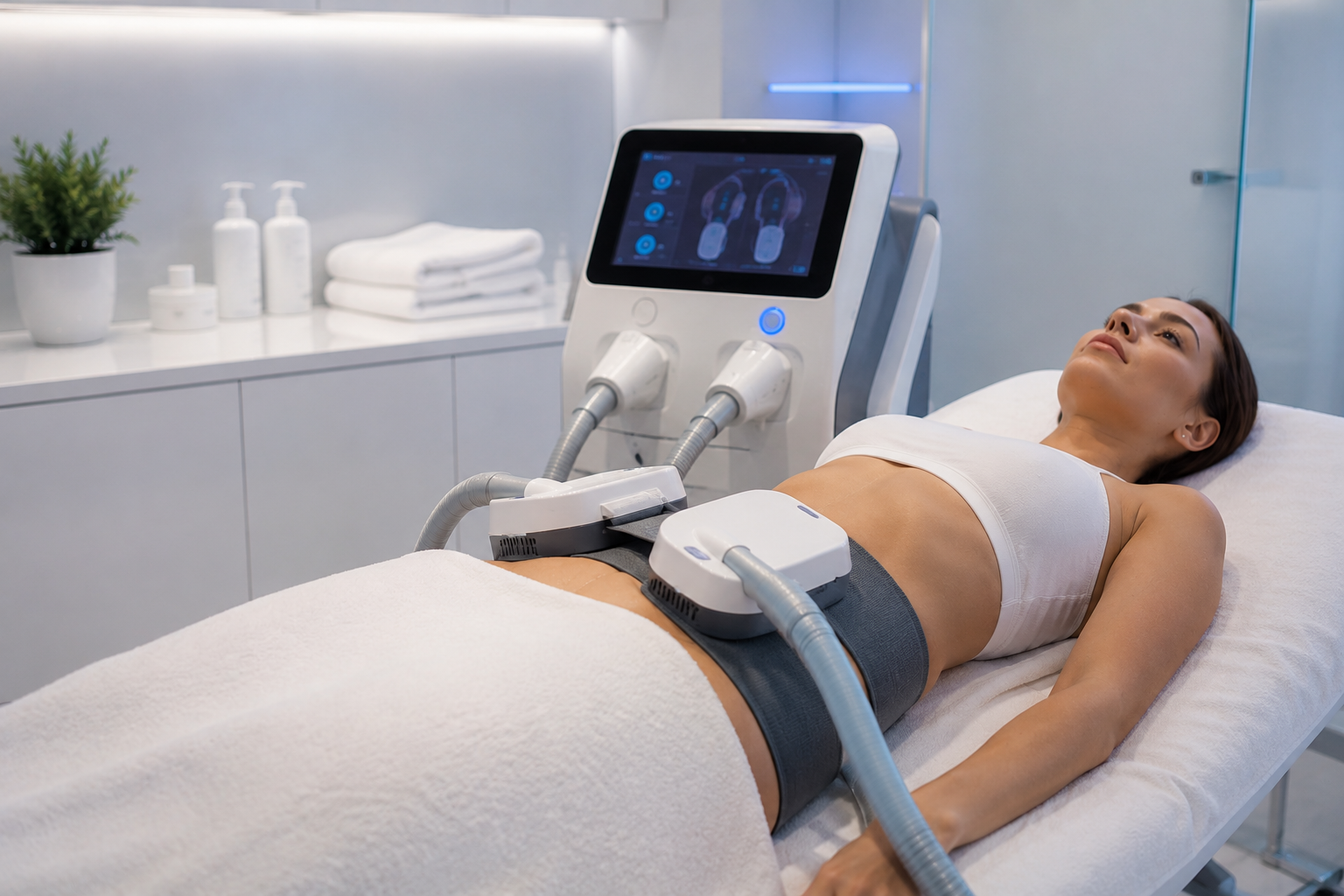
The abdomen is treated for core muscle toning. The buttocks are treated for a non-invasive lift, the hips for contouring around the love handles, the arms for the biceps and triceps, the thighs across the front, back and outer aspects, and the calves as well. For readers specifically interested in improving definition and muscle tone in the upper arms, the Lipo Freeze 2U Arm Toning Treatment provides further information.
The Session Protocol and What It Feels Like
Each session lasts thirty minutes. A minimum of four sessions is recommended, performed at least two days apart so the muscle can recover, and optimal results require at least six sessions within two weeks. There is no downtime. The sensation is a great depth of muscle contraction, sometimes with a stinging or tingling feeling, and the area may feel tender afterwards, but without the post-workout soreness that follows hard training.
Diastasis Recti and Recovery After Pregnancy
Diastasis recti, the separation of the abdominal wall that commonly follows pregnancy, is one of the clearest applications for this treatment. HIFEM helps to thicken and strengthen the muscle fibres and can draw the two sides closer together, with a reduction typically in excess of ten per cent, for mild to moderate separation. It is not a repair for severe separation, so the degree is established at consultation.
Injury Recovery
The same technology is applied to injury repair, where it is designed to speed healing by stimulating the muscles, circulating blood through the area and reducing inflammation. An existing muscle or soft tissue injury in the treatment area is itself a contraindication, so this concerns supported recovery rather than treatment over a fresh injury.
Exercise Before and After, and How Long Results Last
Refrain from exercising the day before and the day after each treatment, so the muscles can rest. Muscle gains last at least six months and potentially longer where regular exercise is maintained, whilst the fat loss is expected to last long term, since fat cells in the abdominal region are permanently destroyed. Lipo Freeze treats it as a complement to exercise rather than a replacement for it.
Who Cannot Have This Treatment
The list is longer than for fat freezing because the technology involves electromagnetic energy, and every item is checked before any session. The treatment cannot be given to anyone with metal implants, rods, pins or plates; anyone fitted with an IUD or contraceptive coil; anyone pregnant or breastfeeding; anyone with a bleeding disorder or taking blood thinners; anyone with a cardiac disorder; anyone with epilepsy; anyone with an active malignancy; anyone with an active hernia; anyone under the age of eighteen; or anyone with a muscle or soft tissue injury in the area to be treated. These are firm exclusions rather than cautions.
Incontinence Treatments
Bladder and bowel control is one of the few concerns people will reorganise their lives around rather than talk about — declining the long drive, working out where the facilities are before agreeing to meet anyone anywhere. It is extraordinarily common, rarely mentioned aloud, and responds far better to treatment than most people expect.
The pelvic floor is a broad sling of muscle spanning the base of the pelvis, and like any other muscle group it can weaken — after childbirth, after surgery, with age, with hormonal change. As it weakens, so does the support it gives the bladder and bowel, and the treatment offered by Lipo Freeze addresses that weakness at its source.
How Pelvic Floor Stimulation Works
The technology is high-intensity focused electromagnetic energy — the same family used in body toning treatment. Rather than asking you to contract the pelvic floor voluntarily, the device induces deep contractions for you, reaching the deep pelvic floor muscles that are difficult to isolate consciously and simulating Kegel exercises. A single thirty-minute session is equivalent to thousands of them.
One thirty-minute session is equivalent to thousands of Kegel exercises — performed correctly, without you having to remember a single one of them.
Fully Clothed, With No Internal Examination
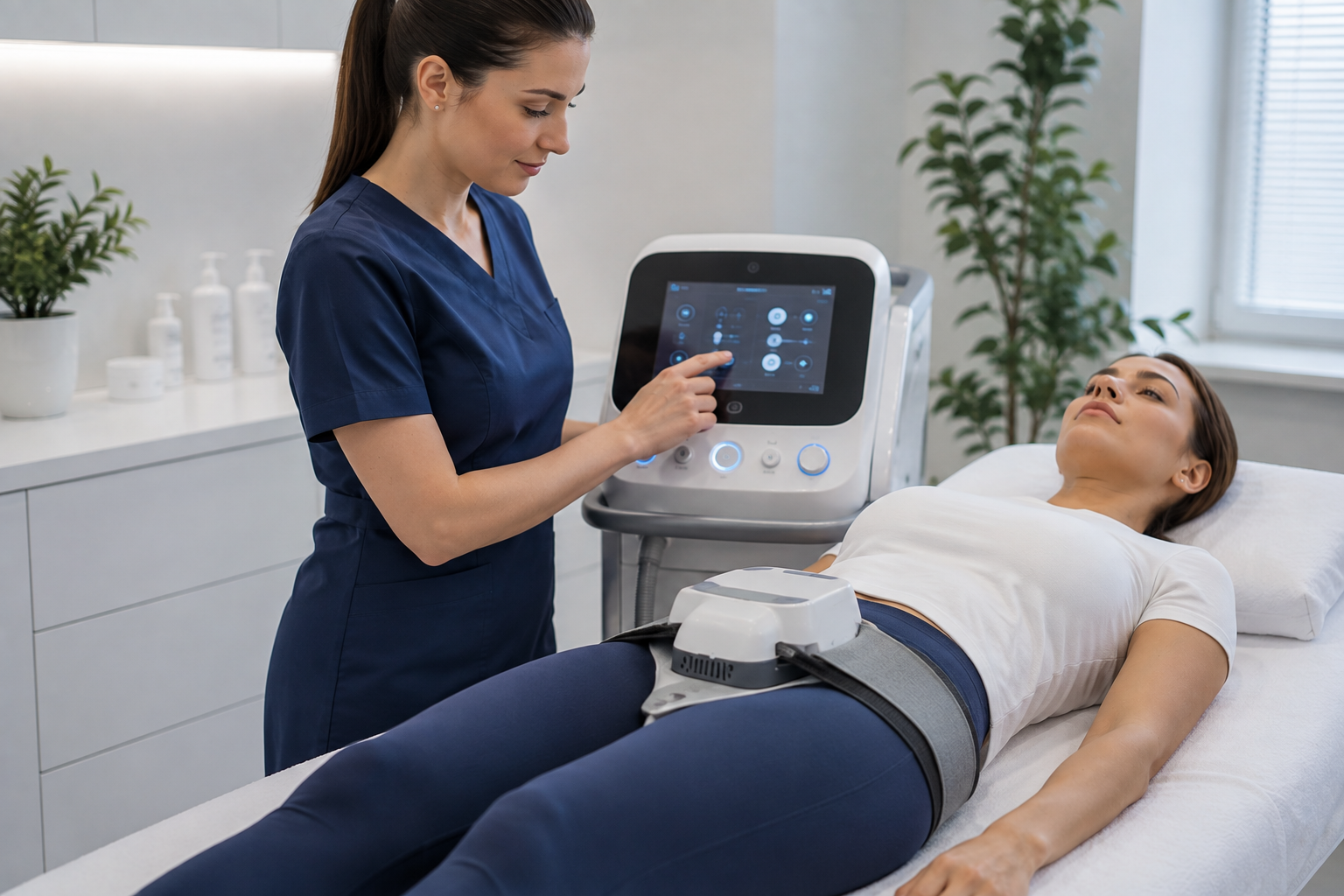
You remain fully clothed for the entire session. There is nothing to undress for, no internal examination, and nothing is inserted at any stage — the procedure is entirely non-invasive, and the energy does its work through clothing. For anyone who anticipated an intimate examination, that matters, and sessions can be carried out at home at no additional cost.
The Four Concerns This Treatment Addresses
Four distinct conditions are treated, and they are worth separating out, since people assume only the first is a legitimate reason to ask.
- Stress incontinence. Leakage when abdominal pressure rises suddenly — a cough, a sneeze, a laugh, lifting a child. Strengthening the support beneath the bladder addresses the mechanism at fault.
- Overactive bladder incontinence. Urgency rather than pressure: a sudden need to pass urine with little warning, often with frequent trips through the night. For people experiencing this particular form of bladder control problem, Lipo Freeze 2U Overactive Bladder Treatment provides further information about the treatment approach, suitability and what patients can expect.
- Faecal incontinence. Bowel control depends on the same muscular sling and nerve supply, and it is treated with the identical protocol and discretion.
- Erectile dysfunction. The pelvic floor musculature contributes to male sexual function, and improved sexual health is among the verified benefits. Men are treated with the same equipment and the same clothed approach.
Suitable for Men and Women Alike
The treatment is appropriate for both men and women, and the assumption that pelvic floor weakness is exclusively a women's concern keeps many men from asking about it. It is also well suited to postpartum concerns, where the pelvic floor has been stretched by pregnancy and delivery.
The Session, the Course and the Sensation
Each session lasts thirty minutes. A course of six to eight treatments is recommended for optimal results, typically two sessions weekly across three weeks, and some patients notice benefits in as few as two or three sessions. The sensation is best described as an extreme pelvic floor exercise without any discomfort, and there is zero downtime, so you resume normal activities immediately.
Preparation and How Results Develop
Wear loose, comfortable clothing; there is no restriction on what you drink beforehand except as advised by the specialist nurse. Results usually begin within a few weeks, with visible improvement in as little as three weeks; improvement may follow a single session, but additional sessions are required for the full benefit. Results can last for years, with maintenance sessions every three to twelve months, and how results typically develop is set out elsewhere.
The verified benefits are stronger pelvic floor muscles, improved bladder control, an efficient and convenient format, improved sexual health, and a genuine improvement in quality of life. The treatment is non-invasive and painless, and the equipment is FDA-approved.
An Honest Word on the Evidence
Incontinence treatment of this kind is a recent innovation. It has been used in several studies to treat urinary incontinence, which is an accurate summary of where the evidence stands — promising and actively researched rather than settled. If your symptoms are new or changing, that warrants assessment by your GP first.
Vaginal Tightening Treatment
Vaginal laxity is a physical change with physical causes — childbirth, ageing, hormonal shifts and weight fluctuation — and it produces physical consequences that range from reduced sensation to dryness to discomfort during intercourse. The women who consider this treatment are almost always seeking function and comfort.
How HIFU Reaches the Deeper Layers
The treatment uses HIFU — High-Intensity Focused Ultrasound — delivered by a specialised wand. A focused, specific amount of energy is directed into the vaginal tissue, where it indirectly heats the deeper layers without harming the surface. That warming prompts the body's own repair response, stimulating collagen and elastin, the proteins responsible for structural integrity and elasticity. It is non-surgical and requires no anaesthesia.
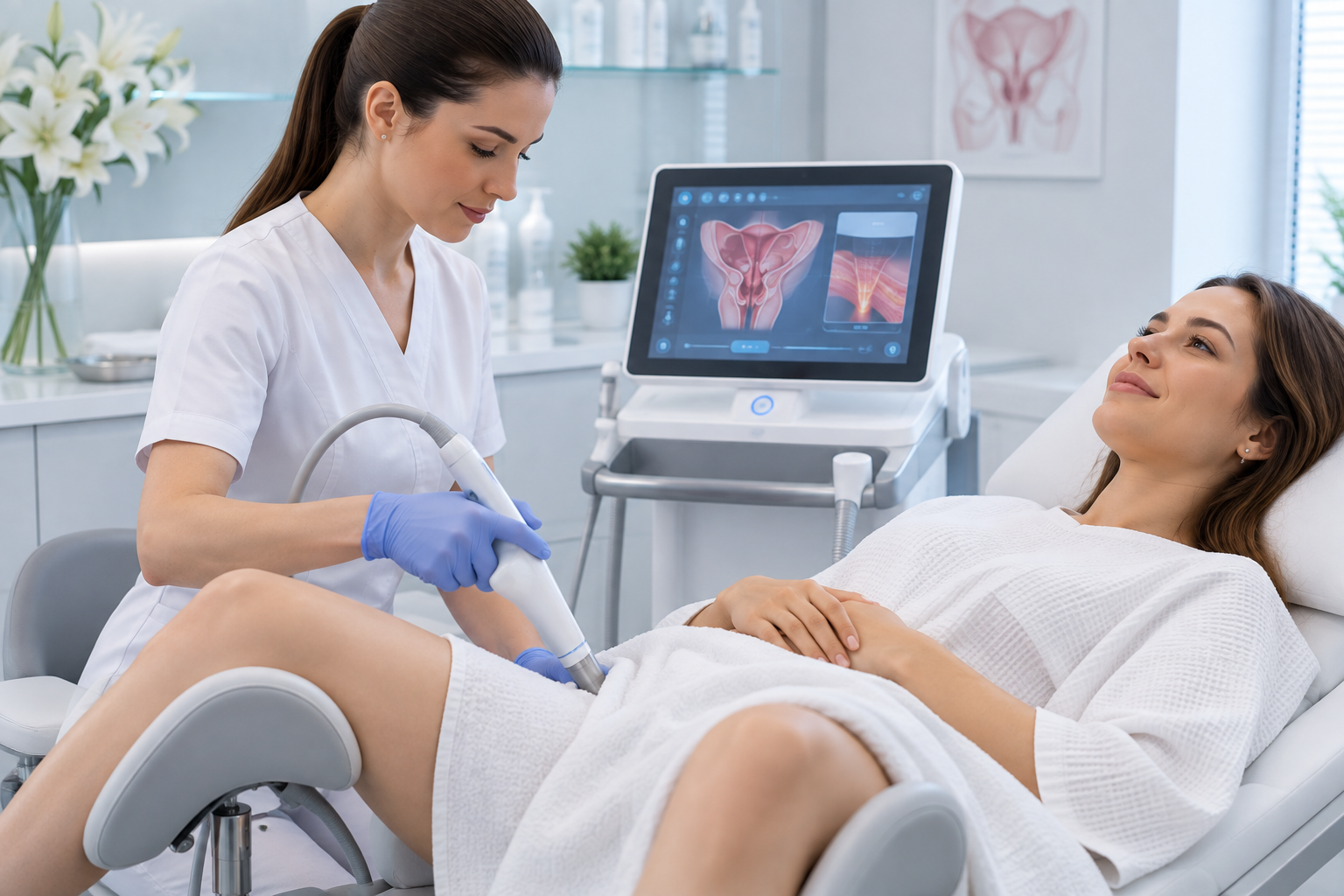
The Session, Stage by Stage
The appointment follows a consistent six-stage sequence, and knowing its shape in advance removes most of the apprehension.
- Initial consultation. Your medical history is evaluated and your suitability assessed before anything is begun.
- Preparation. A topical numbing cream is applied and given time to take effect.
- Treatment delivery. Focused ultrasound energy is applied via the specialised wand, under the consultant's control throughout.
- Collagen activation. The heated deeper layers respond by stimulating natural collagen and elastin production.
- Recovery. Downtime is minimal, with possible mild soreness or swelling lasting days rather than weeks.
- Results. Over several weeks you may notice improved tightness, better lubrication and an enhanced feel through the pelvic floor.
The treatment itself takes around thirty minutes. Most clients describe a warm or tingling sensation rather than anything sharp, and afterwards there may be tenderness, slight swelling or spotting for a few days. Avoid sexual activity for twenty-four to forty-eight hours to allow the tissue to heal, and maintain adequate fluid intake, which supports healing and collagen formation.
Who the Treatment Suits
It is intended for women experiencing vaginal looseness or laxity, particularly following childbirth; for minor or stress urinary incontinence; for vaginal dryness associated with lower oestrogen levels; for increased sensitivity or pain during intercourse; and for the loss of collagen and tone that accompanies ageing and menopause. Reported benefits include increased tightness and elasticity, improved sexual satisfaction, reduced dryness through better lubrication, alleviation of stress urinary incontinence through pelvic floor strengthening, relief from painful intercourse, and improved confidence. It is not recommended during pregnancy, nor for those with certain specific medical conditions.
Course, Results and Longevity
Many women benefit from three treatments spaced around four to six weeks apart, though this varies with personal goals and tissue response. Initial improvements may be noticed within a few weeks, and collagen continues to build over several months. Results can last from several months to over a year, and maintenance sessions may be recommended annually; they are not permanent, and Lipo Freeze would rather you knew that beforehand.
Two Things You Should Know Before Deciding
A 2023 review found that HIFU studies show promising results when the treatment is performed by trained professionals; however, outcomes and risks can vary from person to person. Separately, the FDA warns that energy-based devices used for vaginal rejuvenation procedures, such as Femi-wand, can pose serious risks, and that their use should be approached with caution. Both are the honest context for this treatment, and any discussion of suitability ought to begin from them.
Fat Dissolving Injections
Some pockets of fat are too small, too shallow or too awkwardly shaped for a cooling applicator to grip properly, and a treatment that cannot achieve an accurate fit cannot deliver an accurate result. Fat dissolving injections exist for those areas.
A specially formulated solution is introduced directly into the fat layer, where it dissolves the membrane of the fat cell and initiates the body's natural clearance of the released contents, so the change builds gradually across a short series of sessions. Delivered by injection rather than by suction, it can be placed with precision under the chin, along the jowls or around the knees.
Treatment is organised into four area bands: a small area covers the chin, jowls and knees; a medium area the upper arms and the upper back or bra strap area; a target area the lower and upper stomach and the inner or outer thighs; and a large area the full stomach or full thighs. The published price bands follow the same divisions.
Fat freezing is the more efficient option across broader areas, whilst injections handle the smaller regions a cup cannot reach; a plan from Lipo Freeze often combines both. Most clients resume normal activities with minimal downtime by the end of the day, and the treatment is described as entirely safe and is FDA-approved. It is not a weight loss treatment or an intervention for obesity, and it depends on your following a healthy diet.
HIFU Non-Surgical Facelift
The HIFU facelift applies focused ultrasound energy to the deeper structural layers of the skin — the layers that determine how the face is supported rather than how it is surfaced — and triggers a natural response to regenerate collagen.
Most facial treatments work on the surface: they exfoliate, they hydrate, they improve tone, and they do nothing about the underlying architecture that has loosened over years. This one delivers energy past the surface, where controlled heating prompts the body to lay down new collagen. What emerges over months is a gradual lifting and tightening across the face, the neck and the décolletage.
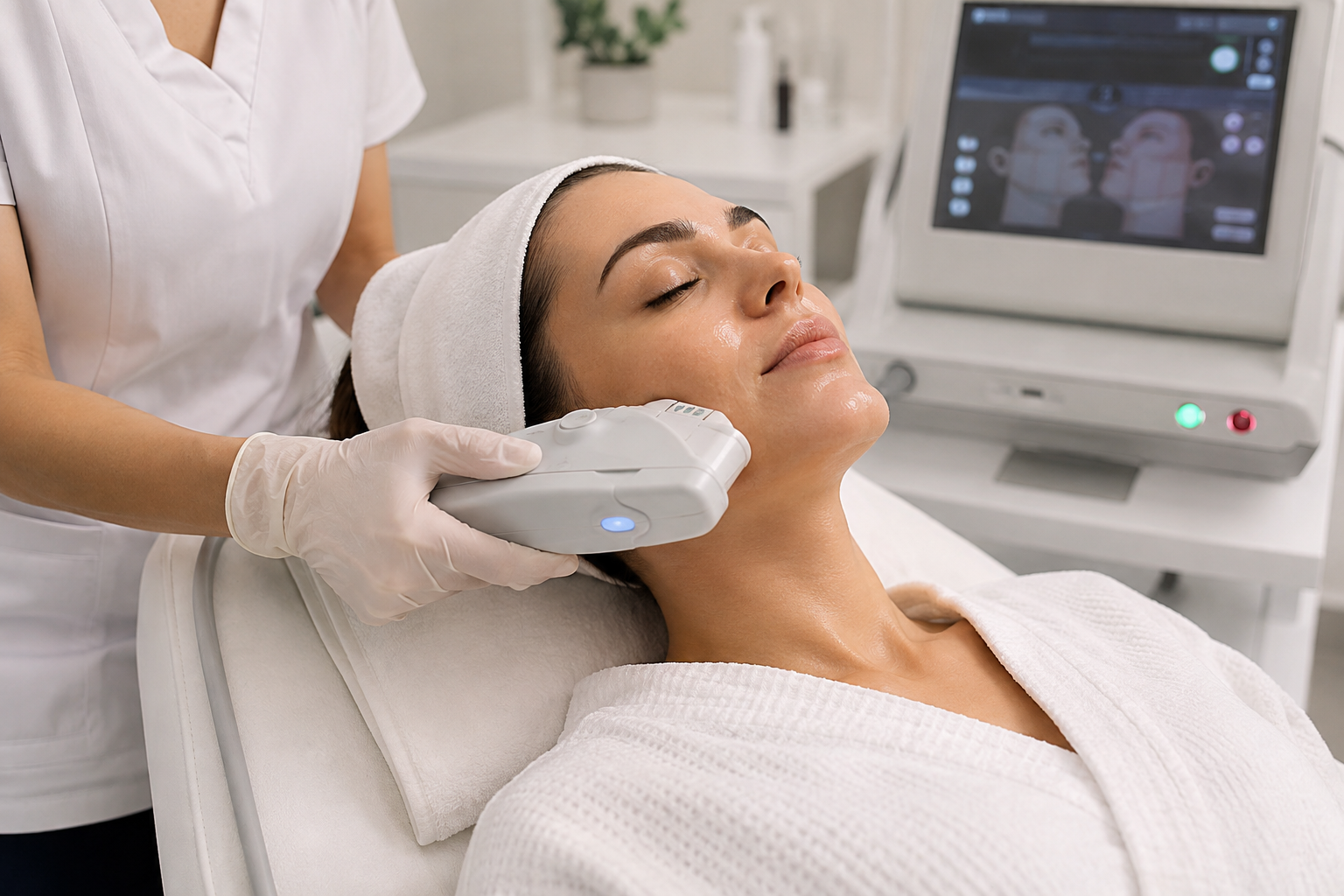
Fine lines soften, the jawline becomes more defined, and the skin feels firmer to the touch. Treating the face, neck and décolletage as one continuous area avoids the mismatch that follows from improving the face alone. There is no scalpel, no anaesthetic and no marks on the skin, and a single session produces results that continue to improve for months. It is not the equivalent of surgery, and Lipo Freeze does not present it as one.
Advanced RF Microneedling
Advanced RF microneedling combines two established approaches — microneedling, which creates controlled micro-injuries that provoke the skin's repair response, and radiofrequency energy, delivered at depth to remodel the skin and the underlying tissue.
Together they do more than either accomplishes alone: the needling stimulates the skin's regenerative machinery just beneath the surface, whilst the radiofrequency energy reaches the deeper tissue where the structural change happens. The result is smoother texture, softened scars and stretch marks, tightening of loose or crepey skin, and sustained collagen production.
It is used on the face, the neck and the body — anywhere skin has loosened with age or following weight loss, which makes it a natural companion to body contouring. Weight loss frequently leaves skin that has not retracted to match the new shape beneath it, and crepey skin, finely creased rather than simply sagging, responds to the same remodelling; stretch marks and older scarring improve gradually.
Recovery is minimal but not quite nothing: expect a few days during which the skin may appear slightly pink. Improvements then continue across three to six months as new collagen is laid down, so the way results build over time is worth understanding before you begin.
CryoPen Cryotherapy
CryoPen is a precision cryotherapy device used for the accurate, painless removal of benign skin lesions — the small, harmless, persistently irritating marks that catch on collars and jewellery.
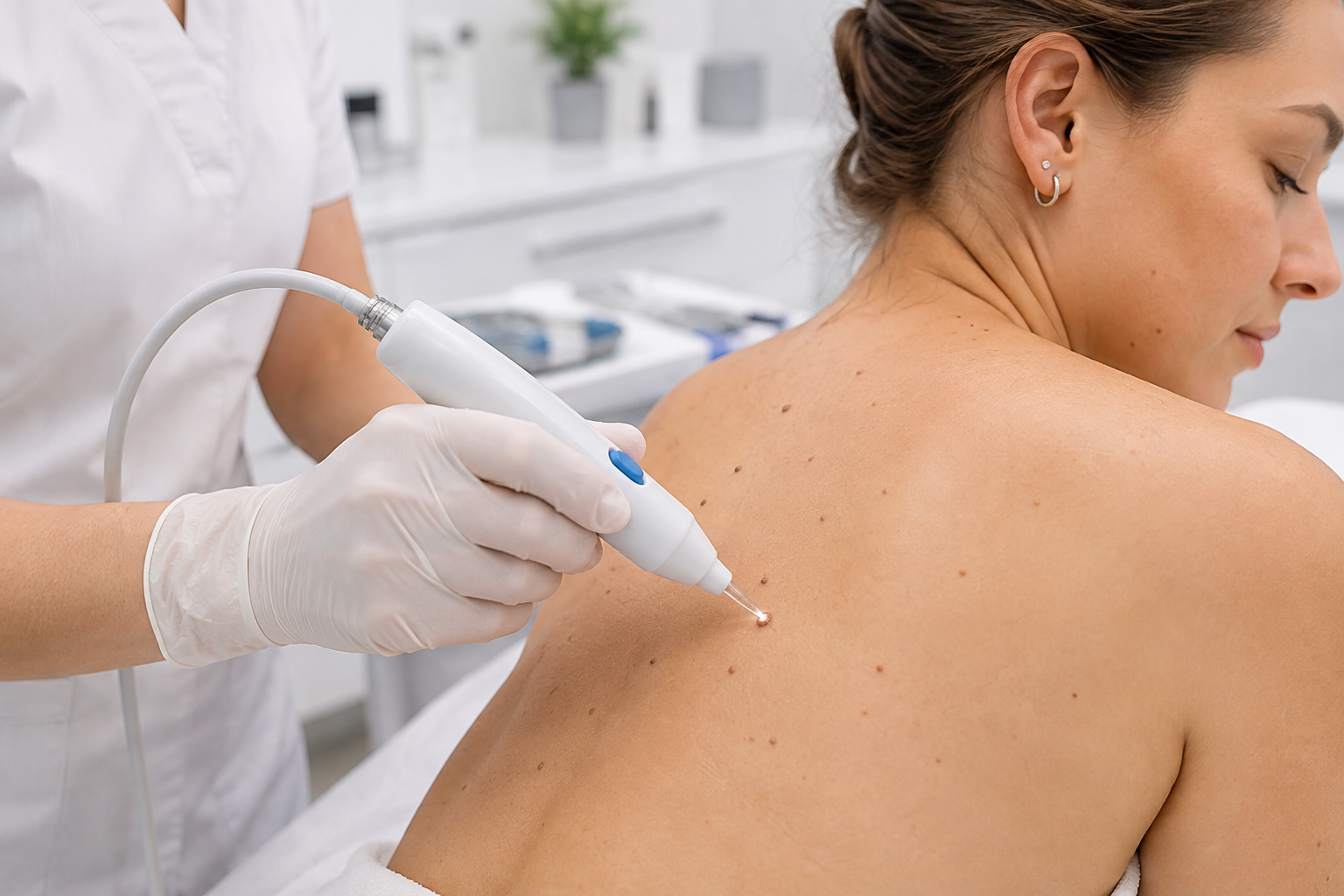
The device delivers a localised stream of nitrous oxide gas directly onto the targeted lesion, freezing it at a cellular level. The stream is fine enough to treat the lesion and nothing else, so the surrounding skin is left intact; there is no scarring and no surgical excision, and treatment is completed in a single short session.
Skin tags, warts, verrucae, milia, age spots, cherry angiomas, seborrhoeic keratoses and dermatofibromas can all be addressed this way. Nothing is cut away afterwards; the frozen tissue breaks down and naturally sloughs away over the following days and weeks.
One qualification Lipo Freeze states prominently rather than burying: this is a cosmetic treatment for benign lesions only. Any mark that is changing in size, shape or colour, that bleeds, that itches persistently, or whose nature you are not certain of must be assessed by a doctor first. Your consultant will decline to treat anything that warrants medical assessment; further detail on how treatment decisions are made is set out separately.
Choosing the Right Treatment for You
The list of treatments above is not a menu to choose from unaided. Most people arrive describing a concern rather than requesting a technology — the stomach that has not changed despite everything, the symptom that has quietly reshaped a year of social plans — and the treatment is worked out from there.
Fat that will not shift, skin that has loosened and muscle that has weakened are three different problems with three different answers, and they are frequently confused by people who have spent a long time trying to solve them alone. More than one treatment is often combined into a single tailored plan and sequenced sensibly: reducing a fat deposit, then addressing the skin quality over it.
Matched, Not Sold
Treatments are matched to the mechanism behind your concern. If a different approach would serve you better, that is the answer you will be given.
Combined Where It Helps
More than one treatment is frequently combined into a tailored plan and properly sequenced, because certain concerns have more than one cause.
An Honest Consultation
Your medical history, skin, fat distribution and expectations are assessed before anything is agreed — an assessment of suitability, not a formality.
Aftercare as Standard
Aftercare advice and follow-up guidance form part of the treatment, and are never presented as a separate purchase.
A consultation covers your medical history, an examination of the area concerned, a discussion of what you hope to change, and an honest assessment of whether the treatment you have in mind will deliver it. Contraindications are checked properly, since several of these treatments have real ones. Pricing depends on the areas treated and the sessions required; where prices are published, for fat freezing and for fat dissolving injections, they are set out in full on the prices page.
Being told that a treatment is not appropriate for you is a normal outcome: you may be too far from your target weight for the result to be worth the cost, you may have a contraindication that rules a treatment out, or your expectations may be beyond what the technology can deliver. Lipo Freeze builds tailor-made plans, and a team of specialists ensures treatment is carried out safely, which includes declining to treat; the approach and standards are set out elsewhere.
When you are ready to ask a question about suitability, what a treatment would involve in your circumstances, or whether any of these options are appropriate for you at all, the next step is an individual assessment. You can arrange a Lipo Freeze 2U Consultation to discuss your goals, medical history, suitability and the most appropriate treatment options before anything is agreed.