
How to Build a Landscape Plan Around Soil and Slope Conditions
A good landscape plan starts long before anyone chooses a plant palette or sketches a patio edge. It starts with the ground itself. Soil texture, drainage, slope, sun exposure, and the way water moves across a site determine whether a landscape will settle into place or fight itself for years. I have seen attractive designs unravel because they ignored a hillside’s runoff path, compacted fill soil around a new tree, or treated a dry, south-facing slope as if it were a flat suburban lawn. The fixes are rarely glamorous. They usually involve rethinking grading, narrowing the plant list, and being honest about what the site can support with reasonable maintenance.
That is especially true in Southern California, where landscape design has to work with water limits, fire risk, and the visual character of hillside neighborhoods. In the San Gabriel Valley and nearby foothill communities, the most successful projects respect the site first. They use drought resistant landscaping where it makes sense, lean on water-wise plant selection, and incorporate hardscaping and drainage details that keep soil in place instead of washing it downhill after the first hard rain.
Start with the site, not the style
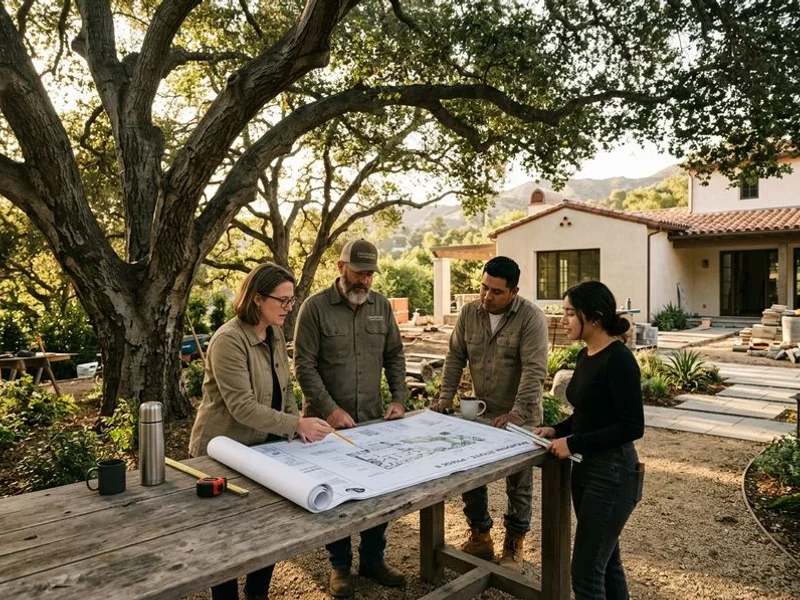
When clients imagine a new landscape, they usually start with appearance. They want screening, color, shade, a place for kids, maybe a low-key native garden, maybe a clean modern entry. Those goals matter, but they come after the site assessment. California’s water agency recommends looking at irrigation, soil, sun exposure, and plant selection before removing turf, and that order makes practical sense. If the soil is tight and slow to drain, or if a slope sheds water quickly, the plant strategy has to follow those conditions.
Soil varies more than people expect, even on a single property. One portion may be sandy and drain quickly, while another holds moisture longer because of compaction or imported fill. On a hillside lot, the upper portion of a slope can dry out far faster than the base, where runoff collects. A flat front yard may still have microclimates created by reflected heat from a wall, shade from a neighbor’s tree, or wind exposure along an open corner.
That is why plant choice should be tied to location, not just the overall garden theme. The California water agency points homeowners toward WUCOLS for understanding regional plant water needs, and that is the right kind of tool to keep in mind. It helps prevent the common mistake of pairing water-hungry plantings with dry, sunbaked soil and then trying to solve the mismatch with heavier irrigation. That rarely ends well.
Reading slope the way a builder reads framing
Slope changes everything. On a flat lot, the biggest concerns may be irrigation efficiency and soil health. On a hillside, the priorities expand to erosion control, root anchoring, runoff management, and safe access for maintenance. Slope also changes how people use the space. A 20-foot wide slope can feel much larger and more daunting than the same square footage laid out level, which is why hillside landscaping is as much about shaping movement and managing water as it is about planting.
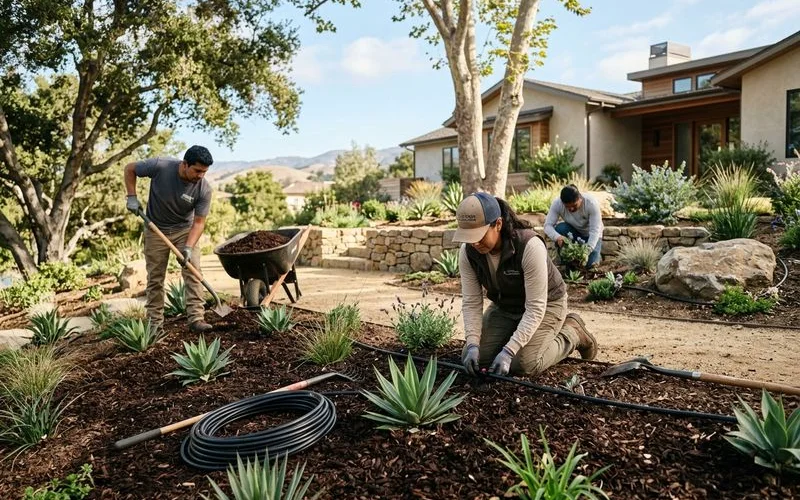
The first question is not, “What can I put here?” It is, “What does water do here during a storm?” On a slope, water tends to accelerate, carry loose soil, and concentrate where it finds a low point. If the plan ignores that, even a beautiful planting scheme can fail when mulch migrates, roots become exposed, and water cuts channels through bare ground. In these situations, hardscaping often does quiet but essential work. Retaining elements, steps, path edges, and other grade-managing features can slow water and create usable terraces. Done well, hardscaping is not decoration. It is structure.
That structure should be paired with plants that help hold soil and tolerate the local exposure. hardscaping services Pasadena CNPS notes that slopes need erosion control, drought tolerance, and firewise planting, which is exactly the right lens for foothill properties. On a hillside, a plant’s root behavior matters as much as its appearance. Dense, fibrous root systems can help stabilize soil better than sparse plantings, while a thoughtful combination of shrubs, groundcovers, and bunchgrasses can cover exposed areas without asking for constant water.
Matching the planting plan to microclimates
One of the most reliable ways to improve landscape design is to stop treating the whole yard as one zone. A site usually contains several microclimates, and a slope makes those differences even more pronounced. South-facing areas receive more direct sun and heat. North-facing pockets may hold moisture longer and stay cooler. Areas near masonry walls can bake in reflected heat, while lower swales may stay damp after irrigation or rainfall.
This is where plant selection by microclimate becomes practical rather than theoretical. In one part of the yard, ceanothus may thrive in a brighter, drier exposure. In another, monkeyflower might suit a slightly more protected edge. Foothill penstemon can fit into drier, sunlit areas where drainage is good and competition from turf has been removed. California buckwheat, California sagebrush, manzanita, bunchgrasses, and San Gabriel oak can all be part of a regionally appropriate palette when the site conditions support them.
The point is not to treat native plants like a checklist. It is to place them where they can live with less intervention. That is the real backbone of drought resistant landscaping. The most sustainable plant is not the one that survives on marketing language, it is the one that fits the soil, slope, and exposure without constant rescue.
Turf removal only works when the replacement plan is real
Turf removal is often presented as a simple water-saving win, but experienced landscapers know the hard part begins after the grass comes out. California’s guidance emphasizes reviewing irrigation, soil, sun exposure, and plant selection before removing turf for good reason. A bare slope covered with mulch and a few scattered shrubs is not a finished landscape. It is an invitation for erosion, weed pressure, and heat stress.
A better replacement plan starts with the function of the space. If a front yard needs visual order, the design may rely on a tighter hardscape edge, massed shrubs, and a limited number of well-placed specimen plants. If a hillside needs stabilization, the answer may be layered planting with dense low growth near the soil surface and deeper-rooted shrubs above. If the area receives runoff from a roof or driveway, the design may need to route that water safely instead of letting it strike bare soil.
The water-wise approach is not about removing every square foot of green. It is about choosing the right kind of green. California native plants, climate-appropriate ornamentals, and carefully matched irrigation zones usually outperform a turf-first mindset on challenging ground. That has become even more important under California’s statewide Model Water Efficient Landscape Ordinance, which regulates water usage in new and renovated landscapes and encourages native or climate-appropriate plants, alternative water sources, and efficient irrigation.
Irrigation needs to follow the grade
Irrigation on a slope is one of the easiest places to lose water and money. Water that would soak in on flat ground can run off before roots absorb it. Overwatering can also deepen erosion problems by keeping surface soil loose or pushing water through the slope too quickly. That is why irrigation retrofits are often as important as plant selection.
The design goal is simple: deliver water slowly enough that the soil can hold it. In practice, that means paying attention to emitter placement, spacing, and zoning so the upper and lower portions of a slope do not receive the same schedule if they drain differently. Microclimate matters here too. A plant in hot reflected sun may need a different amount of water than the same species planted in partial shade. Good irrigation is not just efficient, it is tailored.
This is also where homeowners often discover that a landscape they thought was “low maintenance” was actually just poorly watered. A dry slope planted with species that are not well matched to the site will need repeated intervention. A properly designed planting area, by contrast, can become simpler to maintain over time because the system supports the plants instead of forcing constant correction.
Firewise planting and defensible-space thinking
For hillside properties, especially near the San Gabriel Mountains and foothill edges, firewise planning belongs in the earliest design conversations. The landscape should not be treated as a separate layer from safety. Planting density, material choices, and the placement of features near the house all matter.
CNPS’s San Gabriel Mountains chapter highlights ember-resistant zone rules and native plants suitable for local gardens, which reflects the practical reality that fire-resistant planting is not just about species selection. It is also about arrangement and upkeep. A landscape with good spacing, low fuel accumulation, and clear transitions between planted zones and hard surfaces is easier to maintain and less likely to create a continuous path for fire.
Hardscaping can support that strategy when used intelligently. Walkways, patios, gravel transitions, and masonry accents can create breaks between planted masses. At the same time, the planting should remain coherent. It is easy to overcorrect and create a barren, overheated yard that looks sterile and performs poorly. The better solution is to combine structure with restrained planting, using regionally adapted shrubs, bunchgrasses, and groundcovers in a pattern that reduces fuel continuity while still giving the property texture and shade.
What local conditions in the San Gabriel Valley ask of a landscape
The San Gabriel Valley has a hillside visual character that shapes how people experience their neighborhoods. Many properties sit in or near slope conditions, and new construction or renovation often has to account for water-efficient landscapes that fit that terrain. A landscape that ignores the hillside setting can feel awkward at best and unstable at worst. One that responds to the slope can look settled, rooted, and far more natural.
That local setting also makes water-wise design more than a trend. It is part of the practical reality of maintaining a landscape over time. Drought-tolerant landscaping is not an aesthetic category so much as a response to climate, regulations, and site conditions. California’s statewide landscape rules reinforce that direction, but the most convincing reason to design this way is simpler: the plants and systems last longer when they are suited to the ground beneath them.
There is also a habitat dimension that matters. The San Gabriel Mountains contain many rare, threatened, and endangered species, which gives nearby landscapes a chance to reinforce local ecological character rather than erase it. A private yard will never function as wilderness, nor should it be expected to. But it can echo the region through thoughtful plant selection, reduced turf, and layered habitat gardening that supports native birds and insects without demanding excess water.
HOA rules, water restrictions, and the practical limits of choice
Homeowners often worry that an HOA will block a water-wise renovation, especially when turf removal or native planting is involved. California water restriction guidance makes clear that homeowners’ associations cannot prohibit certain water-efficient landscaping choices during drought-related restrictions. That does not remove every design constraint, but it does matter. It gives homeowners more room to pursue efficient irrigation, drought tolerant landscaping, and native plant palettes without assuming that a uniform green lawn is the only permissible option.
Even so, the best projects avoid framing the change as a fight with the HOA. A landscape that is neat, intentional, and well detailed usually faces less resistance than one that looks unfinished. Clean hardscape edges, consistent mulch depth where appropriate, and a strong planting structure help a water-wise landscape read as designed rather than neglected.
A practical way to think through the plan
Before any planting order goes in, I like to see the landscape problem broken into a few grounded questions. What is the soil doing here? Where does water move, sit, or disappear? Which slopes need stabilization? Which areas are full sun, reflected heat, or shade? Where will irrigation be most efficient? The answers shape everything from plant spacing to whether a terrace or retaining detail is worth the expense.
If the site is steep, the solution may lean more heavily on hardscaping and layered planting. If the soil drains quickly, the palette may need tougher drought-tolerant species and careful irrigation. If the property sits in a visible hillside corridor, visual cohesion matters because the landscape will be read from the street and from neighboring properties as part of the broader terrain.
A short planning pass can keep the project honest. The following points usually deserve attention early, before the design starts to harden:
Those five questions often reveal whether a plan is likely to succeed with modest upkeep or turn into a maintenance burden.
A landscape built around soil and slope conditions does more than survive. It settles in. It holds water where it should, sheds it where it must, and gives the property a shape that feels native to the place. In the San Gabriel Valley, where hillside lots, drought pressure, fire concerns, and water rules all intersect, that kind of design discipline is not a luxury. It is the difference between a landscape that looks good for a season and one that continues to make sense year after year.