
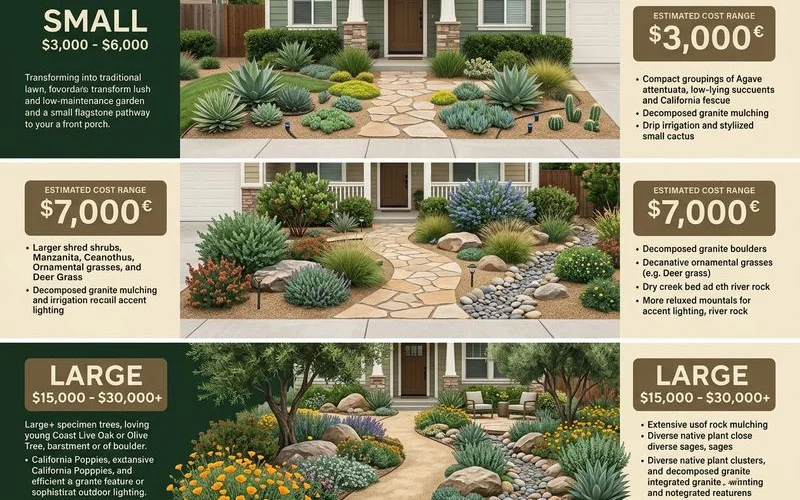
How to Combine Hardscaping and Native Planting on Slopes
Slopes ask for more discipline than flat ground. They drain differently, hold soil differently, and show every design choice from the street. In the San Gabriel Valley, that challenge comes with a second layer of pressure: water efficiency. A hillside that looks good but sheds soil in every rain, or one that relies on thirsty planting to stay presentable, is not a good long-term landscape. The real goal is a site that holds together physically, uses water wisely, and still feels connected to the local character of the foothills.
That is where hardscaping and native planting work best as partners. Hardscaping gives a slope structure. Native planting gives it life, root mass, seasonal change, and a look that belongs in the region. When those two elements are balanced correctly, hillside landscaping becomes more than erosion control. It becomes a landscape design strategy that respects the landform, the climate, and the realities of maintenance.
Start with the slope itself, not the plant list
The most common mistake on a hillside is to start with aesthetics. People fall in love with a plant palette, then try to force it onto a slope that needs drainage correction, access planning, or better soil management first. California’s water guidance points to exactly the right sequence: assess irrigation, soil, sun exposure, and plant selection before removing turf or making major changes. That order matters even more on a slope, where water moves quickly and one weak point can create problems across the whole site.
A hillside should be read in layers. Where does water collect after a storm? Where does it run fast enough to carry soil with it? Which parts bake in full sun, and which stay cooler because of shade from a wall, fence, or neighboring structure? In the San Gabriel Valley, those differences can be dramatic even on a single property. A slope facing south or west may behave like a much hotter, drier site than the area near the house.
Once you understand those conditions, hardscaping has a purpose. A retaining edge, a set of steps, a low wall, or a terrace is not just a visual feature. It is a way to interrupt runoff, create usable pockets, and give plants a place to establish. The best hillside landscaping I have seen never tries to flatten the slope completely. It works with the grade, borrowing a little structure where the land needs help and leaving room for planting where roots can do the rest.
Hardscaping on slopes should look like part of the ground
On a hillside, hardscaping can fail in two ways. It can be too light and do almost nothing, or it can be overbuilt and look like a commercial retaining system dropped into a residential setting. The sweet spot is usually somewhere between those extremes. Materials and forms should feel as though they belong to the topography.
Low retaining walls are often more useful than a single large intervention because they break a steep run into smaller, more manageable sections. Short stair runs can make a slope easier to move across and make maintenance less awkward. Small terraces create level planting pockets where irrigation can be controlled more precisely. These moves help with stormwater runoff, because water slows down as it meets each change in grade. That is important for erosion control, especially on exposed slopes.
There is also a visual reason to keep hardscaping modest. The San Gabriel Valley has a strong hillside character, and new construction often looks best when it preserves that sense of landform instead of burying it under heavy architecture. Hardscaping should reinforce the hill, not deny it. A wall that follows the slope line, a stair that feels embedded rather than imposed, or a boulder placement that echoes natural geology will usually age better than something overly formal.
This is also where drainage and irrigation planning have to be treated as design, not afterthoughts. On slopes, water either infiltrates where you want it to or it races downhill where you do not. Hardscape features should help guide that movement. A terrace, for example, can give irrigation a chance to soak in instead of escaping before it reaches the root zone. That is one reason irrigation retrofits matter so much on hillside properties. A system designed for flat ground often overwaters some areas and leaves others dry.
Native plants do the work that hardware cannot
If hardscaping shapes the slope, native planting stabilizes it. Native plants are not decorative filler. Their roots, growth habits, and water needs make them especially valuable in drought resistant landscaping, especially where soil loss is a concern. California native plants are also well suited to local climate patterns, which matters when the landscape has to survive both summer heat and periods of drought.
On steep ground, a good plant palette is doing three jobs at once. It is covering soil so rain does not strike bare ground directly. It is rooting into the slope to help hold it in place. And it is lowering the long-term water demand of the landscape. That third point is often what pushes native planting from an aesthetic preference to a practical necessity.
For the San Gabriel Valley and nearby foothill areas, plants that naturally fit the region include California buckwheat, California sagebrush, manzanita, ceanothus, monkeyflower, foothill penstemon, and bunchgrasses. San Gabriel oak is another locally named native species that reflects the region’s identity. These are not just names to drop into a plan. They represent different forms, seasonal timing, and water use patterns that can be arranged to create structure on a slope.
Bunchgrasses, for example, can act as quiet soil holders and visual unifiers across a grade. California buckwheat can bridge between harder structural elements and looser planting drifts. Manzanita and ceanothus bring evergreen presence, while monkeyflower and foothill penstemon add seasonal color without turning the site into a maintenance burden. The trick is not to overfill every inch. On a slope, spacing matters. Crowding plants can create competition for limited moisture and make maintenance more difficult, especially if access is awkward.
Match planting to microclimate, not just the hillside
A hillside is rarely one planting condition. It has its own microclimates. One section may get full sun all afternoon. Another may sit in reflected heat near masonry. A pocket near the base of a wall can be wind-protected and slightly cooler. California’s landscape guidance emphasizes sun exposure and plant selection before turf removal, and that advice is especially useful here. If the slope is treated as one uniform area, the landscape will probably underperform somewhere.
This is where landscape design becomes more than arranging attractive species. It becomes reading the site closely enough to place the right plant in the right pocket. Some natives will tolerate hotter, drier exposure better than others. Some will do better where runoff briefly gathers after rain. Some need a little help during establishment, especially if they are placed in the most exposed parts of the slope. The goal is not to make every plant behave the same way. The goal is to organize the slope so each plant is working in a zone that suits it.
A hillside that gets this right feels effortless after establishment, but that effect comes from careful sorting at the start. When plant selection respects microclimate, the landscape tends to use water more efficiently and require less corrective intervention later. That matters in a region where water-wise design is no longer optional thinking. California’s Model Water Efficient Landscape Ordinance has made efficient irrigation and climate-appropriate planting central to new and renovated landscapes, and that framework aligns naturally with slope design.
Think about firewise planting at the same time
On foothill properties, firewise concerns cannot be separated from slope design. The San Gabriel Mountains region is especially relevant here, and local native plant communities are part of a landscape that includes many rare and sensitive species. That does not mean every native plant is automatically the right choice for every home site. It does mean planting decisions should consider defensible space, ember exposure, and the way vegetation is arranged around structures.
Fire-resistant planting and firewise landscaping are often discussed as if they were a separate project from hillside landscaping. They are not. On a slope, plant landscaping companies in Los Angeles placement affects visibility, access, and the continuity of fuel. Hardscape can help create safer zones near the house and break up larger planted areas. Native planting can support a more resilient landscape away from immediate building edges, especially when the palette is selected thoughtfully.
The key is moderation and clarity. Dense planting right up against structures is a problem. So is a slope that is left barren because someone assumed native means unmanaged. A better approach is to shape the land with hardscaping near the house, then move into more naturalistic native planting as distance increases. That creates a transition that is both practical and visually coherent.
Water-wise design is not an add-on in California
For hillside properties in the San Gabriel Valley, drought resistant landscaping is not just a trend or a style. It is a response to local conditions and regulatory reality. California water agencies encourage homeowners to consider irrigation, soil, sun exposure, and plant selection before making landscape changes. The state’s water-efficient landscape standards also point design in a water-wise direction, especially for new construction and renovations.
That means turf removal should be strategic, not emotional. Lawns on a slope are often a poor fit because they can be harder to irrigate evenly and more vulnerable to runoff. Replacing turf with native planting, permeable hardscaping, or smaller functional planting zones often improves both appearance and performance. The win is not simply less lawn. It is a landscape that asks less of irrigation while giving more back in structure and ecological fit.
When homeowners ask where to begin, I usually suggest looking at the site in three parts. The first is where hardscaping can control movement and hold soil. The second is where native planting can establish meaningful coverage. The third is where irrigation can be simplified or retrofitted so water reaches roots instead of wastefully running off. Those three pieces should be designed together. If they are handled separately, the slope usually tells on the design within a season or two.
HOA rules do not erase water-efficient choices
Many hillside neighborhoods have homeowners’ associations, and that can make planting decisions feel more constrained than they really are. California water restriction guidance is clear that HOAs cannot prohibit certain water-efficient landscaping choices during drought-related restrictions. That does not mean every community will be easy to work with, but it does mean drought-tolerant planting and other water-wise measures have real standing.
For property owners, that matters because slopes are exactly the kind of site where practical water-efficient choices should be easiest to defend. A hillside planted with natives, supported by appropriate hardscaping, and managed with efficient irrigation is not a luxury project. It is a sensible response to site conditions. When needed, that logic can help in discussions about turf replacement, visual character, or maintenance concerns.
The best presentations to an HOA are usually concrete. Show how the slope will be stabilized. Show where hardscape will slow runoff. Show the plant palette and explain that it is adapted to the local climate. Avoid selling the design as a fashionable makeover. Sell it as a durable landscape design solution that respects the hillside and reduces waste.
The practical sequence that keeps projects from unraveling
On real projects, the sequence matters as much as the concept. A slope that gets planted before grading, drainage, or access is sorted out often becomes expensive to fix later. The same is true when a hardscape gets built without thinking through where the planting pockets and irrigation zones will go. Good hillside landscaping is coordinated work.
The simplest way to think about it is this: stabilize the slope, create access and control points, then bring in the native planting that will knit everything together. If the site needs erosion control, address that early. If runoff is the main issue, do not pretend plants alone will solve it. If the slope is steep enough that maintenance access is awkward, build that reality into the design with terraces or steps. Then choose plants that can thrive in the resulting conditions.
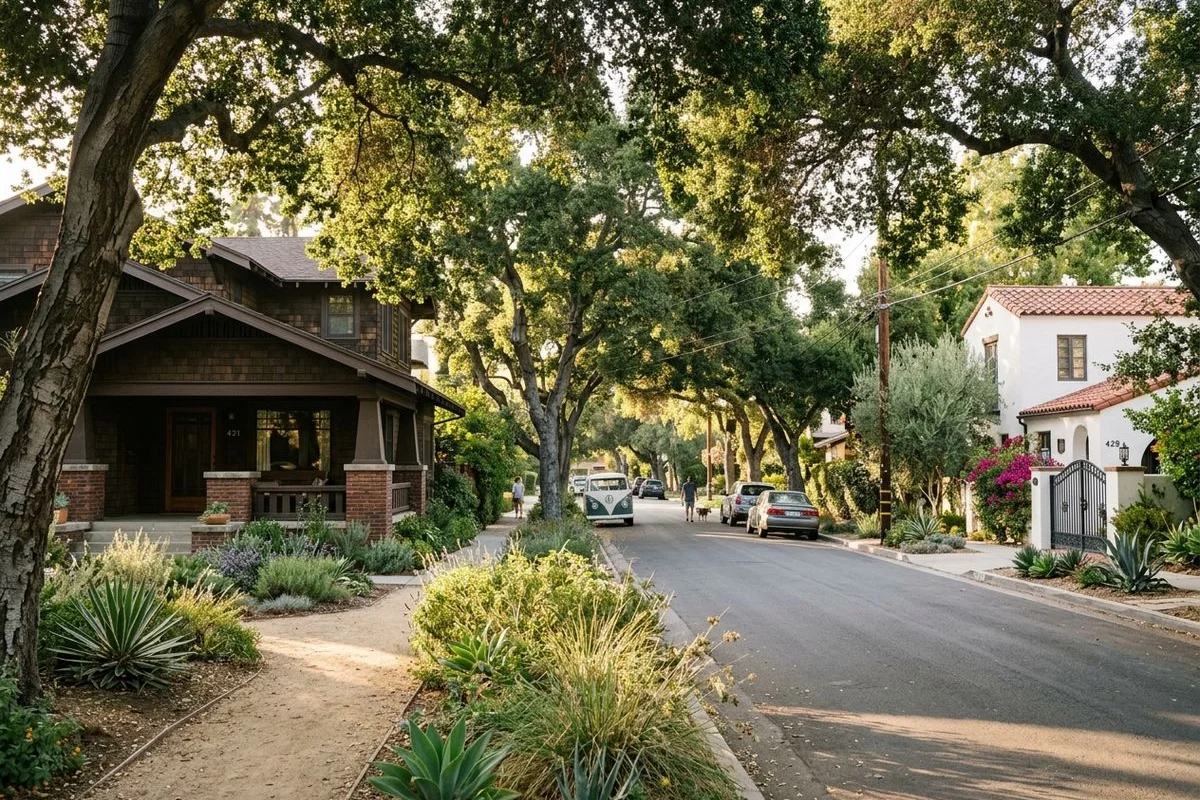
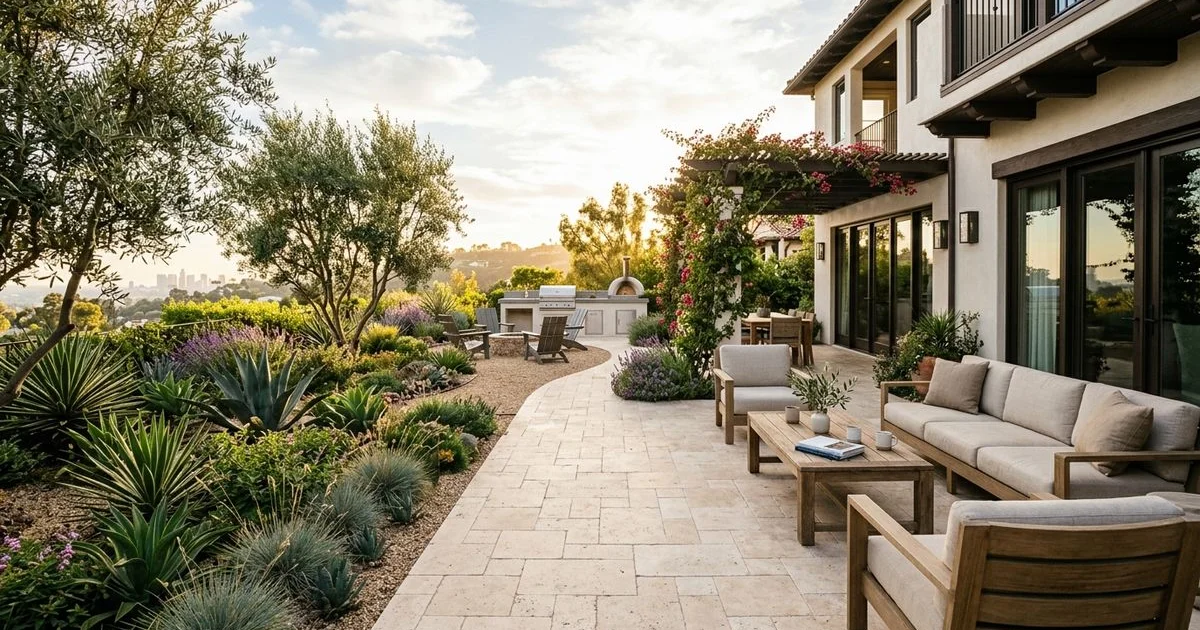
Here is a short practical order that often keeps a project on track:
That sequence may sound obvious on paper, but skipping a single step usually creates more work later. The slope always reveals the shortcut.
A hillside can be restrained and still feel rich
One of the nicest things about combining hardscaping with native planting is that the finished landscape does not need to be busy. In fact, the strongest hillside projects are often restrained. They use a few well-chosen structural moves, then let the planting carry the seasonal texture. California buckwheat in bloom, the upright line of a manzanita, the softer sweep of bunchgrasses, the changing color of sagebrush, these details create a landscape that feels rooted in place rather than imported.
That restraint also helps maintenance. Slopes are harder to mow, edge, and service than flat yards. By reducing turf, simplifying irrigation, and using native planting that fits the climate, you reduce the number of interventions needed to keep the site looking intentional. A landscape like that tends to age more gracefully because it is not fighting its own site conditions.
There is a reason water-wise slope design has become such an important topic in the San Gabriel Valley. The visual character of the hills, the regional climate, the water conservation requirements, and the need for erosion control all point in the same direction. When hardscaping is used to shape and stabilize the grade, and native planting is used to soften, root, and sustain it, the result is more than functional. It feels like the hillside was understood before it was designed.