
Turf Replacement Ideas for Drought-Resistant Landscaping
Removing turf is rarely just a cosmetic decision. In the San Gabriel Valley, it is often a practical response to water pressure, hillside conditions, fire risk, and the simple reality that a broad patch of lawn can be the most demanding feature on a property. Once a homeowner starts looking at drought resistant landscaping seriously, turf replacement becomes less about what to tear out and more about how to rebuild the space so it works with the site instead of against it.
That shift matters. A lawn can hide problems when it is young and well-watered, but many properties in this region are better served by a landscape that respects sun exposure, soil type, slope, drainage, and irrigation efficiency from the start. California water guidance points homeowners toward exactly those factors before removing turf, and that advice is sound. The best replacements are not chosen because they look good in a catalog. They are chosen because they can live through hot seasons, fit the microclimate, and support the shape and function of the property.
For many homes, especially those on or near a slope, turf replacement is also where landscape design becomes more serious. A flat yard and a hillside have different needs. A broad lawn on level ground can be swapped for planting beds, pathways, or hardscaping with relatively little drama. On a hillside, the decision becomes structural as well as visual. The replacement has to manage erosion, slow water movement, and hold together through dry weather. That is why turf removal in this part of California often leads to a mixed landscape rather than a single material swap.
Why turf is often the least efficient part of the yard
Turf has its place, but it is a thirsty groundcover in a climate where water-wise decisions matter. Even homeowners who are not aiming for a completely native garden usually find that lawn consumes more water, maintenance time, and attention than they expected. It also tends to underperform in the places where many San Gabriel Valley properties are most visible, such as front slopes, roadside corners, and narrow side yards with intense afternoon sun.
The soil under turf often reveals the problem. Lawns hide compaction, uneven drainage, and thin soil layers until they are removed. Once the grass is gone, many properties need more than a plant replacement plan. They need grading corrections, mulch, drip irrigation, and sometimes structural features that help redirect runoff. That is where hardscaping and planting work together. A well-placed path, retaining edge, or decomposed granite section can solve a practical issue and reduce the amount of irrigated area at the same time.
There is also the regulatory side. California’s Model Water Efficient Landscape Ordinance shapes how new and renovated landscapes are designed, and it pushes projects toward water-efficient irrigation, climate-appropriate plants, and alternative water sources where appropriate. That does not mean every turf removal project has to look the same. It does mean the old habit of stripping lawn and replacing it with another water-heavy feature is a poor fit for the state’s direction and for the region’s long-term needs.
Start with the site, not the plant palette
The most successful turf replacement projects begin with observation. Before choosing plants or materials, it helps to map the sun, note where water collects, and identify which parts of the property get baked by afternoon heat. In practice, the same front yard can contain several microclimates. One area may be full sun and dry within hours. Another may sit in reflected heat from a wall or driveway. A shady strip along the side yard may stay cooler and support very different species.
That distinction is especially important in drought resistant landscaping, because water needs are not uniform across a property. California’s landscape guidance recommends checking irrigation, soil, sun exposure, and plant selection together. That sequence matters. It is easy to choose a plant because it looks suitable, then discover the irrigation zone is mismatched or the soil drains too slowly for that plant’s roots. Better design starts with what the site can support, not what the owner hopes to force into it.
On hillside landscaping, the site analysis has an added layer. Slopes need erosion control and plantings that can tolerate dry conditions while helping stabilize the soil. A steep front yard is not a lawn problem in disguise. It is a drainage and maintenance problem that happens to have turf on top. Replacing that turf with a thoughtful mix of plants, mulch, and hardscaping usually works better than trying to keep grass alive on an incline that wants to shed water.
Turf replacement ideas that work in dry climates
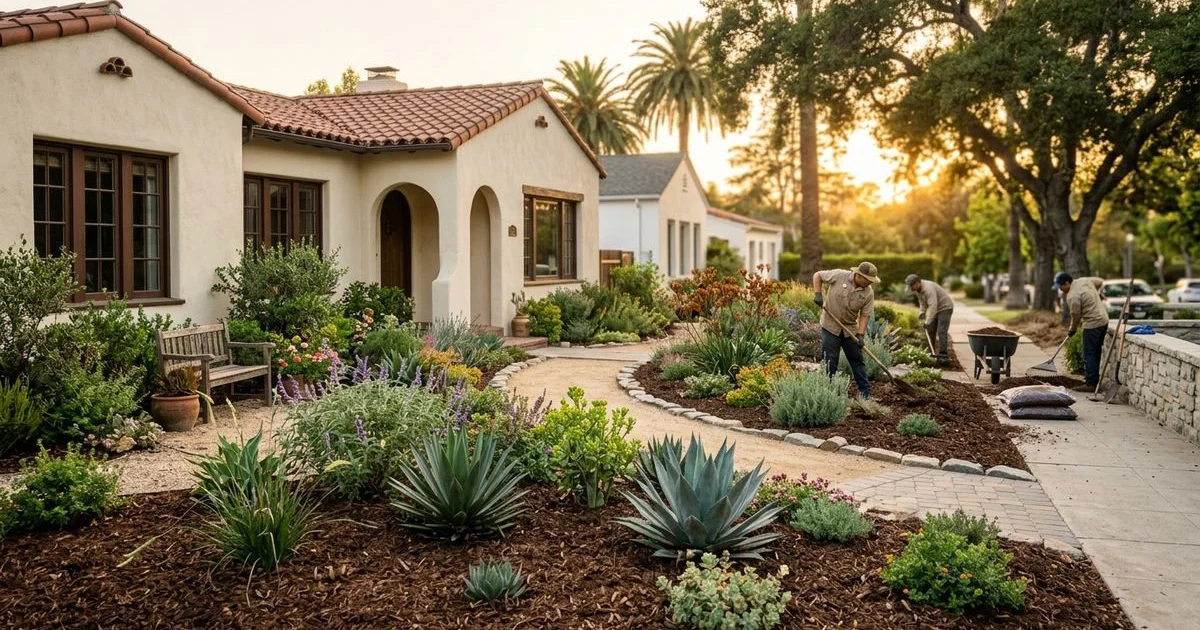
The best turf replacement ideas are usually not singular. They combine planting, surface changes, and irrigation updates so the landscape does more with less water. In the San Gabriel Valley, that often means working with California native plants and climate-appropriate choices that fit both the property and the broader landscape character of the region.
One strong approach is to replace turf with layered planting beds anchored by shrubs, perennials, and bunchgrasses. California buckwheat, California sagebrush, manzanita, ceanothus, monkeyflower, foothill penstemon, and bunchgrasses all fit naturally into this kind of design when matched to the right site conditions. These plants are not interchangeable, and they should not be treated as one-size-fits-all filler. Each has a role. Buckwheat can provide structure and seasonal interest. Sagebrush and manzanita can create the dry, textured look that suits many foothill properties. Ceanothus can bring density and strong seasonal presence. Bunchgrasses can soften edges and help the replacement feel intentional rather than sparse.
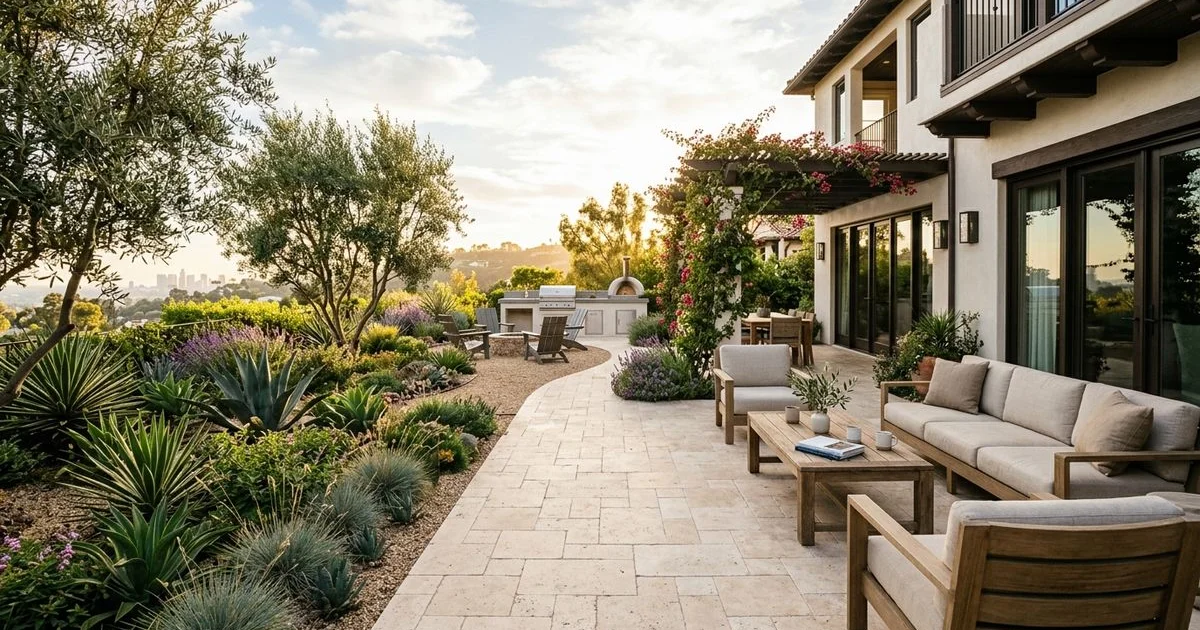
A second option is to use hardscaping to reduce the amount of planted area without making the property feel barren. A decomposed granite patio, stepping-stone path, or simple seating area can absorb part of the former lawn footprint and turn it into usable outdoor space. This is often a smart choice where homeowners want to preserve openness but do not need a turf surface. Hardscaping also reduces irrigation demand instantly, which is one reason it is so often paired with drought resistant landscaping.
A third direction is to create a native habitat garden. This works especially well when the owner wants a landscape that feels rooted in place rather than simply efficient. Around the San Gabriel Mountains, native plant gardens carry an added sense of fit because the area is home to a wide range of rare, threatened, and endangered species, and the local plant palette is deeply tied to that ecosystem. A habitat garden does not have to be large to be meaningful. Even a front yard converted from turf into layered native planting can change the feel of a house and reduce water use substantially.
A fourth idea is to divide the former turf area into distinct functions. For example, one part of the yard may become planting, another a hardscape gathering space, and another a gravel or California-friendly landscaping mulch zone that acts as a visual pause. This type of landscape design is especially effective when the original lawn was simply empty space. Once turf disappears, many yards reveal a better layout waiting underneath.
What works on slopes, and what usually does not
Slope conditions change the whole conversation. Turf on a hillside can be hard to maintain, difficult to irrigate evenly, and vulnerable to erosion if the ground is bare during transition. Replacing it with a groundcover-only approach can be tempting, but that is not always enough. Slopes need texture, roots, and sometimes small structural interventions to keep soil in place.
In hillside landscaping, the plant material should do two jobs at once. It should tolerate dry conditions and help hold the slope together. Native shrubs and grasses often do this better than shallow-rooted ornamentals that want more water than the slope can easily provide. The goal is not to cover every inch with the same plant. A healthier approach is to mix plant forms, vary spacing, and use mulch where bare soil would otherwise invite runoff or weed pressure.
Hardscaping can help here too, but it has to be used carefully. A retaining edge, terracing, or small steps can make a steep yard easier to move through and easier to maintain. When done well, these elements also break up the visual mass of the slope, which matters in the San Gabriel Valley, where hillside landscapes are part of the area’s character. The trick is balance. Too much hardscape can feel severe, but too little structure on a steep site can leave the homeowner with a maintenance headache.
Firewise planning belongs in this conversation as well. The CNPS guidance for local slopes and gardens emphasizes drought tolerance, erosion control, and firewise planting. That combination makes sense. Dry slopes can be beautiful, but they should not be designed as a single continuous fuel bed. Thoughtful spacing, plant selection, and defensible-space awareness can make a real difference in how a landscape performs and how comfortable it feels to live with.
Irrigation retrofits are part of the replacement, not an afterthought
Many turf replacement projects fail because the irrigation system never catches up with the new landscape. A lawn usually depends on different watering patterns than shrubs, native plants, and mixed beds. If the old sprinkler setup remains in place without adjustment, the new plants can suffer from both waste and stress. Some areas get too much water. Others get too little. The result is a landscape that looks drought tolerant on paper but behaves like a compromised system in practice.
Drip irrigation is often the right direction for planted areas because it delivers water more directly and helps match irrigation to plant needs. That said, even drip is not a magic fix. It has to be laid out with the site in mind, checked for pressure and coverage, and adjusted as plants establish. The watering needs of new plantings are not the same as those of mature plantings. A native shrub that eventually thrives with little supplemental water may still need careful establishment watering during its first season or two.
This is where using region-appropriate plant information matters. California’s plant and landscape guidance points users to WUCOLS for understanding plant water needs by region. That type of reference is useful because not every drought-tolerant plant has the same water demand, and not every “low-water” label means the same thing in field conditions. Good irrigation planning depends on those distinctions.
HOA rules, water restrictions, and the limits of old assumptions
Homeowners in neighborhoods with associations often worry that turf replacement will trigger objections, especially if the landscape becomes more native or less manicured. California water restriction guidance makes one point clear: homeowners’ associations cannot prohibit certain water-efficient landscaping choices during drought-related restrictions. That matters because it removes one of the most common barriers to making practical changes.
Even so, the social side of turf replacement should not be ignored. Some homeowners want a low-water landscape that still reads as cared for and finished. That is entirely reasonable. The answer is not to abandon drought resistant landscaping, but to design it well. Clean edges, repeated plant groupings, and a clear structure keep a landscape from looking accidental. A native planting bed with good spacing and a defined mulch line often looks more composed than a struggling lawn ever did.
This is one reason landscape design matters just as much as plant selection. A replacement yard should not feel like a compromise. It should feel deliberate. The best projects often keep one or two visual anchors, such as a specimen shrub, a small tree, or a simple path, so the property has a sense of order even when the lawn is gone.
Matching plants to microclimate and visual character
The San Gabriel Valley has a strong hillside visual character, and that should influence the plant palette. A front yard that sits below a slope may need a different mix from a ridge-top property or a narrow side yard with reflected heat. The most durable landscapes reflect local conditions instead of flattening them.
California buckwheat and sagebrush often suit hot, exposed conditions where a leaner, more textured look is acceptable. Manzanita and ceanothus can provide structure and evergreen presence, though they should be placed where their mature size and water needs make sense. Monkeyflower and foothill penstemon can bring color and softness without demanding the constant input that turf requires. Bunchgrasses help bridge the gap between shrubs and open ground, which can make a replacement landscape feel grounded rather than overworked.
On properties near the San Gabriel Mountains, there is also a meaningful connection between native plant gardening and habitat awareness. Using plants that belong to the local ecological story does more than save water. It supports a visual language that belongs here. That is not a sentimental point. It is a design point. Landscapes that align with place tend to age better and require fewer awkward corrections later.
A practical way to think about turf removal
The strongest turf replacement projects usually follow a simple order of operations. First, assess the site, including irrigation, soil, slope, and sun. Then decide whether the property needs planting, hardscaping, or a combination. After that, choose plants by microclimate and water needs, not by color alone. Finally, install or retrofit irrigation so the new landscape can establish properly.
That sequence sounds basic, but it is where many projects either succeed or struggle. Homeowners often want to start with the visible part, the plant palette. Professionals know that the hidden part, the grading, drainage, and watering plan, usually determines whether the landscape thrives. Once the bones are right, the surface choices become much easier.
There is a good reason the region keeps returning to drought resistant landscaping, erosion control, native habitat gardening, and firewise planting. These are not trend words. They describe practical responses to the landscape conditions of Southern California foothill and hillside properties. Turf replacement, when handled well, is part of that response. It can reduce irrigation demand, improve the usability of outdoor space, and make a property more resilient without sacrificing character.
The right replacement is rarely just “less grass.” It is a landscape with a clearer purpose. Some areas become planting beds with native structure. Some become hardscaping that people actually use. Some become terraced slopes that hold soil and water more effectively than lawn ever could. When those elements are combined with thoughtful irrigation and plant selection, the result is not a stripped-down yard. It is a better one.