Landscape Design Ideas for Erosion-Prone Residential Yards
Erosion-prone yards ask for a different kind of thinking. The usual lawn-and-foundation planting formula tends to fail fast when water moves downhill, soil stays exposed, or irrigation runs harder than the ground can absorb. In those conditions, good landscape design is not mainly about decoration. It is about shaping water, holding soil in place, and choosing plants and materials that can work with the site instead of against it.
That matters even more in places like the San Gabriel Valley, where hillside properties, foothill exposure, and a strong visual landscape character all shape how yards should be designed. The area’s slopes, drainage patterns, dry summers, and wildfire concerns make this a place where erosion control, drought resistant landscaping, and practical hardscaping are not separate issues. They are part of the same conversation.
A yard that sheds soil after every storm, sends runoff toward a neighbor, or strips bare in summer is usually telling you the same thing the terrain already knows: the site needs structure. The best landscape design for these yards starts with observation, not planting.
Start with the slope, the water, and the sun
Before removing turf or sketching out a new plan, it pays to look at the yard the way water does. Where does it land first after a storm? Where does it gather? Which areas dry out quickly, and which stay damp longer than expected? On a slope, a small flow of water can gather force in a hurry, which is why erosion problems often show up first as little channels, bare patches, or soil that slowly creeps downhill.
California water guidance places real weight on this kind of assessment before turf removal. Irrigation, soil, sun exposure, and plant selection all affect how well a landscape will function after the change. That is especially important in residential yards that are being converted away from high-water turf, because the old watering pattern often no longer makes sense once the layout changes. A slope in morning shade will not behave like an open, south-facing bank. A clay-heavy soil will not drain like a loose sandy one. Those differences matter.
In practice, the best starting point is often a walk after rainfall, even if the rain is light. Noting where water lingers, where it rushes, and where the soil starts to move gives you a clearer map than a photo ever will. That map should shape both plant placement and hardscaping. It is common to discover that the problem is not one big eroding hill, but a few specific lines of flow that need to be interrupted.
Hardscaping does more than make a yard look finished
When people hear hardscaping, they often think of patios and paths. On an erosion-prone site, hardscaping also functions as a form of control. Properly placed stone, concrete, decomposed granite, retaining edges, and terracing can slow runoff, redirect it, and create stable areas where planting can take hold.
A hillside without structure tends to shed water too quickly. Even drought tolerant plants struggle when soil is moving under them. Terraces can reduce the effective steepness of a slope, creating flatter planting shelves that hold mulch and roots better than an uninterrupted bank. Retaining walls, when properly engineered for the site, can create usable space and reduce the pressure that causes soil creep. Even a simple series of steps or landings can break up a long run of slope and make maintenance safer.
The key is restraint. Hardscaping should not turn a yard into a maze of impermeable surfaces. Too much pavement creates a different runoff problem, sending more water toward the edges and concentrating it where soil can fail. A better approach uses hardscape in measured ways, with attention to drainage and the path of stormwater. Think of it as structure, not just surface.
In small residential yards, one of the most effective moves is to create a defined path for foot traffic and leave the rest to planting. That protects the slope from being trampled into dust, especially near gates, side yards, and the lower edge of a hill where people naturally cut across.
Planting choices that hold soil and fit the climate
Plant selection carries more weight on an erosion-prone yard than it does in a flat one. The root systems, canopy shape, water needs, and seasonal habits of the plants all affect how well the soil stays in place. California’s landscape guidance points homeowners toward region-appropriate plant water needs, and that is sound advice here. Plants should match the local climate and the site’s microclimates, not just the look of a mood board.
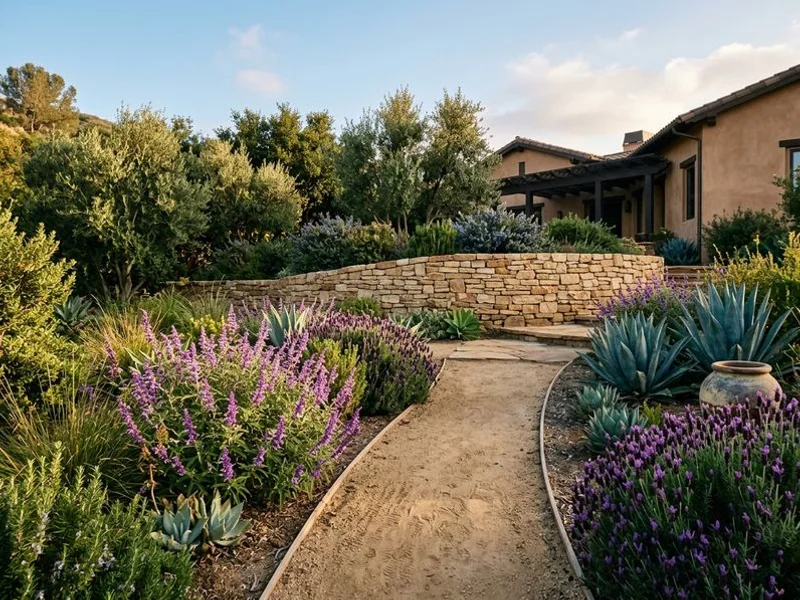
For San Gabriel Valley yards, drought tolerant landscaping and California native plants are particularly relevant. Plants that are adapted to dry summers and variable rainfall can help reduce watering demands after establishment, while still contributing to slope stability and habitat value. Native and climate-appropriate plants also align with California’s broader water efficiency expectations for new and renovated landscapes.
In erosion-prone yards, some of the most useful plants are those that can cover ground, root well, and tolerate exposure. Bunchgrasses can knit soil together without demanding a heavy irrigation schedule. California buckwheat, California sagebrush, monkeyflower, foothill penstemon, ceanothus, manzanita, and locally named natives such as San Gabriel oak are all part of the plant palette that makes sense in this region when matched to the right microclimate. That said, not every native belongs on every slope. A sunny, fast-draining bank has different needs from a shaded side yard that receives overflow from irrigation elsewhere.
It helps to think in layers. Groundcovers hold the soil surface. Shrubs interrupt flow and create root mass deeper in the slope. Larger shrubs or small trees can anchor upper zones and offer shade where it improves water retention. The most effective plantings are usually layered, not scattered.
A common mistake is spacing plants too far apart, which leaves exposed soil between them for too long. On an erosion-prone slope, that gap becomes the weak point. A better plan uses enough density to close the ground sooner, while still allowing each plant room to mature. Mulch can help bridge the early years, but it should not be the only line of defense.
Water management has to be built into the design
A beautiful planting plan fails quickly if irrigation works against it. Water that is applied too fast on a slope runs off before roots can benefit. Water that lands in the wrong place can destabilize the soil or keep one section wet while the surrounding area dries out.
This is where irrigation retrofits matter. Drip systems, properly zoned for sun exposure and plant type, usually perform far better than broad spray on steep or mixed sites. Lower flow rates reduce runoff, and separate zones make it possible to give a shady side California-friendly landscaping yard different treatment from a hot, exposed slope. If turf is being removed, the irrigation system should be redesigned at the same time. Leaving old spray patterns in place after turf removal often wastes water and creates patchy plant health.
California’s Model Water Efficient Landscape Ordinance reflects this larger shift toward efficient irrigation, climate-appropriate plants, and alternative water sources where appropriate. For homeowners, the practical takeaway is simple: water use is not an afterthought. It is part of the landscape plan from the start.
Drainage and stormwater runoff also deserve attention before planting begins. On a hillside, water should be slowed and dispersed rather than dumped into one line. Small grading adjustments, permeable surfaces, and plantings that absorb rather than repel water can make a noticeable difference. Even a modest redesign can change how the whole yard behaves in winter.
One thing worth noting from experience is that irrigation often exposes the real problem more clearly than rain does. A slope may look stable until a sprinkler pattern keeps one strip wet every day. Then the soil loosens, the mulch creeps, and a rill starts to form. Fixing that pattern can be as important as adding plants.
Firewise thinking belongs in the same plan
For San Gabriel Valley hillside landscaping, erosion control and firewise planting belong together. The same areas that shed soil under stormwater can also carry dry plant material in fire season if they are not designed carefully. Local native plant communities and defensible-space practices matter here, especially near the San Gabriel Mountains and the foothill edges where fire exposure is a real concern.
Fire-resistant planting does not mean a yard has to look sparse or sterile. It means the layout should be intentional. Plants with open branching habits, sensible spacing, and lower fuel accumulation can be woven into a design that still feels lush enough for a residential property. The main idea is to reduce the tendency for continuous, highly flammable material to connect one part of the yard to another.
This is one area where overplanting can backfire. Dense, thirsty plantings near structures may create maintenance headaches and conflict with water conservation goals. A better solution is to place the right plants in the right zones, with enough separation for airflow and access. In practical terms, this often means keeping the most fire-conscious plant choices near the house and using tougher, low-fuel plant communities farther out on slopes and open edges.
Turf removal works best when the replacement plan is complete
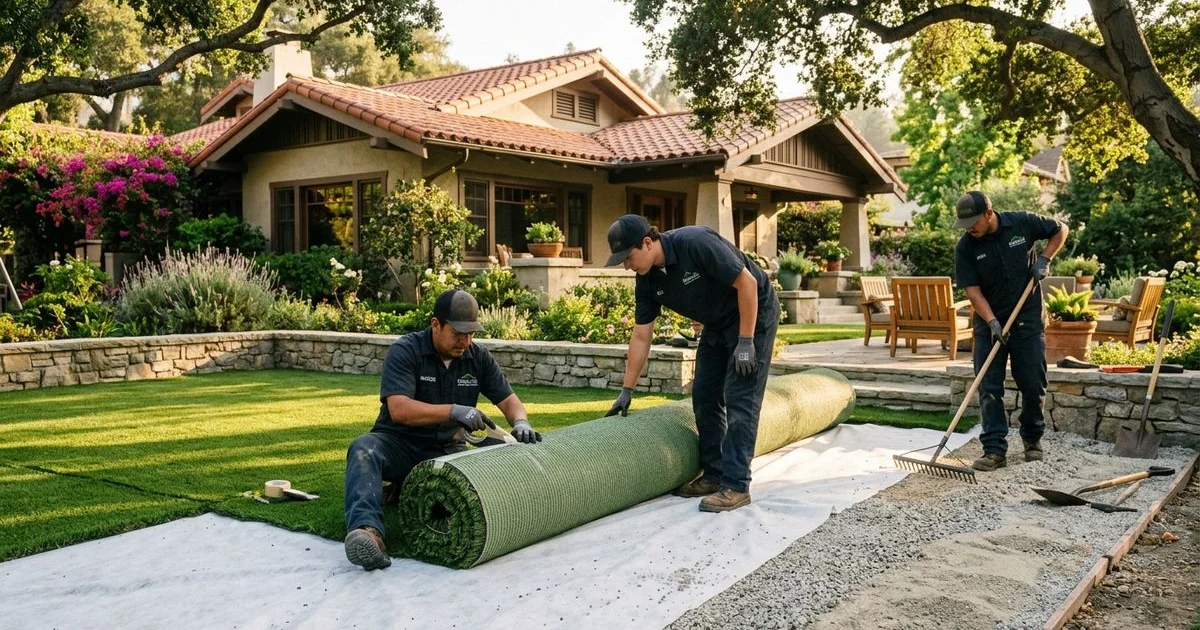
Turf removal is often part of the conversation for erosion-prone yards, especially in California, where water efficiency matters and many homeowners want to reduce ongoing maintenance. But removing grass without replacing it with a stable design can make erosion worse, not better. Bare soil dries, cracks, and erodes quickly. If the old lawn was holding the grade together, the new plan needs to solve that structural role in another way.
That means the turf replacement should include soil preparation, irrigation redesign, plant spacing, and coverage strategy. A slope stripped of turf and replanted too sparsely can struggle for months, sometimes years. During that period, mulch, temporary erosion control, and thoughtful irrigation become critical. On a very exposed bank, the transition period may require more hands-on care than people expect.
This is where a lot of otherwise good projects stumble. The design looks finished on paper, but the site still behaves like a construction zone. The plants need time to knit in. The soil needs protection while they do it. The ideal plan assumes that and builds in support from the start.
HOA rules do not override water-efficient choices
For homeowners in HOA communities, one concern comes up repeatedly, whether a board can block a water-efficient landscape choice during drought-related restrictions. California guidance says homeowners’ associations cannot prohibit certain water-efficient landscaping choices under those conditions. That does not eliminate every design review issue, but it does matter for anyone trying to replace turf, install drought tolerant landscaping, or shift toward native planting.
In practice, this makes documentation valuable. A clear plan showing irrigation changes, plant selection, and drainage improvements can help when a community association wants to understand what is being done and why. The stronger the functional case, the easier it is to defend the design.
A workable design sequence for difficult yards
There is no single formula that fits every erosion-prone residential yard, but there is a sequence that tends to save time and money. First, study how water moves across the site. Second, decide where hardscaping is needed to slow, capture, or redirect that movement. Third, shape the planting plan around the site’s sun exposure and soil conditions, using drought tolerant and region-appropriate plants. Fourth, install irrigation that matches the new layout, not the old turf pattern. Fifth, keep bare soil covered during establishment.
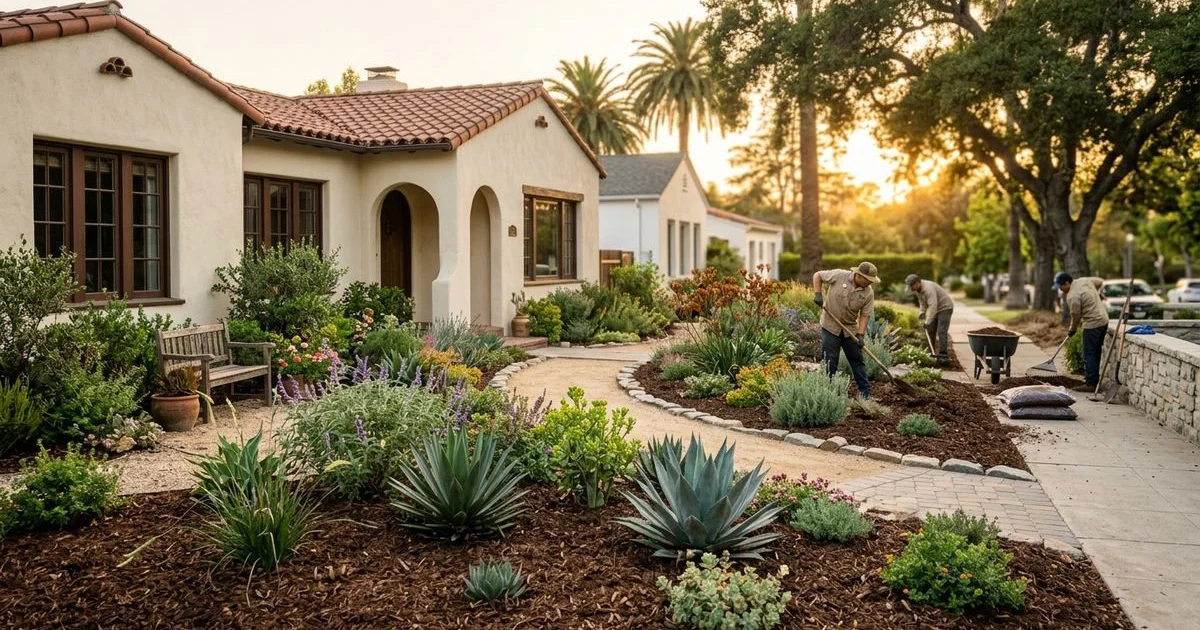
That sequence sounds simple, but skipping one step usually creates trouble somewhere else. A slope without structure needs too much maintenance. A plant palette without drainage awareness struggles. An irrigation retrofit without microclimate thinking wastes water. The best yards do all of it together.
For homeowners in the San Gabriel Valley, that integrated approach is especially important. The hillside visual character of the area, the dryness of the climate, the water efficiency expectations for new and renovated landscapes, and the need for erosion control all point in the same direction. The goal is not just a prettier yard. It is a stable one.
Design ideas that often work well on these sites
A short set of practical patterns tends to come up again and again on erosion-prone residential properties, especially where slope and drought overlap. Terraced planting beds can create usable pockets of level ground. Curved retaining edges can interrupt runoff without making the yard feel overbuilt. Drip irrigation can support newly installed native plantings more efficiently than spray. Groundcovers and bunchgrasses can protect bare soil while giving the slope a softer, more natural look. And a careful mix of firewise planting and defensible-space planning can make the landscape more resilient on multiple fronts.
These are not glamorous fixes, but they are durable ones. A hillside does not need dramatic gestures as much as it needs consistency. Soil needs to stay where it belongs. Water needs to move at a manageable pace. Plants need to fit the site. Once those three things are working together, the yard becomes much easier to live with.
The most successful erosion-prone landscapes rarely look overdesigned. They look settled. The slope feels held, not forced. The planting looks intentional, not crowded. The materials look like they belong to the terrain. That is the mark of good landscape design in this setting, and it is what gives the yard a chance to improve year after year instead of slowly unraveling after every season of wind and rain.