
Water-Wise Landscape Planning Before You Remove the Lawn
Removing a lawn can feel like the obvious first move when water bills rise, summers run hot, and a yard starts to look tired no matter how much effort goes into it. But the best results usually come from slowing down first. A lawn removal project is not just a swap of grass for gravel or a few drought tolerant shrubs. It is a chance to reshape how water moves across the property, how the site handles heat, how the landscape looks from the street, and how much maintenance it will demand in the years ahead.
That matters even more in the San Gabriel Valley, where hillsides, foothill views, fire exposure, and water conservation all meet in the same front yard. A landscape that works here has to do more than survive. It has to resist erosion on slopes, fit the local visual character, support water efficiency, and hold together through long dry stretches. That takes planning before the turf comes out.
Start with the site, not the plant palette
The most common mistake I see is people jumping straight to plant ideas. They fall in love with a California native look or decide they want a clean hardscape courtyard, and only afterward start asking what their yard can actually handle. That is backwards.
Before turf removal, assess the irrigation system, soil, sun exposure, slope, drainage, and existing microclimates. Those conditions shape everything else. A south-facing strip beside a driveway behaves very differently from a shaded side yard or a hillside that sheds water quickly. If you ignore those differences, even carefully chosen drought resistant landscaping can struggle.
The state’s water conservation guidance points homeowners toward exactly this kind of pre-planning, including water needs by region and plant selection based on actual site conditions. That is the right instinct. A plant that thrives in one part of the San Gabriel Valley may not perform the same way a few blocks away if the exposure, runoff pattern, or heat reflection changes.
So before the first shovel hits soil, spend time walking the property at different times of day. Notice where the sun lingers, where water puddles, where soil feels compacted, and where reflected heat is strongest. Those observations are worth more than a dozen catalog photos.
Irrigation tells you more than you think
A lawn often masks irrigation problems. Once the turf is gone, weak zones become obvious. Leaking valves, uneven sprinkler coverage, overspray onto sidewalks, and clogged emitters are easier to spot when you are no longer trying to keep a carpet of grass uniformly green.
This is the point where irrigation retrofits earn their keep. If the system is old, damaged, or designed only for turf, it should be evaluated before any replanting begins. Some areas may need drip irrigation. Others may need a different sprinkler layout. In sloped gardens, the goal is not merely to deliver water, but to deliver it slowly enough that it can soak in instead of running off.
That matters for both water conservation and soil protection. A poorly matched irrigation system can waste water, leave dry gaps, and create runoff that carries topsoil downhill. On a hillside property, that is not a cosmetic issue. It becomes an erosion problem.
Well-planned irrigation also gives you flexibility. A front yard that combines native shrubs, a small gathering space, and a few accent trees does not need every square foot to receive the same amount of water. Different zones should reflect different plant needs and different exposure levels. That is one of the most practical reasons to think through the entire landscape design before removing the lawn. It saves you from trying to retrofit a plan that was never built to function as a whole.
Soil, slope, and drainage decide whether the new landscape lasts
Turf removal exposes the reality below the surface. Some yards have decent soil with reasonable drainage. Others have compacted fill, thin topsoil, or a hard crust that sheds water faster than it absorbs it. A water-wise plan has to account for that difference.
If the soil is compacted, planting straight into it usually leads to weak root growth and uneven establishment. If drainage is poor, certain plants can rot or decline even if they are drought tolerant. If the yard sits on a slope, stormwater runoff becomes part of the design whether you plan for it or not.
This is where hillside landscaping deserves special attention. Slopes in the San Gabriel Valley need erosion control, drought tolerance, and firewise planting all at once. That is a difficult combination, but not an impossible one. It does mean you need to think in layers, with ground-hugging plants, shrubs, and structural elements working together to stabilize soil and slow water.
Hardscaping can help here, but only when it is used with restraint and purpose. Retaining edges, terraces, steps, and permeable gathering areas can organize a slope and reduce the areas that must be heavily planted. Used carelessly, however, hardscaping can concentrate runoff and send water where you do not want it. A good landscape designer will look at how hardscape and planting interact, not just how they look on paper.
In many yards, small drainage adjustments make a bigger difference than people expect. Redirecting downspouts, softening a grade change, or adding a planting basin can help keep water on site long enough for roots to use it. That is especially valuable in drought resistant landscaping, where the whole point is to make the most of limited moisture.
Match the plant choice to the microclimate
A successful water-wise landscape is not built from a single “drought tolerant” list. It is built from a set of plants matched to specific conditions. The right choice for a hot exposed edge will not necessarily suit a moist pocket near a shaded wall. Microclimate matters.
California native plants are especially useful in this kind of planning because they are adapted to local conditions and fit the region’s water conservation goals. In the San Gabriel Valley, plants such as California buckwheat, California sagebrush, manzanita, ceanothus, monkeyflower, foothill penstemon, bunchgrasses, and San Gabriel oak are all part of the local conversation for a reason. They support a landscape that feels rooted in place rather than imported from somewhere else.
That said, native does not mean identical water needs or identical behavior. A shrub that matures beautifully in one garden can outgrow its space in another, or need more room than the owner expected. Some natives are naturally more compact and formal. Others are looser and better suited to a broader habitat style. The same is true for non-native drought tolerant selections. The goal is not simply to pick plants that use less water. It is to choose plants that belong on the site and can be maintained at a reasonable scale.
The California water guidance points homeowners toward WUCOLS for region-appropriate plant water needs, and complete hardscape and landscape services that is a useful tool because it keeps the conversation grounded in actual plant performance rather than marketing language. A plant label that says “low water” is only the beginning. What matters is how that plant behaves in your climate zone, your exposure, and your soil.
A few questions are worth asking before any planting order is placed. Does the plant tolerate reflected heat from paving? Can it handle clay soil or fast-draining soil? Does it need room to spread on a slope? Does it support a layered design or does it only work as a specimen? Those are the questions that separate a landscape that settles in gracefully from one that starts with promise and declines after the first hot season.
Keep fire and water in the same conversation
In foothill neighborhoods, firewise planning is not a separate topic from landscape design. It is part of it. The same design decisions that reduce water use can also improve defensible space when they are handled thoughtfully. Native plantings, ember-resistant zone rules, and careful placement of shrubs all affect how a property functions in a fire-prone setting.
That does not mean a yard has to look barren or over-mineralized. It means every planting decision should have a purpose. Dense combustible material right against the house is a bad trade, especially if it is also getting irregular irrigation. A more considered approach uses spacing, plant size, and maintenance access to reduce risk while preserving the feel of a living landscape.
This is where the San Gabriel Valley’s hillside visual character becomes important. New construction and renovated landscapes should fit the local setting while still using water-efficient plantings. That does not require copying a canyon or turning the property into a museum piece. It does require restraint, layered planting, and an awareness of how the landscape reads from the street and how it performs in real weather.
A firewise yard and a water-wise yard can be the same yard. In practice, they usually should be.
Where hardscaping helps, and where it gets overused
Hardscaping can be one of the most useful tools in a lawn removal project. A small seating area, stepping paths, gravel bands, retaining elements, and low walls can reduce irrigated area and make a hillside or awkward yard more usable. They can also guide runoff and create structure where a bare lawn once hid the site’s challenges.
The caution is simple. Hardscaping should solve problems, not multiply them. Too much impervious surface can increase heat, amplify stormwater runoff, and leave a yard feeling harsh. It can also crowd out planting room, which is a problem if the goal is water-wise landscape planning rather than a purely paved makeover.
A balanced design usually combines hardscape and planting in a way that makes both more effective. Paths give access to planting beds. Walls hold grade changes. Plantings soften edges and keep water moving gently across the site. On a slope, that balance is even more important because hard edges can redirect flow in ways that are hard to undo later.
One practical detail that gets overlooked often is maintenance access. If you cannot reach irrigation lines, prune shrubs safely, or clear debris after a storm, the design is too tight. A landscape should be beautiful on day one, but it also has to be serviceable in year five.
HOA rules deserve a look before the first demo day
Homeowners’ associations can complicate turf removal, but California’s water restriction guidance places important limits on what HOAs can prohibit when it comes to water-efficient landscaping choices during drought-related restrictions. That does not erase neighborhood rules or architectural review processes, but it does mean owners should not assume they are blocked from making sensible water-saving changes.
This is one of those details that is best handled before demolition begins. If your community has design review requirements, do the paperwork early and include the actual planting strategy, irrigation plan, and hardscape layout. It is much easier to get approval for a coherent plan than to explain a half-finished yard.
A well-documented proposal also helps clarify your own goals. Is the project mainly about reducing water use? Solving erosion? Replacing a failing lawn with native habitat gardening? Creating a front yard that suits the San Gabriel Valley’s hillside character? The clearer the purpose, the easier it is to design around it.
A practical order of operations
When a lawn is coming out, the smartest work happens before the lawn does. In broad terms, the process should move from diagnosis to design, not from demolition to improvisation.
A useful sequence usually looks like this:
That sequence protects the budget as much as the landscape. It prevents redundant work, avoids re-digging around bad assumptions, and gives the finished yard a better chance of maturing without expensive corrections.
What success looks like after the turf is gone
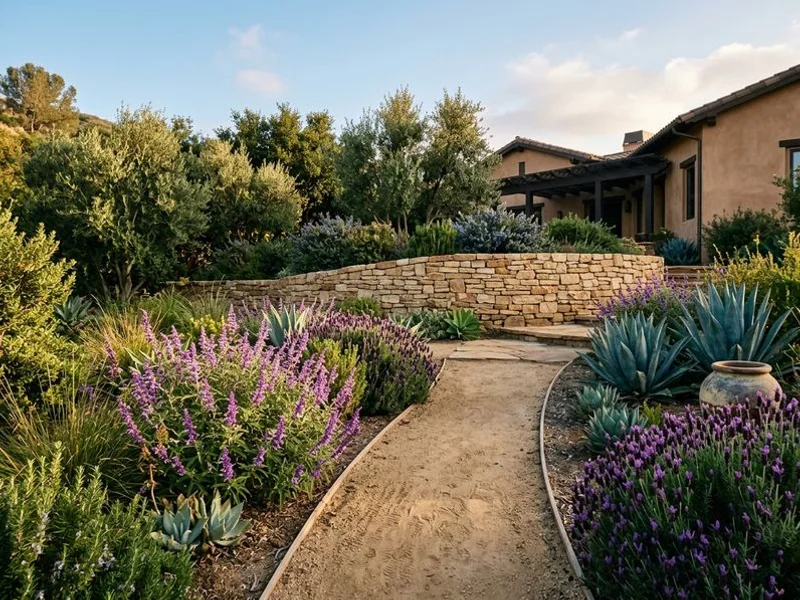
The best water-wise landscapes do not announce themselves by how little they contain. They succeed because they feel settled. Water goes where it should. Plants are grouped by need. Slopes hold together. Paths make sense. The yard looks intentional in February and in August.
In the San Gabriel Valley, that often means a mix of California native plants, climate-appropriate drought tolerant selections, and a hardscape framework that respects the slope and the sun. It may include an entry garden with ceanothus and monkeyflower, a tougher exposed stretch planted with bunchgrasses and sage, or a hillside anchored by shrubs and low groundcover that help reduce erosion. It may also include a few carefully chosen accent species that give the space scale and identity.
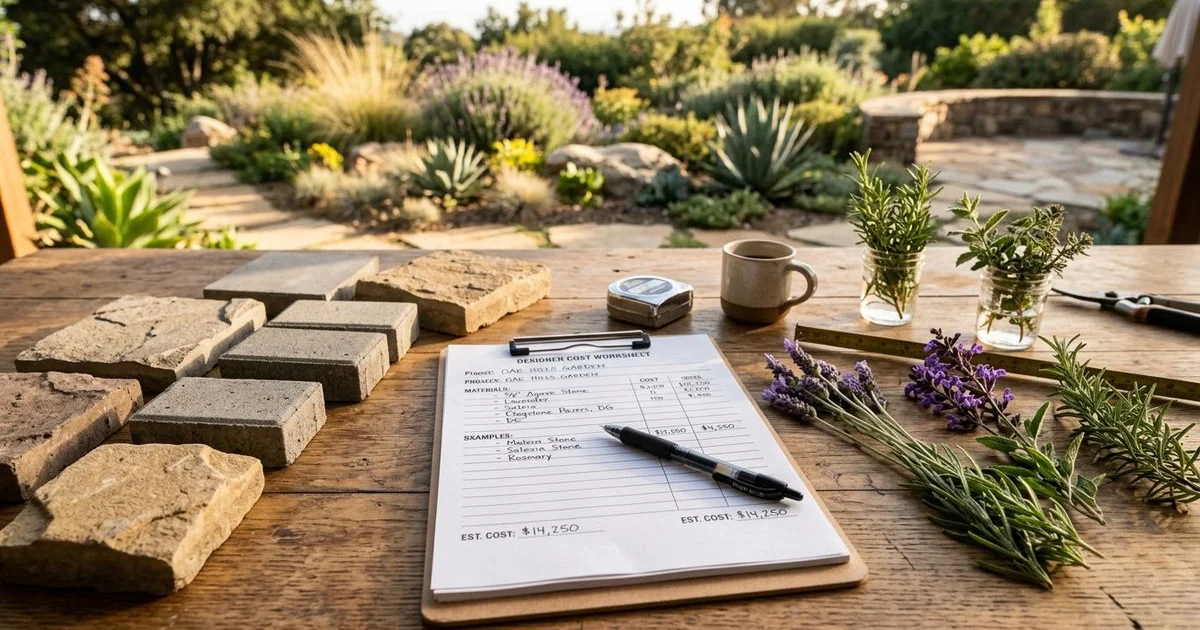
The important part is that the lawn did not disappear first and the thinking happen later. The site was read, the water was considered, the grade was respected, and the plants were placed where they had a fighting chance.
That kind of planning takes longer at the start. It also saves water, reduces frustration, and produces a landscape that belongs to the property instead of fighting it. For homeowners in the San Gabriel Valley, that is the real opportunity hiding inside turf removal. Not just a smaller lawn, but a better landscape.