
Water-Wise Landscaping for Properties Near the San Gabriel Mountains
Properties near the San Gabriel Mountains sit in a landscape that asks for more than a pretty planting plan. The setting is beautiful, but it is also demanding. Hot sun, seasonal dryness, slope conditions, runoff concerns, and fire exposure all shape what works and what fails. A water-wise landscape here is not just about using less water. It is about designing a yard that fits the land, respects the climate, and stays functional through long dry stretches without becoming fragile or overworked.
The strongest landscapes in this part of Southern California usually share the same quality: they look intentional. They are not simply lawns replaced with gravel, and they are not crowded with high-water ornamentals that fight the site. They balance plant choice, soil, irrigation, drainage, and hardscaping so the property can handle heat, wind, and slope while still feeling green, welcoming, and tied to the foothill character of the region.
Reading the site before changing it
Good landscape design starts with observation, and near the San Gabriel Mountains that step matters more than many property owners expect. Before removing turf or selecting new plants, it helps to look carefully at how water already moves across the site, how long the sun sits on different parts of the yard, and where the ground dries out first. A flat front lawn on an interior lot behaves very differently from a hillside backyard that catches reflected heat from a retaining wall and sheds rain quickly.
Soil deserves the same attention. Some properties have compacted soil from years of foot traffic or construction. Others have thin, rocky conditions that drain too fast for shallow-rooted plantings. Water-wise landscaping is not about forcing one formula onto every yard. It is about matching the planting plan to real conditions. The California water agency’s guidance makes this practical: assess irrigation, soil, sun exposure, and plant selection before removing turf, and use region-appropriate plant water needs as a guide rather than guessing.
That advice sounds simple, but it prevents a lot of expensive mistakes. I have seen homeowners replace a thirsty lawn with plants that were technically drought-tolerant, only to discover they needed more frequent watering than expected because the exposure was harsher than they realized. A south-facing slope in this region can cook shallow roots by late afternoon. A shaded pocket beside a house may hold moisture longer and support a different plant palette altogether. Microclimate is not an abstract term here, it is the difference between a landscape that settles in and one that struggles from the start.
Why water-wise design and local conditions belong together
The San Gabriel Valley has a distinct visual identity. Many properties sit within a foothill and hillside setting that feels tied to the mountains above it. That character is worth protecting. A water-efficient landscape can support that look better than a conventional high-water lawn ever could, especially on properties where space, slope, and exposure make turf maintenance difficult.
California’s Model Water Efficient Landscape Ordinance adds another reason to think strategically. For new and renovated landscapes, the state framework regulates water usage and encourages native or climate-appropriate plants, efficient irrigation, and alternative water sources where appropriate. For homeowners and designers, that means the direction is already clear. The most durable choices are the ones that save water without creating maintenance headaches or visual dissonance.
In practical terms, this pushes design toward plant communities that can handle the region’s conditions with less supplemental irrigation. It also raises the value of grouping plants by water need instead of scattering them randomly across the yard. A thoughtful layout lets irrigation work more efficiently. It reduces overspray onto hardscape, keeps water away from problem areas, and makes it easier to maintain healthy plants without overwatering the entire property.
The role of drought resistant landscaping in foothill properties
Drought resistant landscaping is often misunderstood as a style, when it is really a strategy. In this region, it means choosing plants that can tolerate dry periods once established, then combining them with irrigation and soil practices that help roots go deeper instead of lingering near the surface. It also means accepting that a landscape can be low-water and still layered, textural, and attractive.
Native and climate-appropriate species are especially valuable. Plants such as California buckwheat, California sagebrush, manzanita, ceanothus, monkeyflower, foothill penstemon, and bunchgrasses naturally suit the region’s dry conditions and can create a landscape that feels connected to the foothills. San Gabriel oak is another locally named native species that reinforces that sense of place. These plants are not just symbols of local identity. They are useful because they are adapted to the rhythms of this environment.
A smart plant palette should not be chosen by appearance alone. A plant that looks great in a nursery pot can behave very differently once it faces reflected heat, wind, and narrow planting beds. That is why plant selection by microclimate matters. On a property near the mountains, a plant that thrives in partial shade near a north wall may burn out in an exposed front yard. The best design treats every zone of the site as its own small climate.
Hillside landscaping needs more than good taste
Hillside landscaping deserves special care in this region because slopes bring erosion, runoff, and maintenance challenges that flat lots do not. Water moves fast on an incline. If the planting plan is weak, or if irrigation is poorly calibrated, the first heavy rain can wash away mulch, expose roots, and carry sediment downhill. In dry weather, slopes can also be hard to keep evenly watered because runoff happens before water has time to soak in.
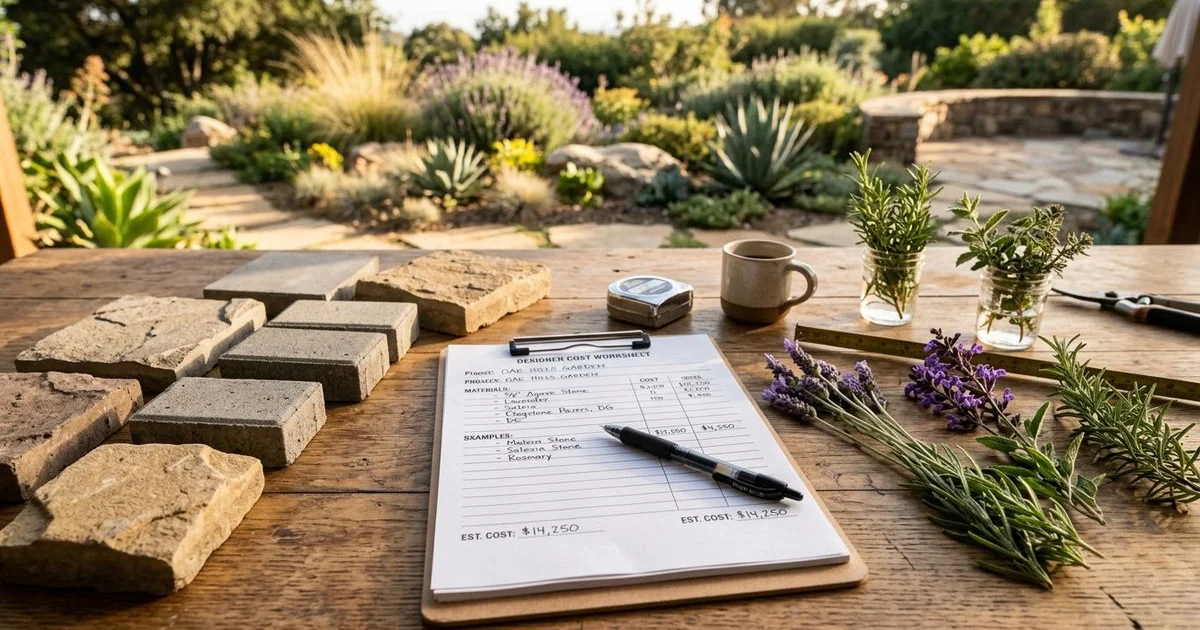
On hillside properties, plant roots are part of the stabilization strategy. CNPS guidance for hot, sunny slopes emphasizes drought tolerance and erosion control, which fits the foothill setting around the San Gabriel Mountains. In a real landscape, that usually means combining deep-rooted shrubs, groundcovers, and bunchgrasses so the soil has living structure across the slope rather than bare gaps that invite erosion.
This is also where planting density matters. A sparse slope may look tidy at installation, but it often becomes a maintenance problem later. The soil dries out too quickly, weeds move in, and every rainfall pushes loose material downhill. A denser, well-planned slope planting can be more resilient, even if it takes a season or two to fully establish. The trade-off is worth considering. A gardener may wait longer for the hillside to fill in, but the reward is less erosion and less frustration during the first hot summer.
Hardscaping as a water-saving tool, not just decoration
Hardscaping plays a larger role in water-wise landscaping than many homeowners initially expect. It is not only about patios and walkways, it is about how the property handles movement, shade, access, and runoff. In a dry climate, thoughtful hardscape reduces the area that needs irrigation while improving the usability of the yard. A well-placed path can protect slope plantings from foot traffic. A small seating terrace can make an otherwise awkward hillside feel deliberate. A retaining wall can create planting pockets that are easier to irrigate and maintain.
That said, hardscaping should not be overused. Replacing too much ground with impermeable surfaces can increase runoff and intensify heat around the home. The better approach is to use hardscape where it solves a real problem, then soften it with planting areas that help slow water and keep the site from feeling harsh. On properties near the San Gabriel Mountains, the most successful designs usually balance these elements carefully. They feel grounded, not paved over.
This is especially important where visual character matters. A property that leans into the natural slope and regional planting palette tends to look more integrated than one that fights the site with oversized decks or stark expanses of gravel. Hardscaping works best when it supports the landscape rather than replacing it.
Irrigation retrofits that make a real difference
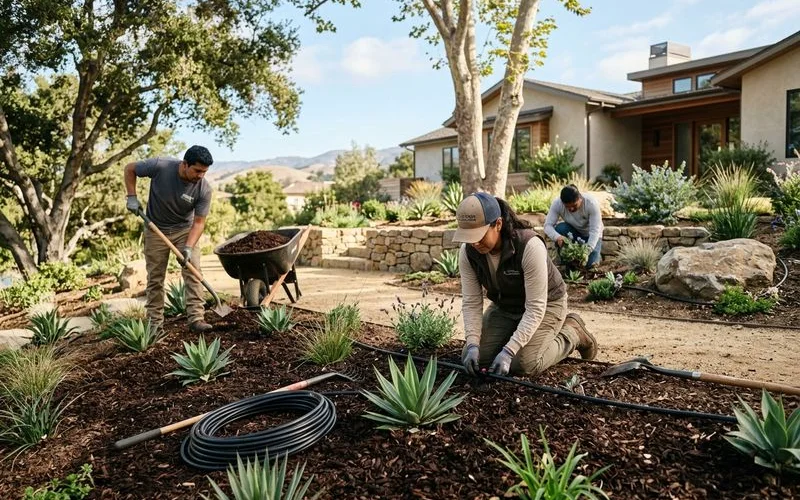
A water-wise landscape can still waste a surprising amount of water if the irrigation system is not updated. Old spray heads, broken valves, uneven coverage, and poorly placed emitters can undermine even the best plant design. In many yards, the quickest savings come from retrofitting the system rather than ripping everything out at once.
The first step is usually to check whether the existing irrigation matches the new landscape layout. Turf zones and shrub zones should not be watered the same way. Plants with different water needs should not share a schedule just because they happen to be nearby. Drip systems often work well for planted beds because they reduce overspray and deliver water closer to the root zone. That helps on slopes too, where spray irrigation can run off before it penetrates the soil.
Timing matters as much as hardware. Watering in short, repeated cycles can be useful on some slopes because it gives moisture time to absorb. But that only works if the system is set up properly. Overwatering is one of the easiest ways to create shallow roots, fungus issues, and runoff. Underwatering is not the only risk in dry-climate gardening. A poorly tuned system can be just as damaging.
Turf removal and the question of what replaces it
Turf removal is often the starting point for a water-wise redesign, but it should never be the whole plan. Grass takes a lot of water compared with many climate-appropriate plantings, yet removing it without a replacement strategy can leave a property hotter, less functional, and less attractive than before. The question is not simply what to remove. It is what to build in its place.
Some homeowners want a completely planted front yard. Others need a patch of open space for children, pets, or visual breathing room. Both can work. The right answer depends on how the space is used and what the site can support. If a front yard faces the afternoon sun and receives strong reflected heat, a broad lawn replacement with drought resistant landscaping may be more resilient than a dense planting that requires constant watering. If the yard sits on a gentle slope, a mix of native shrubs, groundcovers, and a small patio may provide better structure than one large expanse of paving.
The state guidance to review irrigation, soil, sun exposure, and plant needs before removing turf is worth repeating because it keeps the process honest. Turf removal is easy to talk about in the abstract. A durable replacement plan is more exacting.
Firewise planting and defensible-space thinking
Near the San Gabriel Mountains, fire considerations belong in the landscape conversation from the beginning. CNPS guidance highlights ember-resistant zone rules and native plants suitable for local gardens, and that trusted landscaping professionals framing is useful because it links water-wise planting with firewise landscaping rather than treating them as separate goals. In practice, a landscape can be both attractive and more defensible if it is arranged thoughtfully.
That does not mean every plant must be removed. It means the landscape should be maintained with spacing, cleanliness, and plant choice in mind. Dead material should not be allowed to accumulate. Plants near the home should be selected and placed with care. A well-tended native plant garden can support the site’s character while still respecting fire safety considerations. The key is management, not neglect.
Properties near hillside edges and open spaces benefit especially from this approach because the boundary between home landscape and surrounding terrain is more visible. A landscape that looks deliberate, open enough for maintenance, and free of clutter tends to be easier to manage over time. The goal is not sterility. It is clarity.
HOA constraints and homeowner flexibility
For homeowners in associations, landscape decisions can feel more complicated than they should. Still, California water-restriction guidance makes an important point: homeowners’ associations cannot prohibit certain water-efficient landscaping choices during drought-related restrictions. That matters when a property owner is trying to reduce water use, adjust plantings, or move toward a more climate-appropriate design.
This does not erase architectural review, covenant rules, or neighborhood expectations. It simply means that water conservation has real standing. If a landscape change is grounded in efficiency, erosion control, or better long-term maintenance, that case should be taken seriously. In many HOA settings, the strongest argument is not aesthetic rebellion. It is a clear, well-documented design that shows the property will remain neat, functional, and in character with the surrounding area.
That is another reason landscape design matters. A planned approach looks intentional. It reassures neighbors, helps with review processes, and supports the broader visual character of the San Gabriel Valley hillside environment.
A practical sequence that keeps the project grounded
When a property owner wants to shift toward water-wise landscaping, the best sequence is usually measured rather than dramatic. Start with the site itself, not the shopping list. Study sun and shade. Look at slope, drainage, and existing irrigation. Decide what turf, if any, actually needs to remain. Then build the planting and hardscape plan around those realities.
A useful way to think about the work is this:
That sequence helps keep decisions connected. It also prevents the common mistake of installing the plants first and trying to fix the water management later.
The landscape that works hardest is usually the one you barely notice
The best water-wise landscapes near the San Gabriel Mountains do not announce themselves with gimmicks. They fit. They sit comfortably in the foothill setting, handle the slope or sun exposure without constant intervention, and stay visually coherent through hot months when less thoughtful yards begin to look tired. They make room for native habitat gardening, reduce irrigation waste, and respect the realities of fire and runoff.
Over time, that kind of landscape tends to age well. The plants that were chosen for the right exposure fill out instead of sulking. The hardscaping continues to guide movement and manage space. The irrigation system does its job without drawing attention. And the property feels like it belongs to its setting, which is really the point.
Water-wise landscaping in this region is not about deprivation. It is about precision. When landscape design, hillside landscaping, hardscaping, and drought resistant landscaping work together, the result is a property that is calmer to maintain, better suited to the local climate, and more honest about the land beneath it.