
Understanding Lipo Sculpt

Lipo Sculpt provides non-surgical aesthetic, body-contouring and wellbeing treatments. Its official website introduces services for men and women and describes a consultation-led approach: understand the concern, discuss the available options and assess whether a treatment may be suitable. That starting point matters because the same treatment name can mean different things to people with different goals. An interest in treatment opens a conversation; it does not establish that a particular procedure is appropriate.
This page brings together the published customer charter, the main treatment categories and the practical questions that connect them. It is intended to help you understand the service before contacting the team. It does not give an individual recommendation or promise a result. If you already know what you want to ask, Contact Us provides the telephone and official enquiry route. If you would prefer a structured discussion, the consultation guide explains the published arrangements.
The existing Services page offers another way to explore the treatment topics. Read the descriptions as an introduction rather than a diagnosis. A concern that appears similar to an example online may still require a different assessment. Keep your own questions central: what you would like help with, what you are hoping to change, and what you need to understand before deciding. Those questions are more useful than trying to fit yourself into a treatment description.
A customer charter built around communication

The official About page publishes a customer charter. It includes commitments to accurate information, courteous communication, personal attention, confidentiality and the handling of feedback. These are statements of the approach Lipo Sculpt says it aims to provide. They give customers a way to understand the expected conversation, beyond a list of equipment or procedures. They do not replace the separate booking terms or provide a guarantee of any particular treatment outcome.
Information that helps you make a decision
The charter emphasises giving customers information they can understand. In a treatment discussion, clarity starts with knowing what is actually being proposed. Ask the team to distinguish the treatment name, the area under consideration and the purpose of the procedure. If several options are mentioned, ask why each has been raised and what differences you should consider. You should not have to rely on an unfamiliar abbreviation to understand the subject of a decision.
Clear information also includes limits. A useful explanation makes room for what a treatment is not intended to do, what remains uncertain, and which questions require an individual assessment. Write down unfamiliar terms and return to them during the conversation. Understanding a description is different from agreeing to proceed. The consultation is the place to connect the general information on the website with your particular concern, rather than treating a page of marketing copy as a personalised plan.
Courtesy and personal attention
The published charter refers to respectful dealings and taking a personal interest in enquiries. You may arrive with a precise question or only a broad concern. Either way, it helps to explain what matters most to you. That might be understanding a procedure, finding out whether a home visit is possible, or learning what costs are involved. Separating those questions makes it easier to establish which information is needed before discussing a next step.
A personal conversation should also leave space for your preferences and uncertainties. If you need time to consider an explanation, say so. If a question has not been answered, return to it explicitly. These are practical ways to use the consultation, not additional promises about appointment length or availability. The published consultation page describes the call format and says that a decision on treatment does not have to be made during that call.
Feedback and accountability
The charter discusses feedback, complaints and keeping customers informed about the progress and outcome of issues they raise. If something needs clarification, identify the point and the information you want. For an appointment matter, keep the relevant booking details together. For a question about a previous conversation, note which explanation needs revisiting. This helps distinguish a request for information from a request to change a booking or raise a concern about service.
The charter also refers to confidentiality and the accuracy of customer information. The separate official privacy document describes the website's stated data practices and request processes. Our privacy page directs you to that source and explains the distinction between the official site's systems and this informational website. A customer-care commitment is not a substitute for reading the applicable privacy information before you provide personal details through an external form.
Different concerns need different conversations
The official site groups together several kinds of treatment. Body contouring, skin tightening, selected skin-lesion procedures and incontinence treatment are not interchangeable services. Their purposes, assessment questions and practical arrangements differ. Begin by identifying the concern you want to discuss, then ask which service, if any, is relevant. There is no need to choose a device simply because you recognise its name or have read about another person's experience.
It can be helpful to separate appearance goals from symptoms that need medical assessment. The current official homepage acknowledges that some concerns should first be assessed by an appropriate healthcare professional. It also states that non-surgical treatments are not completely risk-free. Keep those qualifications in mind throughout the service descriptions below. The presence of a treatment on the website is information about an available category, not evidence that it is suitable for every concern within that category.
Body contouring: identifying the intended change
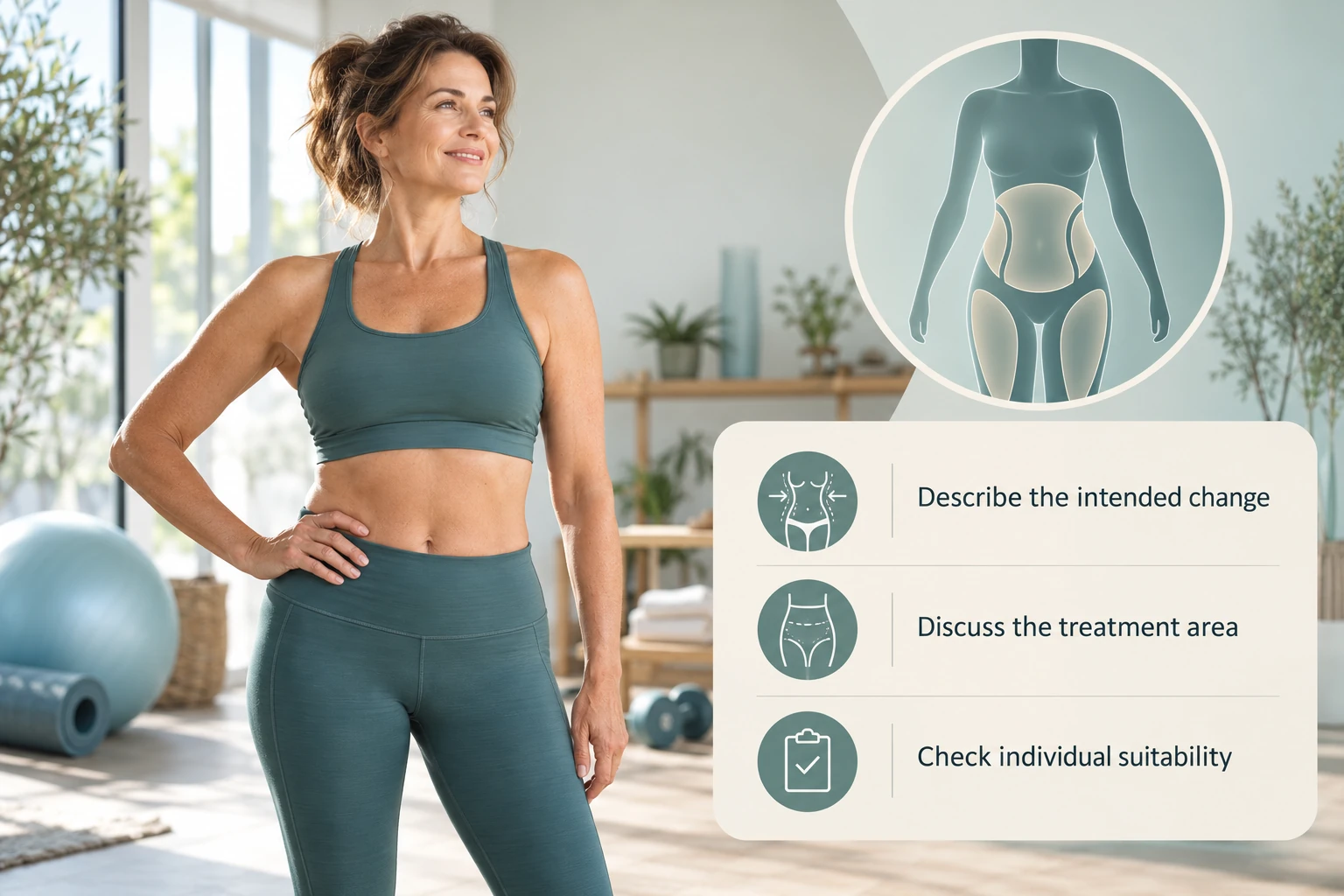
People may use the expression body contouring to describe quite different goals. Before discussing an option, make clear whether the enquiry concerns a localised area of fat, muscle definition, skin firmness, or another issue. These distinctions help frame the conversation without requiring you to diagnose the cause yourself. A treatment that focuses on one aspect should not be assumed to address all the others. Ask the team to explain the specific aim of the proposed approach.
Cryolipolysis and localised fat
The official cryolipolysis information describes controlled cooling applied to a selected area using an applicator. It presents the approach as targeting localised subcutaneous fat rather than removing large amounts of fat in the way a surgical procedure might. For someone exploring this option, the useful first questions concern the area being considered, the intended contour change and the suitability assessment. The current homepage explicitly distinguishes body contouring from general weight loss.
Do not turn a general treatment description into an expectation of a fixed amount of change. Ask what the procedure can reasonably address in the area you have in mind, what limitations need discussing and how progress would be reviewed. The older treatment page includes stronger promotional wording; this page does not adopt its numerical reduction claims or guarantees of comfort. The consultation should address the particular procedure, its possible side effects and your own circumstances.
Muscle-focused body sculpting
The published ToneSculpt page describes electromagnetic stimulation that produces muscle contractions. Its discussion includes the abdomen, buttocks, upper arms, thighs and calves. This is a different treatment concept from applying controlled cooling to fat. If your enquiry concerns muscle definition or a particular body area, ask the team to explain what the proposed service is intended to achieve and why it is being considered in relation to your goal.
The names used across body-sculpting pages can sound similar, so ask for the exact procedure to be written down or clearly identified. Do not assume that a suggested course, session length or expected sensation transfers from one device to another. Those are treatment-specific questions. A useful conversation separates the description of the technology from the expected benefit for the person considering it, and keeps the possibility of unsuitable treatment open rather than treating every enquiry as a booking.
Fat-dissolving injections
The injection-treatment page describes an injectable approach to selected localised fat deposits. It also distinguishes contouring from overall weight loss and discusses possible swelling, redness, bruising, tenderness and altered sensation. If you are considering injections, ask about the assessment, the area under consideration, relevant medical history and the aftercare that would accompany the procedure. A non-surgical label should not obscure the fact that an injection is still a procedure with potential risks.
Comparison should focus on the proposed treatment, not simply on whether an option involves surgery. Ask what makes one approach relevant to your concern, how the practical experience differs, and what information is needed before a recommendation is made. Avoid assuming that a broad website description supplies a complete contraindication list or predicts your result. Any discussion of the number of sessions, total price or treatment schedule should be tied to the actual plan being proposed.
Skin firmness and texture
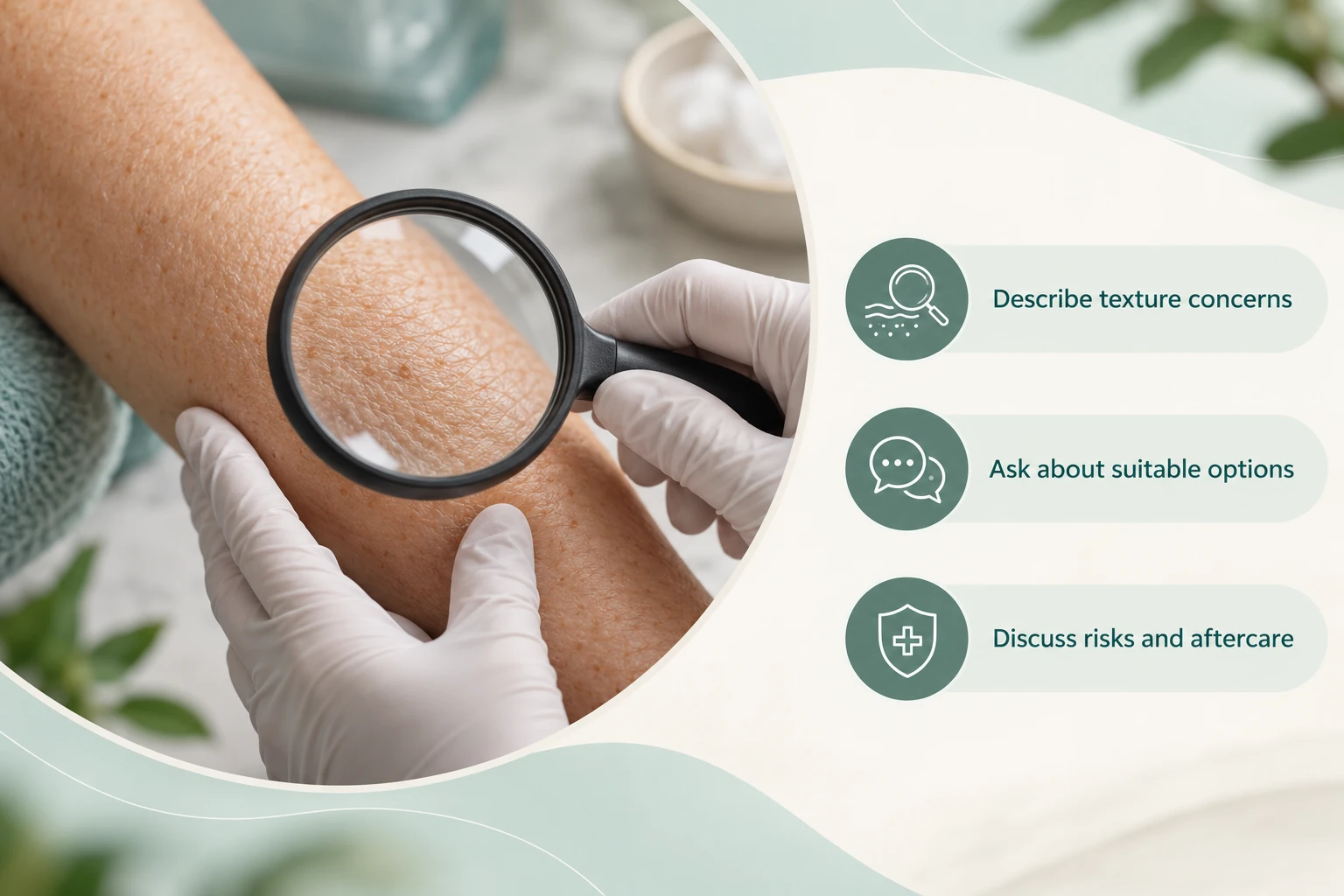
Skin-related enquiries can involve firmness, surface texture, lines or more than one of these concerns. Begin by describing the area and what you have noticed. The official website presents ultrasound and radiofrequency-based approaches, including a combined treatment. These categories use different methods and should be explained separately. A combination is not automatically the right choice because it includes more than one technology; the reason for suggesting each part should be clear.
HIFU
HIFU stands for high-intensity focused ultrasound. The official treatment material describes using ultrasound energy below the skin surface with the aim of stimulating a collagen response. The current homepage discusses facial and neck skin laxity and says that suitability and outcomes vary. If this option is raised, ask which area would be treated, what change is being sought and how the team would assess whether the procedure is appropriate.
The older HIFU page contains absolute statements about pain and safety. This overview does not repeat them. Ask directly about discomfort, potential risks, preparation and aftercare for the proposed procedure. Also distinguish the treatment appointment from the period over which any changes may become apparent. A general statement about collagen or skin tightening does not establish an individual result, a guaranteed timescale or the suitability of treating a particular area.
Radiofrequency microneedling
The official Total Skin Tightening page describes microneedling combined with radiofrequency energy. It explains that needles create controlled channels in the skin while energy is delivered to the targeted layers. Its listed discussion areas include skin texture, fine lines, acne scarring and laxity, with an individual consultation used to assess the concern. Unlike a treatment description that simply says non-surgical, this explains why preparation, hygiene and aftercare need attention.
When asking about this service, clarify the area, the proposed course and the recovery guidance that would apply. The source discusses redness and sensitivity after treatment, so do not plan on the basis that every skin procedure has identical after-effects. Ask which information is specific to your proposed treatment and which is a general example. The website's list of possible concerns is a starting point for discussion, not a finding that each concern will respond in the same way.
Combined skin-tightening treatment
The official website also presents a combination of HIFU and radiofrequency microneedling. The explanation is that the approaches work at different levels and may be considered together for some concerns. If a combination is suggested, ask what each component is meant to contribute. You can also ask whether one treatment alone is an option and what would change in the assessment, aftercare and cost if both were included.
Do not treat a combined name as a single uncomplicated procedure. It is reasonable to ask for a clear description of the sequence, the areas involved and the decisions still to be made. Keep the explanation alongside any quotation so you understand what the proposed plan contains. This page does not prescribe a combination, a session schedule or an interval between treatments; those details need to come from the individual discussion with the team.
Selected skin lesions and cosmetic enquiries
The official site includes CryoPen and pages about several skin-lesion concerns. The current homepage describes targeted cryotherapy for certain superficial benign lesions, subject to assessment. Its examples include skin tags, warts, verrucae, cherry angiomas, milia, seborrhoeic keratoses and age spots. These names should not be used to identify an unfamiliar mark yourself. A cosmetic enquiry still needs to establish what is being considered and whether cosmetic treatment is appropriate.
The homepage specifically cautions that new, changing, bleeding, unusual or unidentified lesions may require assessment by a GP or another suitably qualified healthcare professional before cosmetic treatment is considered. That distinction is important when reading a list of removal services. A page title describing a lesion is not confirmation that a mark on your skin is that lesion, and it should not be used to bypass assessment of a concern that needs medical attention.
For an enquiry, ask what information the team needs and whether an assessment should take place before treatment is discussed. The official consultation page says that lesion enquiries require review and a telephone conversation about a plan. If the official contact form offers an image attachment, follow its instructions and privacy notice. An uploaded photograph is not, by itself, a confirmed diagnosis, a treatment recommendation or an appointment booking on this website.
Incontinence and intimate wellbeing enquiries
Some concerns are more personal to describe than others. The official site includes incontinence treatment and vaginal-tightening information, but these represent different treatment discussions. Explain which concern you want to raise and ask how suitability would be assessed. There is no need to adopt a treatment label before understanding the options. The relevant conversation should connect the symptoms or concern with an appropriate assessment rather than assuming that an appearance-focused procedure is the answer.
The current homepage describes an electromagnetic incontinence treatment used while seated and clothed. It also qualifies suitability by the individual and the underlying cause of symptoms. The intimate-treatment information describes radiofrequency technology, again with individual assessment. This overview does not promise symptom resolution or identify a treatment for you. If the team advises medical assessment first, that is distinct from arranging an aesthetic appointment and should be understood as such.
When privacy matters to your enquiry, use the telephone or official contact route and read the relevant information before sending sensitive details. You can first ask how to discuss the matter without describing it in a public comment or on a social profile. The supplied Facebook and LinkedIn links are ways to find the business online; they should not be assumed to be clinical assessment channels or substitutes for the booking and contact instructions.
How the published journey fits together
The official homepage describes a sequence that begins with the concern, moves through consultation and suitability, and then proceeds to treatment and aftercare where appropriate. Each stage answers a different question. An initial enquiry establishes what you want help with. A consultation explores options. A suitability discussion considers whether a proposal is appropriate. Only then does it make sense to settle the practical details of proceeding with a particular plan.
This sequence also explains why browsing the website cannot finish the process. Information about a service is general. A discussion about your concern adds context, and an assessment may identify reasons to choose another approach or not proceed. Keep track of which stage you have reached. An enquiry acknowledgement, a consultation payment and a treatment appointment are not interchangeable events, and this informational website does not issue any of those confirmations.
Preparing for a useful conversation
Make a short note of the concern, the area involved and the questions you most want answered. If you have read about a particular treatment, bring its name into the discussion but remain open to hearing why it may or may not fit. Ask what background information is relevant, including previous treatment or medical circumstances, rather than deciding that something is unrelated without checking. The aim is a clear discussion, not a self-completed suitability test.
Organise practical questions separately from treatment questions. Location, timing, payment and appointment-change terms can all affect whether a plan works for you, even after the treatment itself has been explained. Having them in a separate list helps prevent one topic from crowding out another. You can return to the consultation page for a more detailed preparation guide, including the current published call format and the route to official booking information.
Deciding whether to proceed
Before deciding, check that you understand the proposed procedure, the intended benefit, the limitations and the possible unwanted effects discussed with you. If the explanation changes during the conversation, ask for the final proposal to be clear. A treatment name alone does not tell you the area, course or practical requirements. You should be able to distinguish the information you have received from the questions that still require an answer.
The official consultation page says a treatment decision need not be made during the call. That is useful if you want to review the information or check dates. It should not be confused with the cancellation or refund rules after a booking or payment has been made. Read the applicable terms before committing, and ask for clarification of any provision you cannot reconcile with the arrangements being proposed.
Practical arrangements and published policies
The official site describes home treatment for some services, depending on treatment and location. If you prefer this arrangement, raise it early and ask whether it applies to your enquiry. Confirm the actual location of any appointment before planning travel or preparing for a home visit. This page does not publish a guessed address, promise a particular practitioner or provide a live availability calendar.
Costs also need to be connected to a specific arrangement. The published consultation fee is separate from treatment deposits and treatment prices. Ask what an amount covers, what remains to be paid and which terms apply if circumstances change. The official terms contain both 48-hour and three-working-day notice wording in different sections. Our terms page identifies that discrepancy and directs you to the complete source rather than choosing a rule on your behalf.
Privacy information deserves the same care. The official policy describes practices and tools on the official website. Those descriptions do not mean this static site operates the same database, analytics or data-request system. Read the privacy information and the destination page before entering details. If you want to request access, correction or deletion, use the official route and clarify how your request should be made rather than assuming a link click submits it.
Reading treatment language accurately
Different pages sometimes use closely related words to describe different aspects of care. A treatment category tells you the broad subject. A technology name tells you something about the method. An appointment description tells you how the service may be arranged. Keeping those levels separate helps when comparing what you have read. For example, the label body contouring does not, on its own, identify whether the discussion concerns cooling, injections or muscle stimulation.
The phrase non-surgical also needs context. It distinguishes an approach from surgery, but does not explain every part of the procedure. The official site includes both needle-based procedures and treatments applied without injections. Ask what physically happens during the method being proposed instead of assuming that all services under the same broad heading share the same experience. This distinction is especially useful when discussing preparation or time afterwards.
Another distinction is between a treatment's intended purpose and evidence about an individual's likely outcome. A page may explain that a method is designed to improve a particular aspect of appearance. That statement does not tell you how much change a particular person will see. When reading, separate the explanation of the method from any expectation you are forming about yourself. The suitability conversation is where that expectation needs to be examined.
Using the website without losing the original question
It is easy to move from one treatment page to another and end up comparing terminology instead of considering the concern that brought you here. Keep a brief note of that original question. If you read about a different method, ask whether it relates to the same goal or a new one. You can bring several questions to a consultation without assuming they all require treatment or must be addressed together.
Use the website's different pages for different tasks. About explains the published approach and service categories. Services introduces the existing treatment topics. Contact identifies the enquiry routes. Book Consultation explains preparation and the official booking destination. The policy pages address the separate questions of terms and information handling. This structure lets you return to a specific issue without treating every page as a complete source of individual treatment advice.
Finally, keep any clarification from the team alongside the page or subject it concerns. If a statement online seems inconsistent with another explanation, ask about that particular difference. Do not assume that a broad reassurance cancels a specific limitation. The clearest next step comes from understanding which information applies to the proposed arrangement and which statements are only general introductions to the available services.
Finding your next step
You can approach Lipo Sculpt with a question rather than a decision. Start with the subject you need help understanding, then use the relevant page to organise the next conversation. Contact information is available through Contact Us, and the official telephone number is 03300101799. For the published consultation arrangements and booking destination, continue to Book Consultation.
The most useful outcome of reading about a service is a clearer set of questions. Knowing which procedure is being discussed, why it is relevant, what remains uncertain and which practical terms apply gives you a sounder basis for the next step. Keep the distinction between general information and individual advice throughout that process. Treatment suitability and results vary, and no description on this page guarantees a particular outcome.