
Begin with a consultation

A consultation is the opportunity to connect a general interest in treatment with the questions that matter to you. You may know the service name already, or you may only know the area or concern you would like to discuss. The official Lipo Sculpt booking page describes a one-to-one telephone call with a specialist, covering your concerns and a possible treatment plan. Use that conversation to understand a proposal before deciding whether to take it further.
This page explains the published arrangements and offers a practical preparation guide. It does not assess you, reserve a slot or take a payment. When you are ready to continue, open the official consultation page and review the information shown there. If you have a question first, call 03300101799 or use the official enquiry route linked from Contact Us.
The published fee and call format
The official booking page states a £15 consultation fee and describes a telephone discussion lasting approximately 10 to 20 minutes. It says the payment is deducted from the treatment cost when treatment is booked and completed. Check the current information on the official page before paying, including any conditions that relate to your enquiry. A published consultation figure should not be read as a quotation for the treatment itself.
The same page allows visitors to request a convenient callback time, and to suggest three or four possible treatment dates. These are preferences to discuss with the team. They do not create confirmed availability on this website. If your timing is important, ask which arrangements can actually be confirmed and distinguish the time of the telephone consultation from the time of any later treatment appointment.
The official page also says that you do not have to decide on treatment during the call. Use that opportunity if you need to consider the explanation, review practical arrangements or check your diary. Taking time to decide before booking is different from changing a booking after a payment or commitment. Read the applicable terms before moving from an information-gathering conversation to an agreed appointment.
What you can prepare before calling

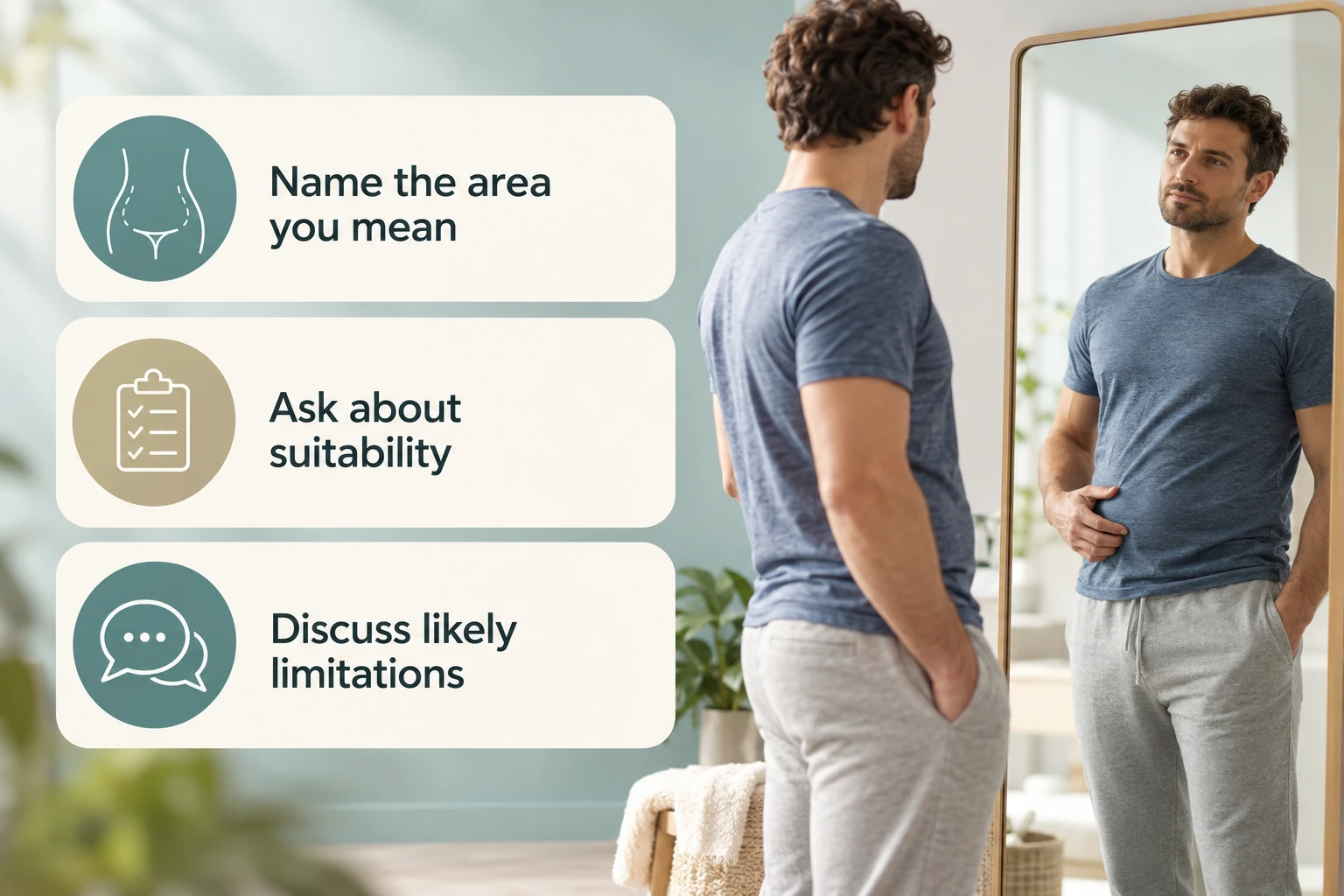
Start with a brief description of the concern in ordinary language. Identify the area you want to discuss and the change you hope to understand, without assuming which treatment will be recommended. A clear starting point helps the conversation focus on your question. You do not need to make a diagnosis, select a device or decide on a course of treatment before speaking with the team.
Put your questions in order of importance. If your first concern is suitability, write that first. If a practical limit such as location or timing determines whether you can proceed, include it near the top. A telephone call can cover several subjects, but a short list makes it easier to notice if an important question has been left unanswered. You can also keep space beside each question for the response.
Have relevant background information available and ask what the team needs. The current official homepage lists medical history, existing conditions or medication where relevant, previous treatment, contraindications, expectations and the treatment area as possible parts of the assessment. This is not a complete screening form. Do not use it to decide that a particular circumstance is irrelevant; ask how that information should be discussed before any procedure is agreed.
If you are enquiring on behalf of someone else, clarify how that person's own consultation will be arranged. The official booking page specifically says a parent must be available for a telephone consultation concerning a child under 16. That statement does not establish that every listed treatment is available to children. The service, the person's circumstances and any further requirements need clarification with the team.
Separate the questions you need answered
The concern and the proposed procedure
Ask the team to name the exact treatment under discussion and explain why it is being considered. If the conversation moves between several options, note the differences rather than combining them into one general idea of treatment. Body contouring, skin tightening, injections and lesion procedures involve different methods. Understanding which method is proposed is the starting point for sensible questions about experience, risks, aftercare and price.
Describe the outcome you have in mind, then ask whether that is a realistic aim for the proposed approach. It may be necessary to distinguish a localised contour change from weight loss, or a concern about skin texture from a concern about firmness. You can explain what you have noticed without knowing the technical explanation. The purpose of the consultation is to clarify the connection, not to make you adopt terminology before you understand it.
Suitability and reasons not to proceed
Ask how suitability will be established and which questions cannot be answered from the initial telephone discussion alone. The official homepage makes clear that not every treatment is appropriate for every person and that some concerns should be assessed by a healthcare professional first. An enquiry should leave room for that outcome. Paying for a consultation is not evidence that treatment has been approved or that a particular result is achievable.
It is useful to ask what would cause the proposed plan to change. That might be information identified during assessment or a practical issue still to be clarified. Keep those unresolved points visible in your notes. A recommendation with conditions attached should not be remembered as an unconditional recommendation. If you do not understand a limitation or the reason for further assessment, ask the team to explain it before discussing a treatment date.
Benefits, limitations and unwanted effects
A balanced discussion covers what the treatment is intended to do and what it cannot promise. Ask about the potential benefit for the area in question, the limitations of the approach and the possible side effects or risks. Non-surgical does not mean risk-free. The current official homepage explicitly rejects that interpretation, and the consultation should be used to understand the particular procedure rather than relying on broad reassurance.
Ask how the team distinguishes a typical response from a guaranteed outcome. General examples can help explain a procedure, but they do not predict your result. The official terms state that results vary and are not guaranteed. If a timescale, number of sessions or expected degree of change is discussed, note whether it is an estimate, a general illustration or part of the specific recommendation being made to you.
Questions for body-contouring enquiries
If you are asking about fat freezing
The official cryolipolysis page describes an applicator delivering controlled cooling to a selected area. The current homepage describes this as body contouring for localised fat, rather than a general weight-loss treatment. During your call, identify the area and ask why cooling is being considered for it. Ask which aspects can be discussed by telephone and which require further assessment before a plan can be established.
You can also ask what the treatment appointment would involve, what preparation would be required and which after-effects should be discussed. Do not assume that a statement about one treatment area applies to every area. If you have read different timescales or numerical claims on older pages, raise the discrepancy rather than selecting the most appealing figure. The purpose is to understand the proposal relevant to you, not to turn a promotional example into a promise.
If you are asking about injections
The official injection page describes treatment for selected localised fat deposits and discusses swelling, redness, bruising, tenderness and altered sensation among possible after-effects. Questions about the procedure, medical history and aftercare are therefore part of an informed enquiry. Ask which product and area are being discussed, who will assess suitability and what information is needed before any treatment can be agreed.
The consultation page says a telephone consultation is required before this service. Use it to clarify the difference between an initial discussion and the arrangements for the procedure itself. If a course is proposed, ask what determines the number of visits and how the overall cost is presented. Do not assume that an injection treatment has the same recovery requirements or practical experience as cooling or electromagnetic body sculpting.
If you are asking about muscle-focused treatment
The published ToneSculpt information describes electromagnetic stimulation producing muscle contractions. If that is the service you want to discuss, explain the area and the goal rather than using body sculpting as a catch-all term. Ask what the proposed method is intended to address and how that differs from an option directed at localised fat or skin laxity. A familiar category name should not hide a difference in purpose.
Questions about session planning should be tied to the actual recommendation. Ask how any suggested course would be arranged and how the team would explain the experience of treatment. The website includes promotional statistics and broad outcome language; this guide does not turn those into an individual expectation. Keep your questions focused on suitability, the proposed plan, practical requirements and how any progress would be assessed in your circumstances.
Questions for skin-tightening enquiries
Skin texture, skin laxity and visible lines may lead to different discussions. Tell the team which concern is most important to you and which area is involved. Ask whether the conversation concerns ultrasound, radiofrequency microneedling or a combination, and why. People researching concerns such as rf microneedling crepey skin nottingham may also encounter treatment information covering different technologies, so it is important to confirm which procedure and treatment area are actually relevant to the concern being discussed. Knowing the method makes it easier to ask meaningful questions about preparation, treatment experience and aftercare without assuming that all non-surgical skin procedures are the same.
For HIFU, the official description concerns focused ultrasound beneath the surface. For radiofrequency microneedling, it describes needles creating controlled channels while radiofrequency energy is delivered. These different descriptions matter when considering what to ask next. If more than one approach is proposed, ask what each contributes, whether both are necessary for the stated goal and how the practical arrangements would differ from a single approach.
The radiofrequency microneedling source discusses redness and sensitivity after treatment and the possibility of a course tailored to the concern. Ask for guidance that relates to the actual treatment area and plan. If you have an event or other commitment in mind, mention it and ask what uncertainty remains around recovery and timing. This website does not provide a recovery guarantee or confirm that a procedure can be fitted around a particular event.
Questions about a skin lesion
The official consultation page says lesion enquiries involve reviewing the lesion and discussing a treatment plan by telephone. The current homepage adds an important qualification: new, changing, bleeding, unusual or unidentified lesions may require assessment by a GP or another suitably qualified professional before cosmetic treatment is considered. Do not use an online list of lesion names to decide what a mark is or whether removal is appropriate.
Ask what assessment is needed and how information should be provided. If you use the image-attachment option on the official enquiry page, read its instructions and privacy information first. An image sent as part of an enquiry should not be mistaken for a confirmed diagnosis, approval for a procedure or an appointment. Clarify what further steps are required and who will explain the outcome of that assessment.
You can ask about the procedure only after making clear which concern is being discussed. Questions may include how the area would be treated, which after-effects need considering, what aftercare would be explained and whether another assessment is appropriate first. The aim is to understand the process and its limits. This page does not identify lesions, provide treatment instructions or promise that a particular mark can be removed cosmetically.
Questions about incontinence or intimate concerns
If the enquiry concerns incontinence or an intimate-health issue, identify that subject rather than assuming it belongs within a general skin or body-contouring appointment. The official site includes different technologies and purposes within these categories. Ask how the concern will be assessed, what background information is relevant and whether another healthcare assessment should take place before treatment options are considered.
The current homepage qualifies suitability for electromagnetic incontinence treatment by the individual and the underlying cause of symptoms. That is a reason to discuss the concern carefully rather than to select a treatment from a symptom description alone. Similarly, information about vaginal-tightening technology does not establish the cause of an intimate concern. The telephone discussion should clarify the route forward, including any questions that cannot be resolved through general website information.
You can first ask how to share sensitive information through the appropriate contact route. Avoid placing personal details in public comments merely because a social profile is linked from the website. The official contact form provides its own privacy wording, and the privacy page links to the complete policy. Reading those details helps you decide how to continue without treating a public profile as a private assessment channel.
Understanding the quotation
Ask what any quoted figure includes. A consultation fee, a treatment deposit, a single treatment price and the cost of a course describe different things. Write the description alongside the amount so you can review it later. If more than one area or procedure is discussed, ask whether the quotation covers all of them. Do not infer a total cost from a figure that has only been presented for one part of the proposed plan.
The official terms discuss appointment deposits of £50 to £300 and payment before treatment begins. That is separate from the £15 consultation information on the booking page. This guide does not decide which deposit would apply to your appointment. Ask the team to identify the applicable amount and conditions, then check that the explanation matches the booking arrangements you are considering before making a payment.
If you are comparing options, compare the descriptions as well as the prices. Ask whether the discussion concerns the same area, a different method or a different course. A lower or higher figure on its own does not explain what is being proposed. Keep any unresolved question about payment, allocation of the consultation fee or the remaining balance on your list until you have a clear answer.
Location, dates and home visits
The official website mentions home visits, while its current homepage makes availability dependent on the treatment and location. Tell the team if a home visit is important to your plans and ask whether it is possible for the service under discussion. Do not assume that a general statement about home treatment applies to every procedure or address. The consultation should establish the actual arrangement before you prepare for it.
If you would attend a clinic, confirm where the appointment will take place before arranging travel. This page does not supply an unverified street address or allocate a particular practitioner. Ask how the location and appointment time will be communicated, and keep that information with your booking details. A request for several preferred dates is useful for discussion but is not itself a confirmed reservation.
Mention practical requirements when they affect the decision. For example, you can ask about the time to allow for the proposed appointment, any preparation instructions and how to raise questions afterwards. These are questions for the team, not promises made by this guide. The official terms contain instructions about arrival and preparation, so review them together with any treatment-specific guidance you receive.
Read the appointment-change terms before paying
The official terms contain different notice wording in different sections. The appointment cancellation and voucher provisions refer to 48 hours, while the deposit and appointment-change section refers to three working days. Our Terms & Conditions page explains that discrepancy and links to the original. Ask which provision applies to your proposed booking rather than assuming that the shorter period will always be sufficient.
The source also describes non-refundable deposits, restrictions on treatment-course refunds and transfers, and consequences for missed appointments. Read those sections before making a commitment. The opportunity to think after an initial consultation should not be confused with a promise of a refund after payment. If a provision is unclear, ask for clarification while you are still deciding, and keep that clarification with the appointment information.
For an existing booking, the terms direct customers to telephone the clinic where they booked to arrange cancellation or rescheduling and state that text-message changes are not accepted. This informational page cannot process a change. A link click, a note written for yourself or a general enquiry should not be assumed to have altered the appointment. Use the stated route and establish what has actually been agreed.
At the end of the consultation

Review the main points before ending the conversation. Can you name the proposed procedure and area? Do you understand what it is intended to address, the limitations discussed and the next assessment step? Are there questions still waiting for an answer? This brief review helps distinguish a clear proposal from an early discussion in which several possibilities were mentioned but no plan was settled.
Then review the practical points separately: the quotation, any deposit, the appointment location, dates and applicable terms. If you are not ready to proceed, the official booking page says you can take time rather than decide during the call. Keep your notes so a later conversation can return to the unresolved subjects. Do not treat a tentative date or an example of a course as a confirmed booking unless the arrangements have been established.
If you decide to continue, ask what happens next and which information will be provided before treatment. The published journey on the official homepage includes explaining the procedure and relevant aftercare. Your own understanding should be specific enough to distinguish those instructions from general website information. This guide is preparation for that conversation, not a replacement for the individual assessment or directions accompanying an actual treatment.
A practical note-taking format
You can prepare a short personal worksheet before the call. This is not a form to submit and does not create a booking. It is simply a way to record what you want to learn and the answers you receive. Use headings that distinguish the concern, the proposal, the assessment, the practical arrangements and the questions still open. Keeping those subjects separate can make the information easier to review afterwards.
Under the concern heading, write what you want to discuss in your own words. Include the area and the aspect that matters to you, rather than a conclusion about the treatment you need. If you have several concerns, give each its own line. This prevents a conversation about one subject from being mistaken for an assessment of everything on your list. You can ask explicitly which concern a proposed option is intended to address.
Under the proposal heading, record the exact procedure name used by the team. Leave room for the reason it is being considered and any alternative mentioned. If no recommendation has been made, write that down too. A list of possibilities is useful information, but it is different from an agreed treatment plan. Your notes should reflect the stage the conversation has actually reached, including when more assessment is needed.
Under assessment, record the information you have been asked to provide and any further step described by the team. Keep questions about suitability, potential benefit, risks and limitations here. If you are uncertain about an explanation, mark it as unresolved rather than filling the gap from an unrelated webpage. You can return to the specific question in a later discussion instead of relying on an assumption you made while taking notes.
Under practical arrangements, record the quotation and what it covers, any payment described, the proposed location and the dates being discussed. Label dates as requested, tentative or confirmed according to what has actually been communicated. Similarly, distinguish a consultation payment from a treatment deposit or balance. These simple distinctions reduce the chance of remembering an early possibility as a final arrangement.
Finish with the next action and who is expected to take it. That could be your decision to review information, a request to provide relevant details, or a further contact agreed with the team. Do not invent a response deadline that has not been given. If you need to know when to follow up, ask that question directly. The worksheet is useful because it records the actual conversation, not because it supplies a standard answer for every enquiry.
If you read conflicting information before the call
Some official pages use stronger language than the current homepage about comfort, risk or results. If that affects your understanding, note the subject and ask the team to explain the current information for the particular procedure. This guide does not adopt a promise that treatment is painless, risk-free or guaranteed to produce a specified outcome. A focused question about the discrepancy is more useful than choosing one statement without clarification.
The same approach applies to the differing appointment-change periods in the terms. Identify the specific wording you need explained and connect it to the booking you are considering. A general answer about consultations may not answer a question about a course, voucher or deposit. Keep these points on the unresolved list until the proposed arrangement and the applicable conditions are clear to you.
Continue to the official booking route
Open the official Book Consultation page to review the current fee information and the payment link provided there. This website does not collect card details, submit booking requests or issue payment or appointment confirmations. Any action you take on the external destination is governed by the information and processes shown on that destination, so read it before proceeding.
For a general enquiry instead, call 03300101799 or visit Contact Us. You can also read About Lipo Sculpt to understand the published approach and treatment categories before making contact. Your next step can be a question: the aim is to understand what is being proposed and whether it makes sense for you before any treatment decision is made.