Teeth Whitening is a cosmetic dental treatment that reduces the visible discolouration of natural teeth. It is one of the most frequently requested cosmetic procedures in the UK, and also one of the most misunderstood. Advertising tends to focus on the final photograph rather than the process, which leaves many people unclear about what actually happens in the chair, how the result is arrived at, and what they need to do afterwards to keep it.
This page sets out the whole service in order. It covers the assessment that precedes treatment, the chemistry that produces the change in shade, the structure of a typical appointment, the management of sensitivity, and the aftercare routine that determines how long your result lasts. It is written to be read before you book, so that you arrive with an accurate picture of what the treatment can and cannot do.
The single most useful thing to understand at the outset is that Teeth Whitening acts on natural tooth structure only. It lifts pigment that has accumulated within and upon enamel and dentine. It does not resurface teeth, it does not alter their shape or alignment, and it has no effect on crowns, veneers, bridges or composite fillings. A treatment plan that ignores this produces an uneven smile; a plan that accounts for it produces a balanced one. That distinction is made during assessment, not during treatment, which is why the assessment matters as much as the session itself.
Throughout this page the term Teeth Whitening refers to professionally supervised treatment carried out by a registered dental professional. Where over-the-counter products or unsupervised services are discussed, they are named as such. The difference is not a marketing distinction — it determines the concentration of the agent used, the protection given to your gums, and who is accountable if something needs adjusting mid-treatment.
What the Teeth Whitening Service Involves
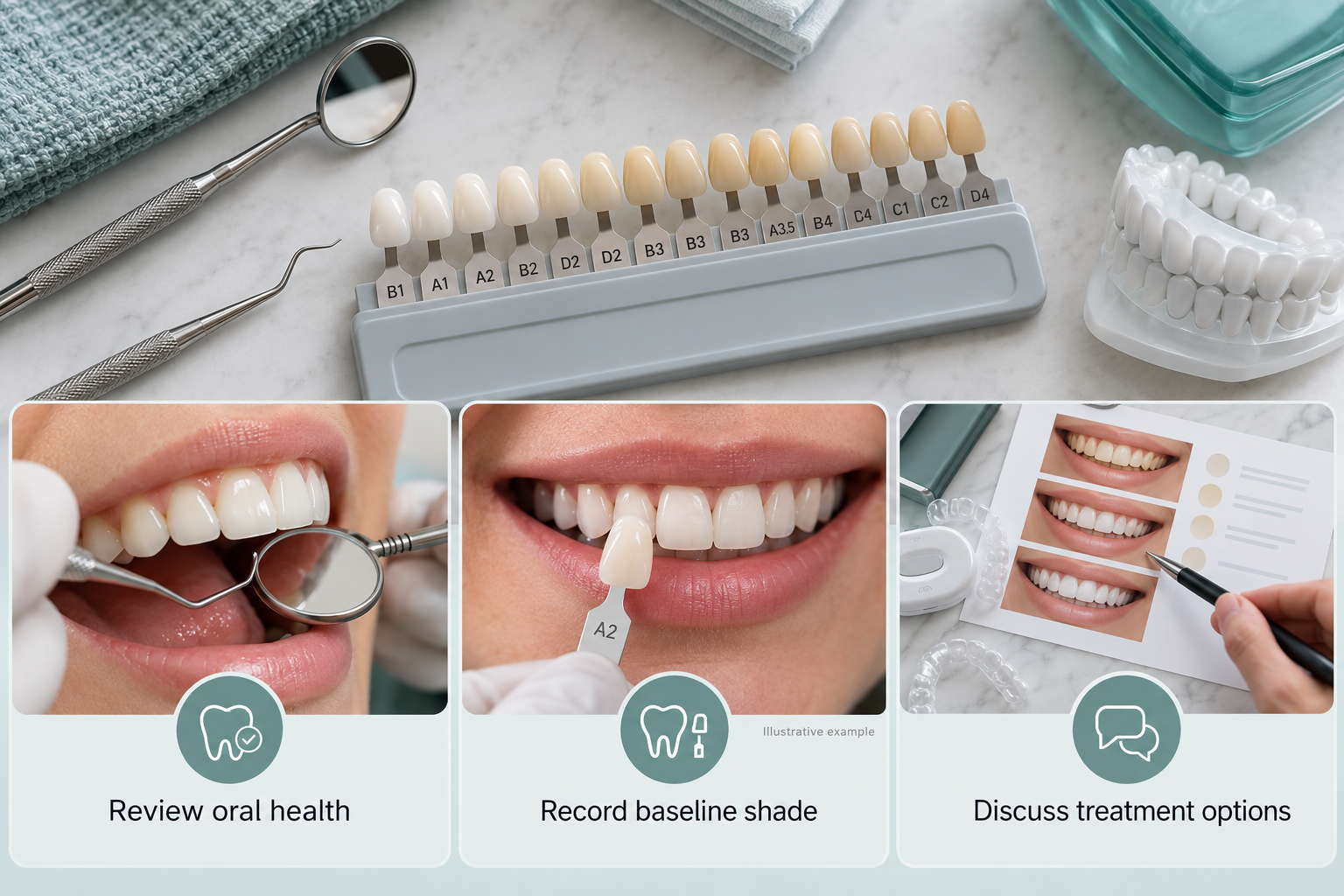
The service is best thought of as three connected stages rather than a single appointment. The first is assessment and planning. The second is the whitening session itself. The third is aftercare and maintenance, which continues long after you have left the clinic. Skipping or rushing any one of the three tends to show up in the result.
Stage One — Assessment and Planning
Before any whitening agent is used, a registered dental professional reviews your medical history, current medications, and dental history. The mouth is examined for untreated decay, gum inflammation, enamel wear, cracks, exposed root surfaces, and existing restorations. Each of these findings changes the plan. Untreated decay, for instance, can allow the whitening agent to reach the pulp and cause avoidable discomfort, so it is stabilised first.
A baseline shade is then recorded using a standardised shade guide, and where appropriate, clinical photographs are taken under consistent lighting. This is not a formality. Without a documented starting point there is no objective way to measure what the treatment achieved, and memory is an unreliable comparator — people routinely underestimate how much their teeth have changed because they see them every day.
The consultation also establishes your baseline sensitivity. If you already experience discomfort with cold drinks, that is recorded before treatment so that any post-treatment change can be interpreted properly rather than guessed at.
Stage Two — The Whitening Session
The session applies a professional-strength whitening gel to the natural tooth surfaces under controlled conditions, with the gums and soft tissues protected by physical barriers. Where a light or laser system is used, it supplies energy that accelerates the breakdown of the whitening agent. The full sequence is described step by step further down this page.
Stage Three — Aftercare and Maintenance
Aftercare begins the moment the gel is removed. For a short period following treatment the enamel surface is more receptive to pigment than usual, which makes the first day or two disproportionately important. Beyond that window, the routine becomes ordinary: consistent brushing, interdental cleaning, sensible timing around staining food and drink, and periodic professional review. The aftercare section of this page covers all of it in detail.
Twelve Reasons People Choose Professional Teeth Whitening
People arrive at Teeth Whitening from very different starting points. Some have a specific event in mind. Others have simply noticed a gradual change over several years and want to reverse part of it. The reasons below are the ones that come up most often in consultation, presented honestly rather than promotionally — including where a reason comes with a qualification attached.
1. The change is visible quickly
An in-clinic session typically produces a measurable shade change within a single appointment of roughly one hour. That is the single most common reason people choose in-clinic treatment over gradual alternatives. It is worth knowing that the shade continues to settle over the following days as the teeth rehydrate, so the appearance immediately after treatment is not quite the final appearance — it usually settles slightly, then holds.
2. The concentration is matched to you, not to a shelf
Over-the-counter products are formulated for the average mouth because they have no way of knowing anything about yours. A clinician selects the concentration and exposure time based on your baseline shade, your enamel condition, and your sensitivity history. Where a lower concentration over a longer period is more appropriate, that is what is used. The ability to make that judgement is a substantial part of what professional supervision buys you.
3. Sensitivity is anticipated rather than discovered
Short-term sensitivity is the most commonly reported effect of Teeth Whitening, and it is not a sign that anything has gone wrong. It occurs because the whitening agent passes through the dentine tubules and temporarily affects nerve response. Because this is expected, it is planned for: desensitising agents can be applied immediately after treatment, exposure times can be shortened, and a desensitising toothpaste can be started before your appointment. Sensitivity that is anticipated is far easier to manage than sensitivity that takes you by surprise at home.
4. The protocol is designed around protecting enamel
A brighter smile that costs you enamel is a poor trade. Professional protocols are built around controlled contact time, correct isolation, and immediate management of any soft-tissue contact. Current evidence indicates that peroxide-based whitening used correctly under professional supervision is not associated with lasting harm to enamel structure; the transient surface changes reported in research are typically reversible. The safeguard is in the supervision, not in the product alone.
5. It is carried out by someone accountable for the outcome
At-home kits place every judgement on the user: how much gel, how long, where it goes, and what to do if something feels wrong. Uneven application is the most common result, producing a patchy shade that is harder to correct than the original discolouration. In a clinical setting the application is even, the timing is measured, and if sensitivity develops mid-session the protocol can be adjusted immediately rather than at the end of a week.
6. The effect on day-to-day confidence is real
This is the reason people mention least often at the start and most often afterwards. Discoloured teeth change behaviour in small, cumulative ways — a closed-mouth smile in photographs, a hand raised while laughing, a reluctance to lead a conversation. Patients frequently report that those habits ease once the shade improves. It is a modest change with a disproportionate effect on how comfortable people feel in ordinary social situations.
7. It addresses the staining that everyday life produces
Coffee, tea, red wine, dark fruit, soy and tomato-based sauces, and tobacco all deposit pigment on and just beneath the enamel surface. This is extrinsic staining, and it is precisely the category that Teeth Whitening addresses most predictably. If your discolouration has built up gradually through diet and habit rather than being present since childhood, you are in the group most likely to see a clear improvement.
8. The process itself is straightforward
There are no trays to remember, no daily regimen to maintain, and no multi-week schedule to keep to. You attend an appointment, the treatment is carried out under supervision, and you leave with written aftercare guidance. For people whose previous attempts at whitening failed through inconsistency rather than through the product, the simplicity is often the deciding factor. Those comparing professionally delivered whitening options in the area can also review Ultimawhite Bracknell when researching the type of treatment and appointment format available locally.
9. It fits well before a significant event
Weddings, milestone birthdays, interviews, graduations, and photographs are the most common prompts for booking. If you are treating ahead of a specific date, book with a margin rather than the day before — ideally one to two weeks. That allows the shade to settle, any transient sensitivity to resolve, and leaves room for a follow-up session if your clinician recommends one.
10. Results hold well when they are maintained
Teeth Whitening is not permanent, and any service that implies otherwise is overselling. What is accurate is that many patients retain a good result for months to a few years, with the variation driven almost entirely by diet, tobacco use, and oral hygiene. A maintenance plan agreed with your clinician — typically periodic review and an occasional top-up — extends that considerably.
11. It suits a broad range of adults
You do not need to be an ideal candidate to benefit. Adults in good general and oral health, without active decay or gum disease, and with realistic expectations, are commonly suitable. If your teeth have become generally dull, yellowed or stained, there is a reasonable likelihood of visible improvement. A consultation confirms this properly rather than leaving you to guess from a website.
12. The process is transparent from the outset
You should know before you consent what degree of change is realistic for your teeth specifically, how many sessions may be needed, how your existing restorations will behave, and what the aftercare requires of you. Where a particular outcome is unlikely, you should be told during the consultation rather than after the appointment. Transparency at the start is what prevents disappointment at the end.
Your Teeth Whitening Session, Step by Step
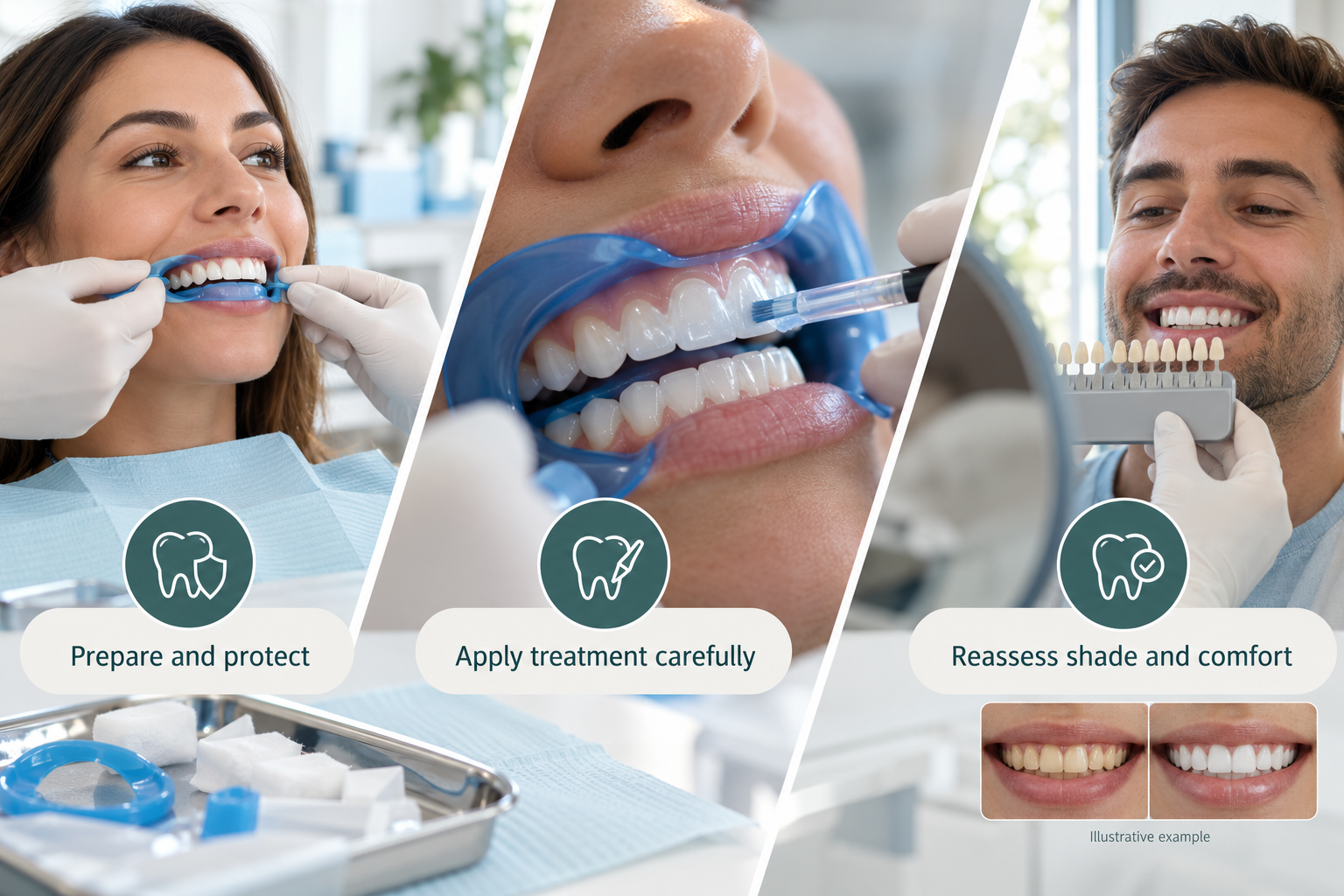
Knowing the sequence in advance removes most of the apprehension people bring to a first appointment. The stages below describe a typical in-clinic session. Exact timings vary with the system in use and with your individual treatment plan.
Assessment and Shade Recording
Your clinical assessment is reviewed and your baseline shade is recorded against a standardised shade guide, with clinical photographs taken under consistent lighting where appropriate.
Professional Cleaning
Where indicated, plaque and surface deposits are removed first. A clean surface allows the whitening gel to contact enamel evenly rather than working through a layer of film, which improves consistency of result.
Soft Tissue Protection
Lip retractors are placed and a gingival barrier is applied along the gum line. This is the step that prevents the most common avoidable complication of whitening — temporary irritation from gel contacting soft tissue.
Gel Application
The whitening gel is applied in measured amounts across the natural tooth surfaces, with attention to even coverage. Restorations are noted and expectations for those surfaces confirmed.
Activation Cycles
Where a light or laser system is used, it is applied for defined intervals, often across several cycles within one visit. The energy accelerates the release of active oxygen from the gel; it does not bleach the teeth itself.
Removal and Reassessment
The gel is removed and the mouth rinsed. Shade is re-recorded against the same guide used at baseline, and sensitivity is assessed and noted before you leave.
Aftercare Guidance
You are given specific, written aftercare guidance covering the first forty-eight hours and the weeks that follow, along with advice on whether a maintenance regimen is appropriate for you.
How Long the Appointment Takes
Preparation and protection typically occupy ten to twenty minutes. Gel application and activation cycles run for approximately thirty to sixty minutes, depending on the system and protocol; the clinician may reapply gel and repeat a cycle several times within the same session. A post-treatment check of five to fifteen minutes completes the visit, during which the gel is removed, the teeth are rinsed, shade is re-recorded, and sensitivity is assessed.
Many patients achieve a visible improvement from a single session. Others are advised to have a further session, or a combined in-clinic and supervised at-home regimen, depending on their baseline shade and the outcome they are aiming for.
Aftercare: The First 24 to 48 Hours
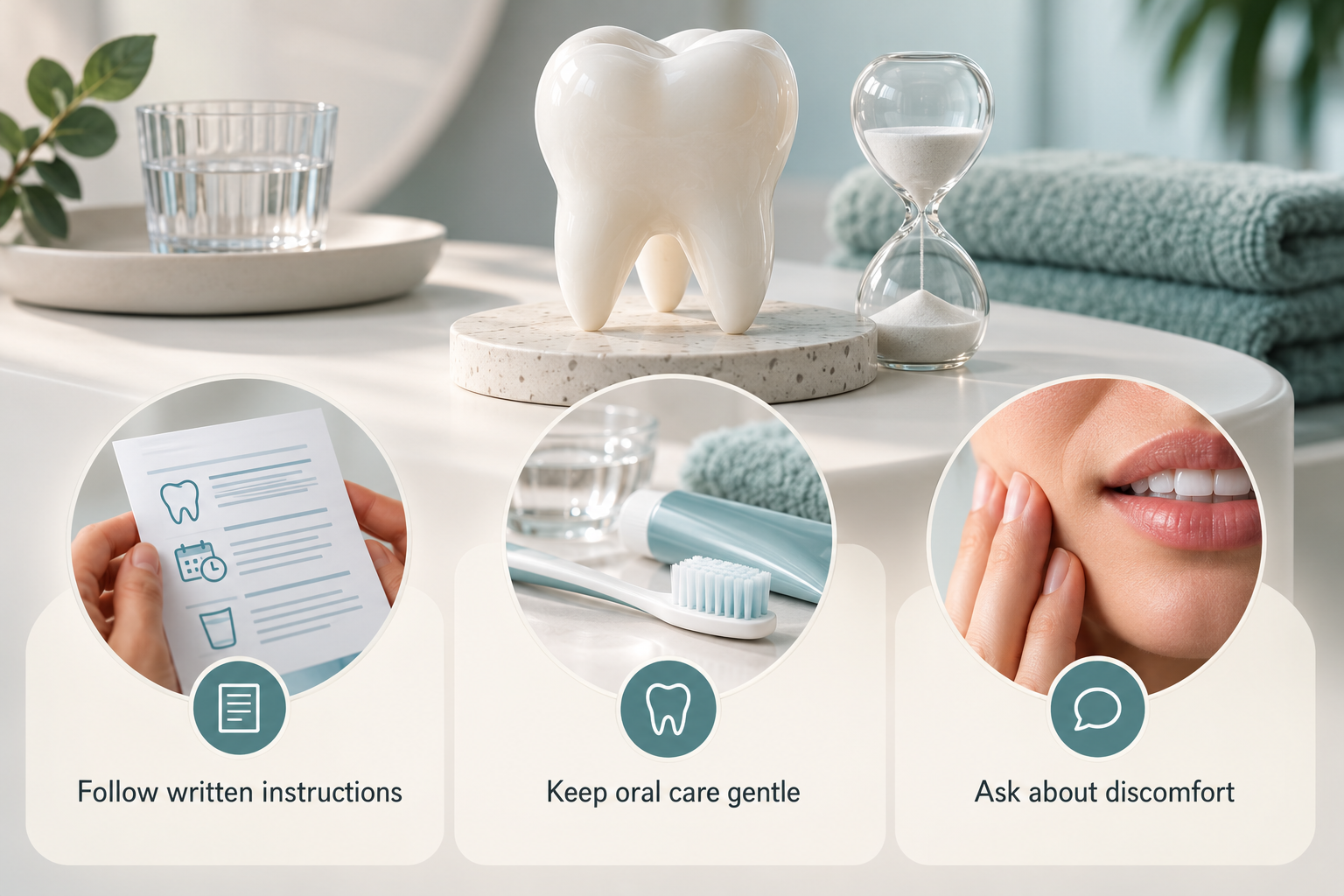
The first two days after treatment carry more weight than any other part of the aftercare routine. For a short period following whitening the enamel surface is temporarily more receptive to pigment, which means that what you eat and drink in that window has a disproportionate effect on how your result settles. This is the most important thing to get right, and it is entirely within your control.
The Principle
The simplest guide is also the most reliable: if something would stain a white shirt, treat it as capable of staining your teeth. That single test handles most decisions without needing a list.
What to Avoid
- Coffee and tea, including green and herbal varieties that carry strong pigment
- Red wine, and dark spirits mixed with cola or similar dark mixers
- Dark fizzy drinks, which combine pigment with acidity
- Curry, soy sauce, balsamic vinegar, and tomato-based sauces
- Berries, beetroot, and strongly coloured sweets or ice lollies
- Tobacco in any form, which is among the most aggressive staining agents there is
What to Choose Instead
- Water, still or sparkling, as your default drink throughout the period
- Milk and plain natural yoghurt
- Plain chicken, turkey, white fish, rice and pasta without coloured sauces
- Potatoes, bread, plain cheese, eggs, cauliflower and other pale vegetables
Practical Adjustments That Help
If avoiding a drink entirely is unrealistic, reduce contact instead of eliminating it. Using a straw keeps pigmented liquid away from the front surfaces of the upper teeth, which are the ones most visible when you smile. Rinsing with water immediately after eating or drinking clears residue before it settles. Neither substitutes for the white diet during the critical window, but both meaningfully reduce the impact when circumstances make full avoidance impractical.
Managing Sensitivity in This Period
If you experience sensitivity, it usually presents as a short, sharp response to cold and settles within a day or two. Extremes of temperature are worth avoiding during this period — iced drinks and very hot ones both. A desensitising toothpaste used consistently, rather than only when discomfort appears, is more effective. Where your clinician has provided or recommended a specific desensitising product, follow that guidance in preference to general advice.
Sensitivity that is intense, that worsens rather than settling after the first couple of days, or that persists beyond roughly a week, warrants a follow-up assessment. The same applies to any gum irritation that does not resolve quickly. These situations are uncommon, and they are straightforward to address when raised early.
Daily Habits That Maintain Your Result
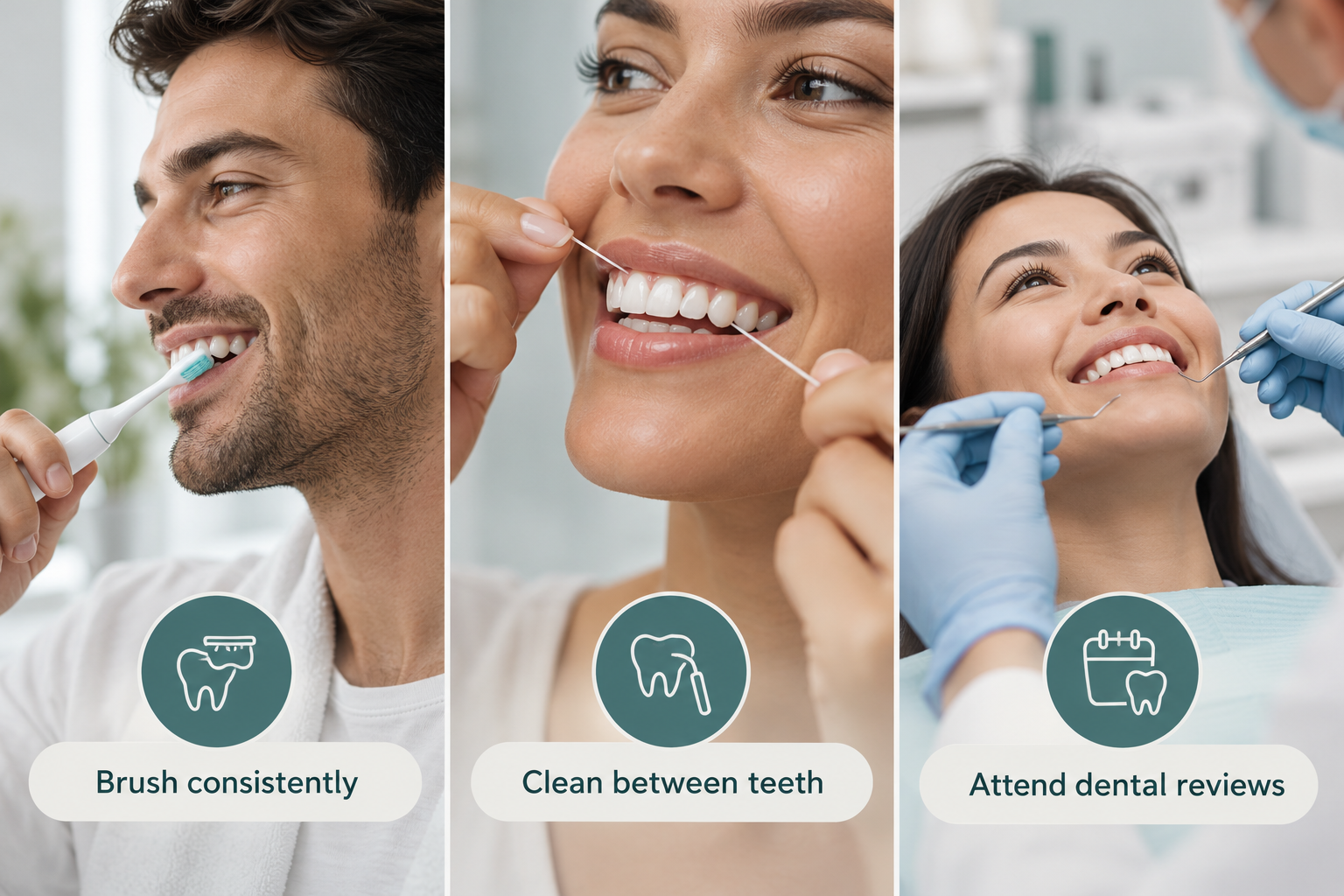
Once the first forty-eight hours have passed, maintaining your result requires consistency rather than effort. None of the following is complicated, and none of it is specific to whitening — it is ordinary good oral care, which happens to also be what protects a whitening result.
Brush Properly, Twice a Day
Use a soft-bristled brush for a full two minutes, morning and evening. The duration matters more than the pressure; hard scrubbing wears enamel and irritates gums without cleaning better. What you are doing is removing surface film before pigment has time to bind to it, which is why regularity beats intensity. An electric brush with a timer helps if you consistently underestimate two minutes, as most people do.
Clean Between Your Teeth Every Day
Floss or interdental brushes reach the surfaces a toothbrush cannot. These contact points are where discolouration is most visible at the margins between teeth, and they are also where gum inflammation begins. Daily interdental cleaning protects both the appearance of your result and the health of the tissue around it.
Stay Hydrated
Drinking water through the day continually rinses the mouth, dilutes acids, and clears pigment before it settles. It also supports saliva flow, and saliva is the mouth's own protective mechanism — it buffers acid and helps remineralise enamel. A dry mouth, whether from medication, dehydration or mouth breathing, accelerates staining noticeably.
Rinse After Eating and Drinking
Where brushing is not practical, a mouthful of water swirled and swallowed does a substantial share of the work. This is particularly worthwhile after coffee, tea, wine or anything acidic.
Avoid brushing for around thirty minutes after anything acidic — citrus, wine, fizzy drinks, vinegar-based dressings. Enamel is temporarily softened by acid, and brushing during that window removes more surface than it otherwise would. Rinse with water immediately, then brush once that period has passed.
Choose Products Sensibly
A non-abrasive fluoride toothpaste is the sensible default. Whitening toothpastes vary considerably: some work by gentle polishing, some contain low concentrations of active agents, and some are simply marketed that way. Highly abrasive formulations remove surface stain at the cost of enamel over time, which is a poor exchange. Ask your clinician which product suits your enamel condition rather than selecting on packaging.
Long-Term Maintenance and Top-Ups
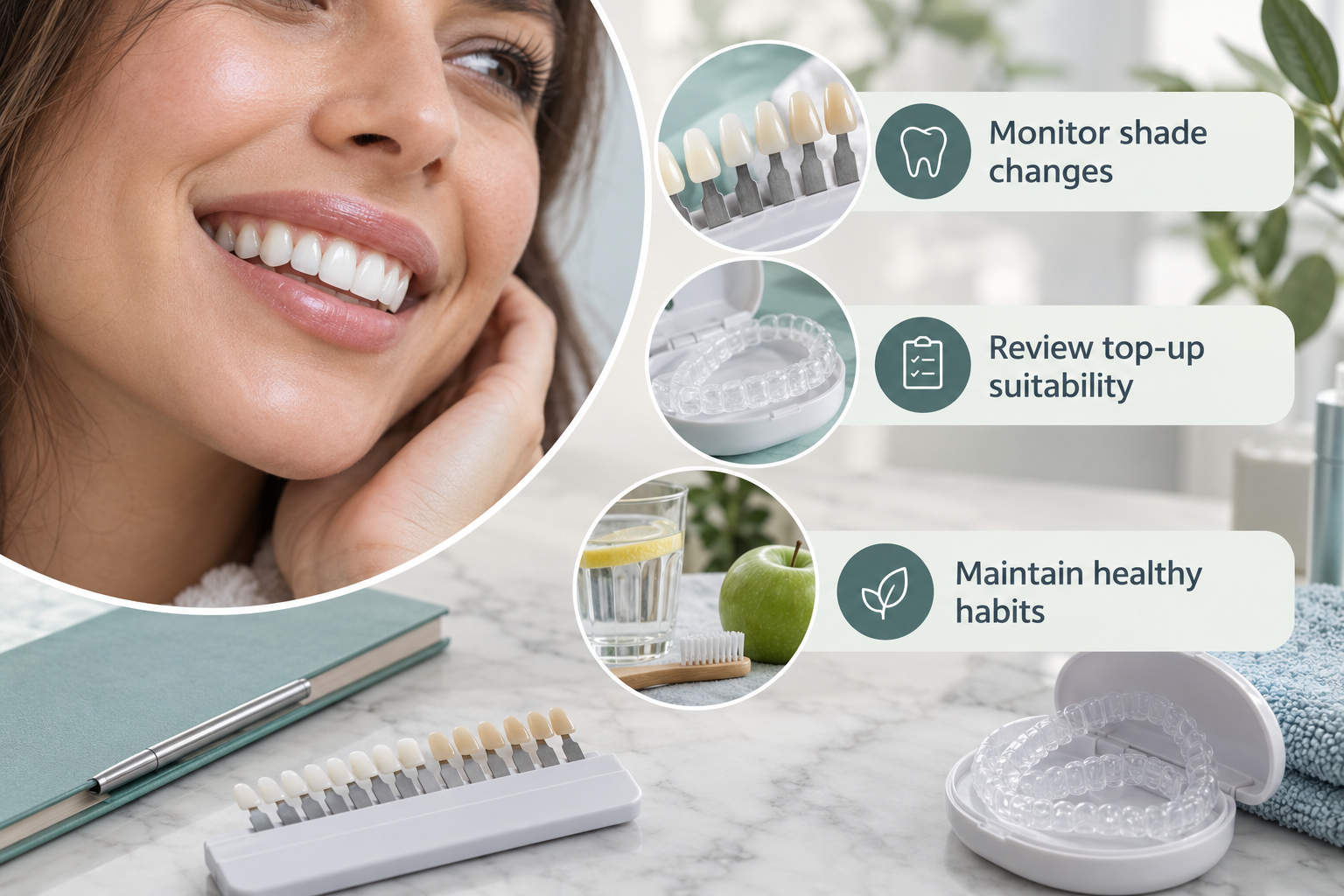
Shade relapse is gradual and normal. It is caused by ordinary living rather than by any failure of the treatment, and because it happens slowly most people do not notice it until they compare against a photograph. Planning for it is more effective than reacting to it.
What Determines How Long Your Result Lasts
Four factors account for most of the variation between patients. Diet is the largest: daily coffee or tea, frequent red wine, and heavily pigmented food all accelerate relapse. Tobacco use is the second and has the most pronounced effect of any single habit. Oral hygiene consistency is third. The fourth is your individual enamel — its thickness, its surface characteristics, and how porous it is — which is not something you control but which your clinician can factor into expectations.
Professional Cleaning
Regular professional cleaning removes accumulated surface deposits that daily brushing leaves behind. For many people this alone restores a noticeable amount of brightness and delays the point at which a top-up becomes worthwhile. It is also the appointment at which developing problems are caught early, which matters independently of appearance.
Top-Up Sessions
A top-up is a shorter, lighter intervention than an initial course. Depending on your circumstances this may be a single in-clinic session or a brief supervised at-home course using lower-concentration gel. The appropriate interval varies with your habits; your clinician will suggest a schedule based on how your shade has behaved rather than on a fixed calendar.
Supervised At-Home Maintenance
Where appropriate, a supervised take-home regimen using custom-fitted trays can maintain shade between in-clinic visits. The distinction from over-the-counter kits is meaningful: the trays are made to fit your teeth, so the gel stays where it should rather than seeping onto gum tissue, and the concentration is selected for you. This is provided on clinical advice rather than as a default.
Many patients experience good shade retention for months to a few years. That range is wide because behaviour varies widely. A heavy coffee drinker who smokes and a non-smoker who drinks mostly water will have very different experiences of the same treatment, and neither outcome indicates that the treatment worked better or worse.
Suitability and Important Considerations
Teeth Whitening suits many adults, but not everyone and not in every circumstance. The considerations below are assessed individually during consultation. None of them is necessarily a permanent barrier; several simply mean that the sequence of treatment changes.
Children and Adolescents
Whitening is generally reserved for adults. Younger patients are usually advised to wait until dental development is complete before cosmetic whitening is considered.
Pregnancy and Breastfeeding
Routine elective whitening is usually deferred until after pregnancy and breastfeeding as a precautionary measure rather than because of a demonstrated risk.
Active Dental Disease
Decay or active gum disease is stabilised first. Treating an unhealthy mouth cosmetically before treating it clinically produces both a worse result and unnecessary discomfort.
Extensive Visible Restorations
Where many visible teeth are restored, whitening can create an uneven appearance. Restorative options including veneers, crowns or composite bonding may be more appropriate.
Marked Existing Sensitivity
Pre-existing sensitivity does not rule treatment out, but it changes the approach. A desensitising protocol beforehand and a gentler regimen during treatment are commonly used.
Intrinsic Discolouration
Staining originating deep within the tooth — from certain childhood antibiotics, trauma or fluorosis — responds less predictably and may need a staged or combined plan.
Patients with a known peroxide allergy, significant chemical sensitivity, or particular medical conditions are assessed individually. Where necessary, a clinician will seek medical advice before proceeding in order to determine the safest approach.
Understanding Your Type of Discolouration
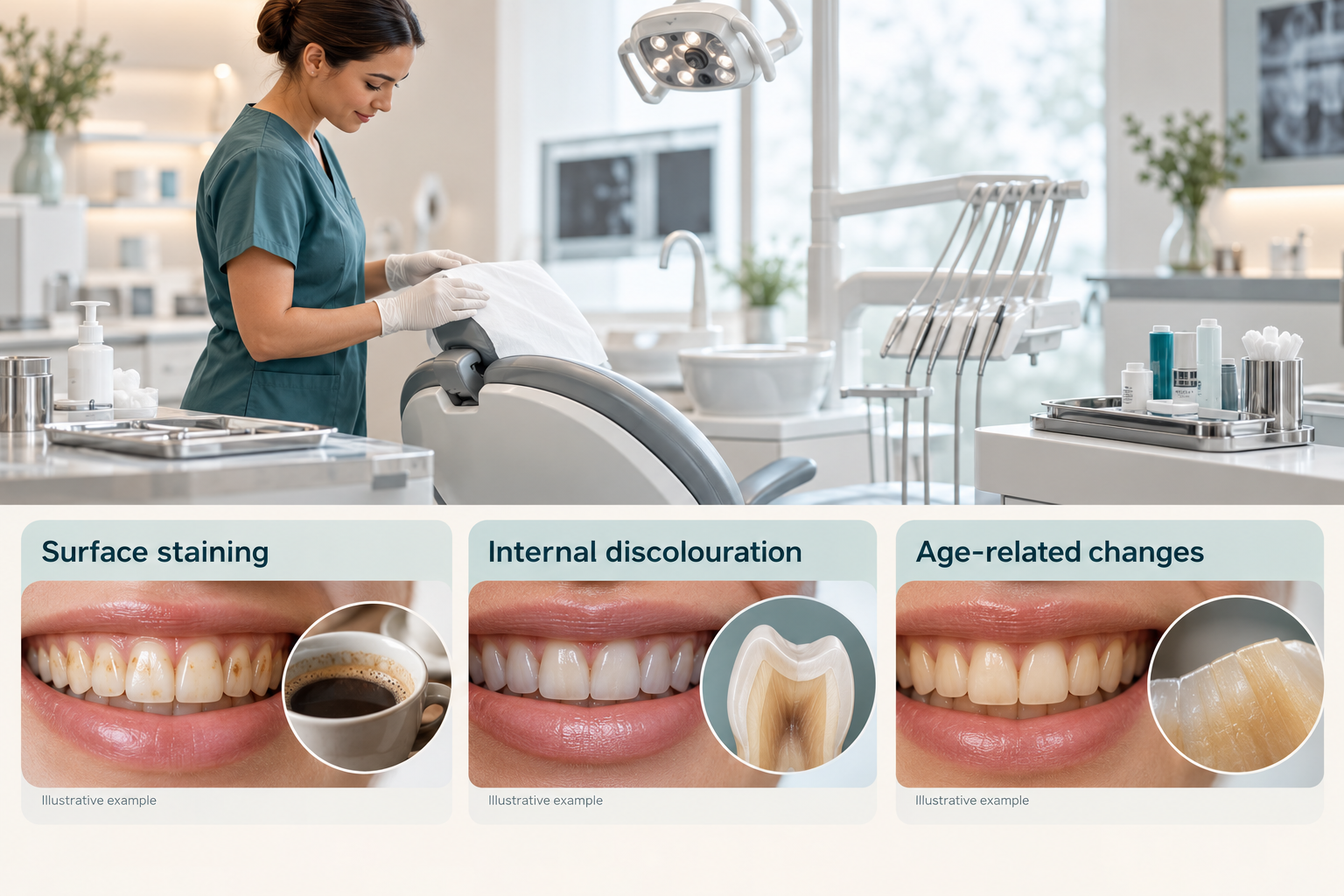
Two people with visibly similar teeth can respond very differently to the same treatment, because the cause of their discolouration differs. Understanding which category applies to you is the clearest predictor of what to expect.
Extrinsic Staining
Extrinsic stains sit on or just beneath the outer surface of the tooth and accumulate through contact with pigmented food, drink and tobacco. This category responds most predictably to Teeth Whitening because the pigment is where the whitening agent can readily reach it. If your teeth have darkened gradually over years of coffee, tea, wine or smoking, this is almost certainly what you are dealing with.
Intrinsic Staining
Intrinsic stains originate within the tooth structure itself. Common causes include certain antibiotics taken during tooth development, dental trauma affecting the pulp, and fluorosis. These respond less predictably. Improvement is often still achievable, but it may require a longer course, a combined approach, or in some cases a restorative solution instead. Grey-toned intrinsic staining is generally the most resistant.
Age-Related Change
Enamel thins gradually with age while the dentine beneath it darkens, so teeth become progressively more yellow through a combination of both changes. This responds reasonably well in most cases, though the degree of improvement depends on how much enamel remains and on the starting shade.
Mixed Presentations
Most people present with a combination rather than a single pure category — typically age-related change with extrinsic staining layered over it. The extrinsic component usually lifts first and most visibly, which is why the initial improvement can be striking even when the underlying age-related component changes more modestly.
Watch a Professional Teeth Whitening Treatment
See a professional teeth whitening treatment in action. Your own treatment plan and results will depend on a clinical assessment.
Service Questions
A typical in-clinic session runs to about an hour of active treatment, with preparation and a post-treatment check either side. Allow a little longer for a first appointment, which includes assessment and shade recording.
You can eat and drink immediately, but for the first twenty-four to forty-eight hours you should follow the white diet described above. After that window, normal eating resumes, with the caveat that heavily pigmented items will gradually affect shade over the longer term.
You can, but the restorations will not change shade. If they are visible when you smile, your clinician will explain how whitening the surrounding natural teeth will affect the overall appearance, and whether replacing the restorations afterwards to match would be advisable.
Many patients see a clear improvement from one session. Others benefit from a further session or from a combined in-clinic and supervised at-home regimen. Your clinician will advise based on your baseline shade and the outcome you are aiming for, and will tell you this at consultation rather than afterwards.
No. Shade relapses gradually as pigment reaccumulates through ordinary eating and drinking. Many patients retain a good result for months to a few years depending on diet, tobacco use and oral hygiene, and periodic top-ups extend it further.
In most cases yes, and it is often carried out as part of the process. Removing surface deposits first allows the whitening agent to contact enamel evenly and gives a more consistent result.
One to two weeks is sensible. That allows the shade to settle fully, gives any transient sensitivity time to resolve, and leaves room for a follow-up session if one is recommended.
Current evidence indicates that when used appropriately under professional supervision, whitening is not associated with lasting enamel damage. Transient surface changes reported in research are typically reversible. A clinician will avoid treatment where it might compromise tooth structure.
Planning Your Teeth Whitening
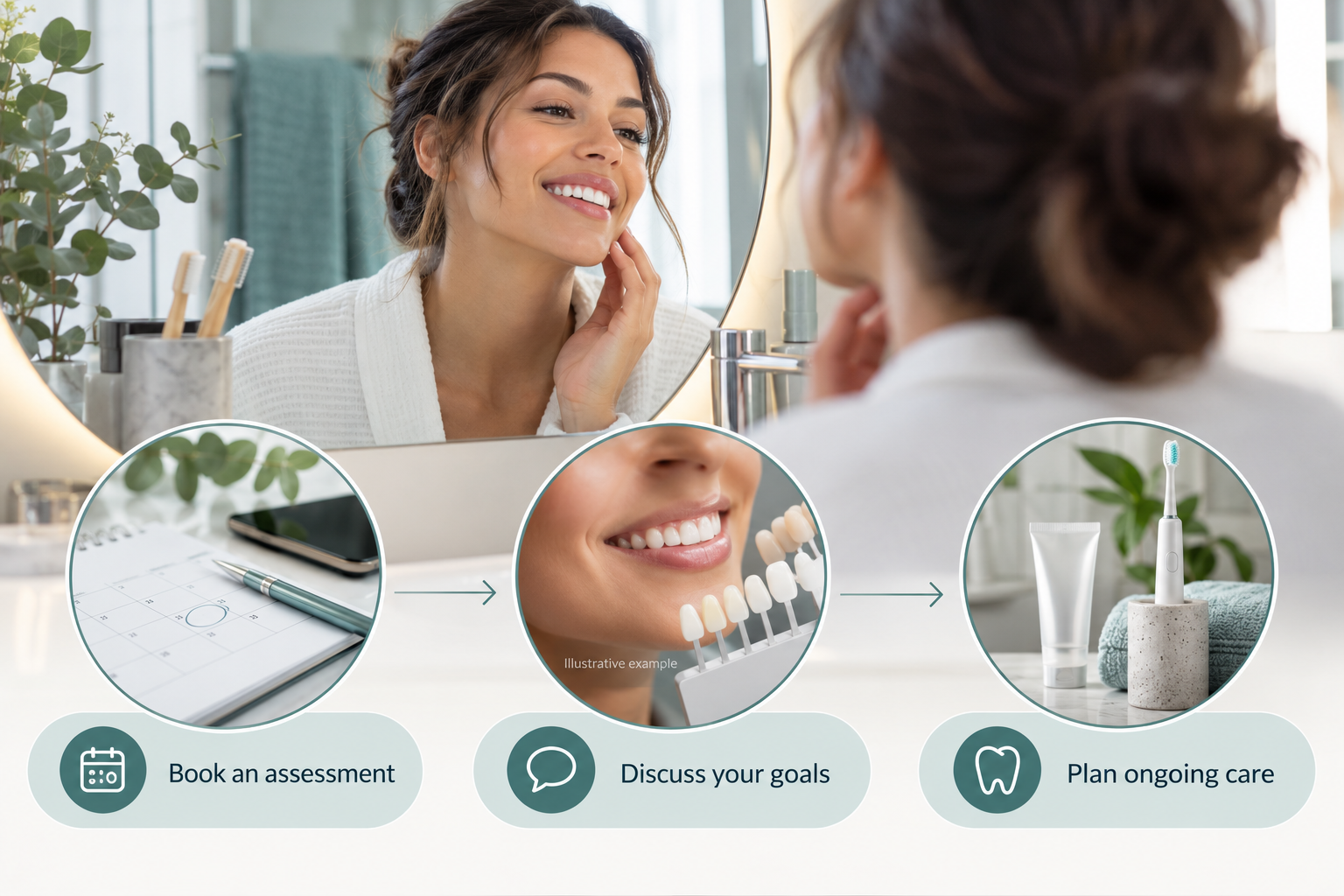
The service works best when it is treated as a plan rather than a single appointment. Assessment establishes what is realistic for your teeth specifically. The session produces the change. Aftercare determines how long that change lasts. Each stage depends on the one before it, which is why the consultation is not a formality and why the aftercare guidance is not optional advice.
If you are considering treatment, the useful next step is a clinical assessment. That is where your baseline shade is recorded, your restorations are accounted for, your sensitivity history is discussed, and you are given a realistic account of what to expect including, where relevant, being told that a different approach would serve you better. If you want to ask about treatment or discuss the next step with a provider in Watford, you can use https://watford.ultimawhite.co.uk/contact-us/ to make an enquiry.